









Skin Flap vs. Skin Graft: How Surgeons Decide



When a Mohs surgeon recommends a skin flap instead of a skin graft, the decision comes down to blood supply, defect size and depth, and how much adjacent tissue is available without distorting nearby structures. Flaps keep their original blood supply and tend to produce better color and texture matches, especially on the nose, though the strongest evidence for this is location-specific. Grafts remain the better option when there isn't enough donor tissue nearby, when the defect is unusually large, or when simplicity outweighs a flap's added complexity. Smoking, age, and overall health all factor into which technique a surgeon ultimately recommends.
Weighing skin flap vs skin graft options is one of the more consequential calls in Mohs reconstruction, and there's real reasoning behind that recommendation, not a coin flip. It usually comes down to a specific combination of where the defect sits, how large and deep it is, and how much research favors one approach over the other in that exact situation. Here's what surgeons actually weigh when making the call.
The Underlying Reason: Blood Supply
A flap is tissue moved into the defect while staying connected to its original blood vessels. A graft is tissue completely detached, left to grow a new blood supply once it's placed. That single difference explains most of why one gets recommended over the other. Tissue that never loses its blood supply generally survives more reliably and keeps its original color and texture. Tissue that has to revascularize from scratch carries a higher chance of partial loss and a less predictable cosmetic result.
This distinction is part of why Hazany Derm's Mohs surgeon Los Angeles page treats reconstructive training as a separate skill set from the cancer removal itself.
What the Research Actually Shows
Real evidence backs this up, not just clinical instinct.
A study evaluating Mohs defects specifically on the nose found that essentially all flap repairs achieved an acceptable cosmetic appearance by objective wound-scoring criteria, versus about three-quarters of graft repairs evaluated the same way. When a surgeon recommends a flap, this kind of evidence is often part of what's informing it.
That evidence matters most for defects where a flap and a graft are both technically feasible, since it gives the decision more to go on than instinct. It doesn't mean flaps win everywhere. The data is strongest on the nose specifically, and evidence quality varies from one facial location to the next, which is why your surgeon should be able to point to the specific reasoning behind a recommendation rather than a general preference for one technique. Ask what the evidence actually shows for a defect in your particular location, not just for defects on the face broadly.
When a Flap Is the More Suitable Technical Choice
A handful of specific conditions tend to push a surgeon toward a flap rather than a graft:
- Enough loose, mobile skin sits next to the defect to recruit without distorting the eyelid or nostril
- The defect is somewhere highly visible, like the nose or cheek, where color and texture match carries real weight
- The wound bed has good blood flow but would otherwise need a large graft with a correspondingly large donor site
- Avoiding a second, separate donor-site wound matters, since a flap generally needs only one surgical site
The Main Flap Categories Your Surgeon Is Choosing Between
Without the full technical detail your surgeon will actually use during planning, it helps to know the broad categories a recommendation is drawn from. Advancement flaps slide tissue in a straight line and work well wherever nearby skin is generous and evenly distributed, like the forehead. Rotation flaps pivot a curved section of adjacent tissue into the defect, common for larger cheek and scalp repairs. Transposition flaps, including bilobed and rhombic designs, lift tissue over intervening skin into a nearby but non-adjacent defect, frequently used around the nose and eyes. Interpolation flaps borrow tissue from a nearby but disconnected area and are typically reserved for larger, more complex defects that often need a staged second procedure.
Your surgeon's recommendation reflects which category, and which specific design within it, best fits your defect's size, depth, and location. Two patients with a flap recommendation can end up with very different-looking procedures.
How Defect Depth Factors Into the Decision
Depth matters as much as width here. A flap brings its own layer of fat and connective tissue along with the skin, which lets it fill in some depth as it's repositioned. A graft is thin, with essentially no bulk of its own, so it works best on wounds that are relatively shallow and well supported underneath. For a deep defect, a flap may get recommended specifically because it can fill volume a graft can't. For a shallow, wide defect, a graft may be perfectly adequate, and less invasive than a larger flap would be.
The Reconstructive Ladder: Why Simpler Options Get Tried First
Surgeons are trained to think through reconstruction options in a rough hierarchy sometimes called the reconstructive ladder, moving from simplest to most complex: letting a wound heal on its own, direct closure with stitches, a skin graft, a local flap, and, for the most complex cases, tissue moved from farther away with its own blood supply reconnected surgically. The idea isn't that simpler is always better. It's that a surgeon should be able to justify reaching for a more complex option rather than defaulting to it.
This is part of why a flap recommendation sometimes comes with an explanation of why a graft, technically simpler, wasn't chosen instead. A flap is a step up in complexity, and a surgeon following this kind of framework should have a specific reason for taking that step for your particular defect, not just a general preference for one technique over another.
Evidence From Delicate Areas Where a Graft Sometimes Wins Out
Not all the research points the same direction, which is useful if you've been told a flap isn't an option for your defect.
A study focused specifically on reconstruction near the medial canthus, the inner corner of the eye, compared 13 patients treated with local flaps, 8 treated with grafts, and 4 treated with a combination of both. Flaps scored somewhat better across the outcome measures used, but the difference wasn't statistically significant, and no major complications turned up in either group. The study's authors concluded a graft can serve as a genuinely viable option here, precisely because local flaps aren't always feasible given how little surrounding tissue there is. If your surgeon has recommended a graft near your eye, this is likely part of why.
Flaps aren't always the better option, and a good surgeon will say so plainly. A graft is often the more suitable choice when there isn't enough adjacent skin to create a flap without pulling on nearby structures, when the defect is unusually large, or when the surrounding tissue needs to stay available for a future repair. Areas with naturally tight, non-mobile skin, like the lower leg or, in some patients, the scalp, are also more likely to end up with a graft simply for lack of spare tissue nearby.
How Your Overall Health Factors Into the Recommendation
The same defect can lead to different recommendations in two different patients, because flap survival depends partly on how well the surrounding tissue is likely to heal. A few things surgeons weigh:
- Smoking history, since nicotine constricts blood vessels and is one of the more significant modifiable risk factors here
- Diabetes and circulation issues. Anything that affects blood flow or wound healing broadly shifts which option carries a more predictable outcome.
- Prior radiation to the area, which often reduces blood flow and can complicate flap design
- Age and skin laxity. Older patients often have more redundant, mobile skin to work with, while younger patients with tighter skin sometimes have fewer flap options for the same size defect.
None of these factors work alone. A surgeon weighs all of them against the defect itself, which is part of why two patients with similarly sized wounds in similar spots can walk away with different plans.
What This Means Practically for Your Procedure
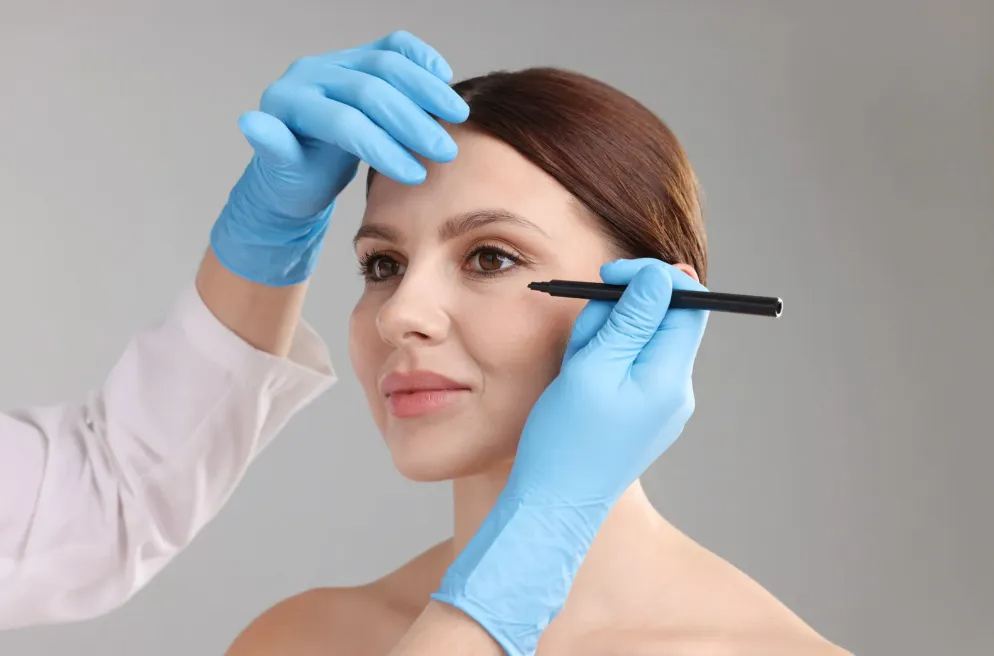
If a flap has been recommended, procedure day looks a little different than a graft procedure would. There's no separate donor-site wound to manage, since the tissue comes from directly next to the defect, which for many patients means one dressing and one site to care for. The trade-off is more involved planning: your surgeon may need to mark out the intended incision lines carefully before the first cut, since the design has to account for tension and subunit borders in a way graft placement generally doesn't.
If you want a refresher on how the excision stage works before this decision even comes up, Hazany Derm's guide to what Mohs surgery involves covers that groundwork.
What the Broader Research Says About Complication Rates
A separate retrospective study of more than 600 facial reconstructions after skin cancer removal found that patients who received full-thickness skin grafts had a significantly higher rate of hematoma and both partial and total tissue loss than patients who received flap reconstruction. Flap reconstruction was performed in the large majority of nasal-region cases in that study; grafts were spread more evenly across the nose, forehead, and temple. Surgeons there reached for a flap on the nose as often as they reasonably could, and leaned on grafts where skin naturally has less laxity to recruit, like the temple and forehead in some patients.
If You Disagree With the Recommendation
Push back if something doesn't add up. A confident surgeon should be able to walk through the specific factors driving the recommendation for your defect, not just state a general preference. Ask how much donor tissue a flap would require from the surrounding area, what the design would actually look like on your face, and whether a graft was considered and ruled out, or simply never discussed.
A recommendation that doesn't hold up to specific questions is worth revisiting, whether that means asking your current surgeon to walk through it again in more detail or getting a second opinion from someone else entirely. Bring your actual questions into the room rather than a general sense of unease. Ask what specific factors, your defect's depth, the tissue nearby, your health history, drove the recommendation, and what the alternative would have looked like if it had been chosen instead. A surgeon confident in the reasoning should be able to answer both without hesitation.
The Trade-Off Surgeons Are Actually Weighing
Understanding why flap instead of graft gets recommended for your particular defect, rather than the reverse, comes down to exactly this kind of weighing. Choosing between a flap and a graft is rarely a clean better-or-worse call. A flap generally offers a better cosmetic match and a more predictable healing course, at the cost of needing more surrounding tissue and a harder design. A graft can close a defect with almost nothing to work with nearby, but it brings a separate donor-site wound and a somewhat less predictable look. Your surgeon's recommendation reflects which trade-off matters most for your defect specifically, not a fixed rule applied the same way to everyone.
Neither option is inherently the better choice in the abstract. A flap that gets forced onto a defect without enough surrounding tissue can distort nearby structures and end up looking worse than a graft would have. A graft used where a flap was realistically available can leave a visible color mismatch that a flap would have avoided entirely. The point of walking through the tradeoff explicitly, rather than defaulting to whichever technique a surgeon happens to prefer, is landing on the option that actually fits the defect in front of you.
Why This Decision Benefits From Reconstructive Training Specifically
Recognizing which technique fits a given defect takes training beyond what's required to perform the Mohs excision alone. Dr. Salar Hazany's background includes fellowship training specifically in reconstructive technique on top of Mohs surgery, which is what lets him evaluate flap and graft options for the same defect instead of defaulting to whichever he knows best.
That training shows up in specific ways during a consultation: in how precisely a surgeon can describe why a particular flap design was chosen over the alternatives, in whether they proactively raise a graft as an option rather than waiting to be asked, and in how they talk about tradeoffs for structures like the eyelid or nostril that have little margin for error. A surgeon without dedicated reconstructive training may still produce a reasonable result on a straightforward defect, but complex or borderline cases are where that extra training tends to matter most.
If your case involves a provider outside the immediate Los Angeles area, Hazany Derm's page for dermatologist and Mohs surgeon services in Los Angeles outlines how the practice evaluates both new and referred reconstruction cases.
When Surgeons Combine a Flap and a Graft on the Same Defect
Some defects don't force a choice between the two techniques at all. Large or unusually shaped wounds sometimes get closed with both, each covering the part it's best suited for.
A published case report on a large scalp defect with exposed bone illustrates the logic well. Skin grafts don't survive over exposed bone on their own, since there's no blood supply at that level to support them, so the surgeons used bilateral transposition flaps to cover the primary defect and a split-thickness skin graft to close the secondary defects those flaps left behind. That combination allowed the entire repair to happen in one operation, with a good functional and cosmetic result at follow-up.
You won't necessarily be told upfront that a combination approach is even on the table. If your defect is large, oddly shaped, or involves exposed bone or cartilage, it's a fair question to ask whether your surgeon is considering a hybrid repair rather than a single technique stretched to cover more than it comfortably can.
A Worked Comparison: Two Defects, Two Different Calls
Two patients, both with a Mohs defect on the nose, can walk out of a consultation with completely different plans, and it helps to see why in concrete terms.
Patient A has a shallow, 1-centimeter defect on the nasal tip with plenty of loose skin along the nasolabial fold nearby, a healthy blood supply at the wound bed, no smoking history, and no prior radiation to the area. Nearly every factor here points toward a flap: enough donor tissue close by, a wound bed healthy enough to support a repositioned pedicle, and a location where color and texture match carry real cosmetic weight. A bilobed transposition flap, designed along the border of the nasal subunit, is the likely recommendation, closing the defect in a single procedure with one surgical site to manage during recovery.
Patient B has a similarly sized defect in almost the same spot, but with two differences: a long smoking history and a nasal dorsum that's naturally tight, with little spare skin to recruit without pulling on the ala. Even though the defect looks nearly identical on paper, the surgeon has good reason to lean toward a graft here, or to have a frank conversation about quitting smoking well before any flap gets attempted, since nicotine's effect on blood flow raises the risk of partial flap loss substantially.
This is what a Mohs reconstruction decision actually looks like in practice. Same location, same rough size, two different plans. The defect itself is only one part of the equation. Skin laxity, blood supply, and the patient's own health history all shift the calculation, which is exactly why a surgeon evaluating your specific case in person, rather than working from a general rule about "nose defects," is worth insisting on.
If a flap gets recommended for your defect, How Skin Flaps Preserve a Natural Look After Skin Cancer Surgery walks through what to actually expect from the healing process. If a graft turns out to be the better fit and you've been referred elsewhere for it, Referred for a Skin Graft After Mohs Surgery? What to Know covers what that next appointment should look like.
Frequently Asked Questions
Can I ask my surgeon why a flap was recommended over a graft for my specific defect?
You should, and a good surgeon will welcome the question rather than deflect it. The reasoning behind a flap recommendation usually comes down to three factors working together: where your defect sits, how large and deep it is, and how much adjacent tissue is available without distorting the eyelid, nostril, or lip. A flap gets recommended when a surgeon believes the intact blood supply and better color match are worth the more complex design, not simply because a flap sits higher on the reconstructive ladder. Ask specifically what type of flap is being planned, whether a graft was considered and ruled out, and what the incision line will look like once healed. At Hazany Derm, that conversation happens with every patient before any plan gets finalized, and Dr. Hazany's combined training in both Mohs excision and reconstruction means he can walk through the tradeoffs in detail rather than reciting a default answer.
Is a flap always going to give a better result than a graft?
No, not universally, and a surgeon who claims otherwise probably isn't being fully candid. Flaps do tend to win out in highly visible areas like the nose and cheek, where matching color, texture, and thickness matters most, and where research on nasal reconstruction specifically shows a meaningful cosmetic advantage. But flaps carry their own tradeoffs: they require enough loose, mobile adjacent skin to work with, and forcing one where that tissue doesn't exist can pull on the eyelid, nostril, or lip and create a worse result than a well-matched graft would have. Areas with naturally tight skin, like the lower leg or scalp in some patients, often do better with a graft simply because there isn't spare tissue nearby to recruit. Hazany Derm weighs your defect's size, depth, location, and your overall health before making a call, since a technique that works well in one spot can fail outright in another.
What happens if there isn't enough skin nearby for a flap?
Then a graft, or in some cases a combination of both techniques on the same defect, becomes the plan. Flaps depend on enough loose, mobile skin next to the wound to recruit without distorting nearby structures like the eyelid or nostril, and when that tissue simply isn't there, pushing forward with a flap anyway can do more harm than good cosmetically. A graft can close a defect with far less surrounding tissue to work with, since it's placed rather than recruited from next door, though it comes with its own donor site wound and a somewhat less predictable color match. For larger or unusually shaped wounds, some surgeons combine a flap and a graft on the same defect, using each technique where it fits best. Exactly how much tissue surrounds your particular defect, and whether a hybrid approach makes sense, is something Hazany Derm assesses in person during your consultation rather than guessing from measurements or photos alone.
Does the research on flaps versus grafts apply to every part of the face equally?
Not quite, and this is worth understanding before assuming a flap recommendation should apply everywhere. Most of the strongest published evidence favoring flaps over grafts comes specifically from nasal reconstruction, where studies have found flap repairs scoring meaningfully better on standardized cosmetic evaluation scales than grafts. Other areas of the face carry different considerations. Near the inner corner of the eye, for example, research comparing the two techniques found flaps scored only somewhat better than grafts, without reaching statistical significance, largely because there's so little spare tissue in that area to build a flap from in the first place. The cheek, lip, chin, forehead, and scalp each come with their own tissue laxity, muscle function, and hair pattern considerations that shape which technique actually makes sense. The evidence base shifts by location, which is worth keeping in mind if a recommendation seems to be leaning on a general rule rather than your specific spot.
Should I get a second opinion if I am unsure about a flap recommendation?
It's a completely reasonable thing to want for a decision that will affect how your face looks and heals. Reconstruction planning involves real judgment calls, weighing your defect's size and depth, your overall health, your smoking history, and how much adjacent tissue is realistically available, and different surgeons can reasonably land on different plans for the same defect. A second opinion isn't a sign of distrust in your original surgeon. It's a chance to hear the reasoning laid out again, ask questions you might not have thought of the first time, and confirm that a graft, a flap, or a combination approach was genuinely considered rather than defaulted to. Hazany Derm welcomes second-opinion consultations specifically for post-Mohs reconstruction. Bringing your pathology report, any photos of the defect, and a list of questions to that visit tends to make the conversation more productive.
Does smoking really affect which technique my surgeon recommends?
Yes, measurably, and a surgeon planning reconstruction takes it seriously as a modifiable risk. Nicotine constricts the blood vessels that feed healing tissue, which matters most for flaps, since a flap's entire advantage depends on that uninterrupted blood supply staying intact while the tissue is repositioned. A smoker's flap carries a meaningfully higher risk of partial tissue loss or poor healing than the same flap in a nonsmoker, which can push a surgeon toward a graft instead, or toward asking for a specific quit date well before the procedure. Other health factors get weighed the same way: diabetes and circulation issues, prior radiation to the area, and age and skin laxity can all shift which option carries a more predictable outcome for a given patient. None of these factors work alone, which is part of why two patients with similarly sized defects in similar locations can walk away from Hazany Derm with different reconstruction plans.