







How Do Non-Surgical Eyelid Treatments Actually Work? CO2 Laser and Radiofrequency Explained



CO2 laser, radiofrequency, and ultrasound are often marketed together as "non-surgical eyelid treatments," but they work through genuinely different mechanisms, ablative resurfacing, electrical current, and acoustic energy, each reaching the skin's collagen-producing layer a different way. This guide explains what is actually happening beneath the surface with each technology available at Hazany Derm: how CO2 laser's fractional ablation triggers immediate tightening and delayed collagen remodeling, how Density's dual-mode radiofrequency heats tissue without breaking the skin, and how Sofwave's SUPERB ultrasound reaches a precise depth to lift the eyebrow specifically. It also covers why skin type changes CO2 laser's risk profile, how session count differs by mechanism, and why FDA clearance language differs between these devices. Understanding the mechanism behind each option, rather than which one sounds most advanced, is what allows Dr. Hazany to set realistic expectations and match the right technology to a patient's actual anatomy.
CO2 laser, radiofrequency, and ultrasound are often grouped together as "non-surgical eyelid treatments," but they achieve tightening through genuinely different mechanisms. Understanding how each one actually works, rather than just what it claims to do, is the clearest way to understand why a provider might recommend one over another for a given patient.
This guide breaks down the science behind each technology available at Hazany Derm: the ablative resurfacing of CO2 laser, the electrical heating of Density's radiofrequency, and the acoustic energy behind Sofwave's ultrasound platform.
Why the Eyelid Skin Ages Differently From the Rest of the Face
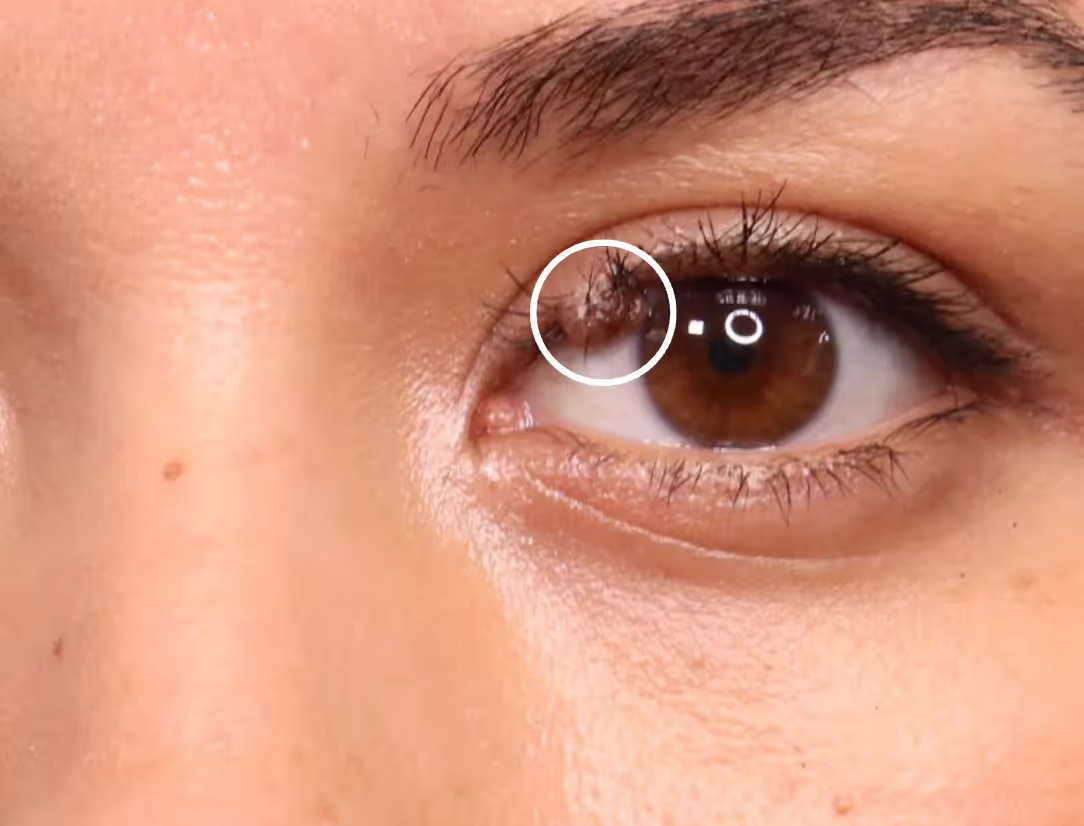
Eyelid skin is the thinnest skin on the body, with almost no underlying fat layer to cushion or support it. That makes it one of the first areas to show fine lines, crepey texture, and laxity as collagen production slows with age.
Several anatomical factors compound this, including:
- A weakening orbital septum, the thin membrane that normally holds fat in place behind the eyelid, which can allow fat to bulge forward as visible bags
- Brow descent, since a lower brow position pushes additional skin down onto the upper lid and can create the appearance of hooding that has little to do with the eyelid skin itself
- Repetitive muscle movement from blinking and squinting, which contributes to fine lines over decades
- Cumulative sun exposure, since eyelid skin is rarely protected by sunscreen the way the rest of the face is
Each non-surgical technology below addresses a different piece of this picture, which is why they are not interchangeable despite often being marketed together.
How CO2 Laser Tightens the Skin
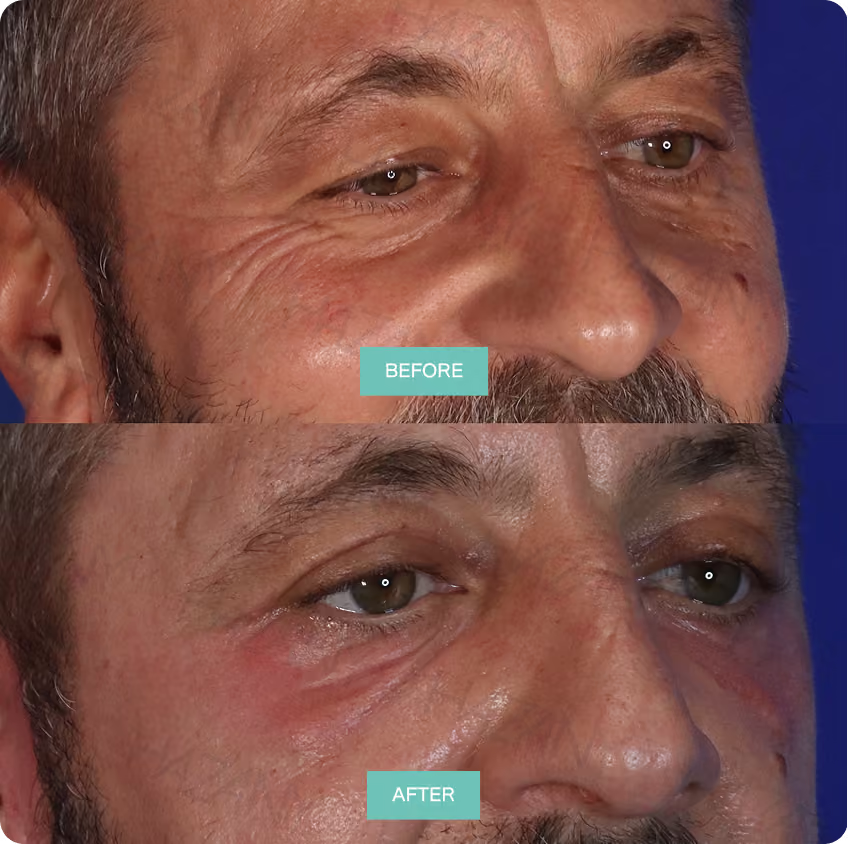
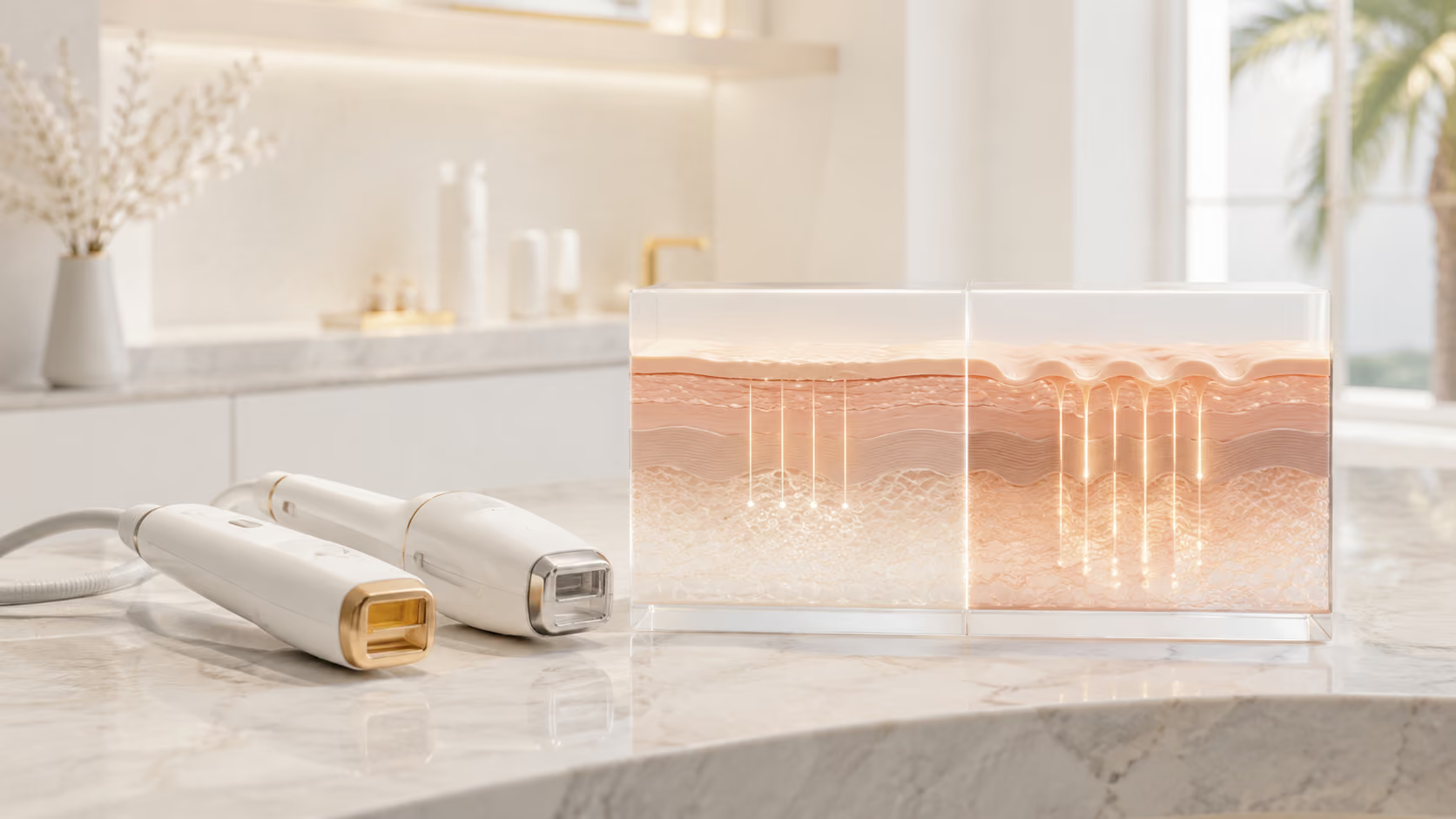
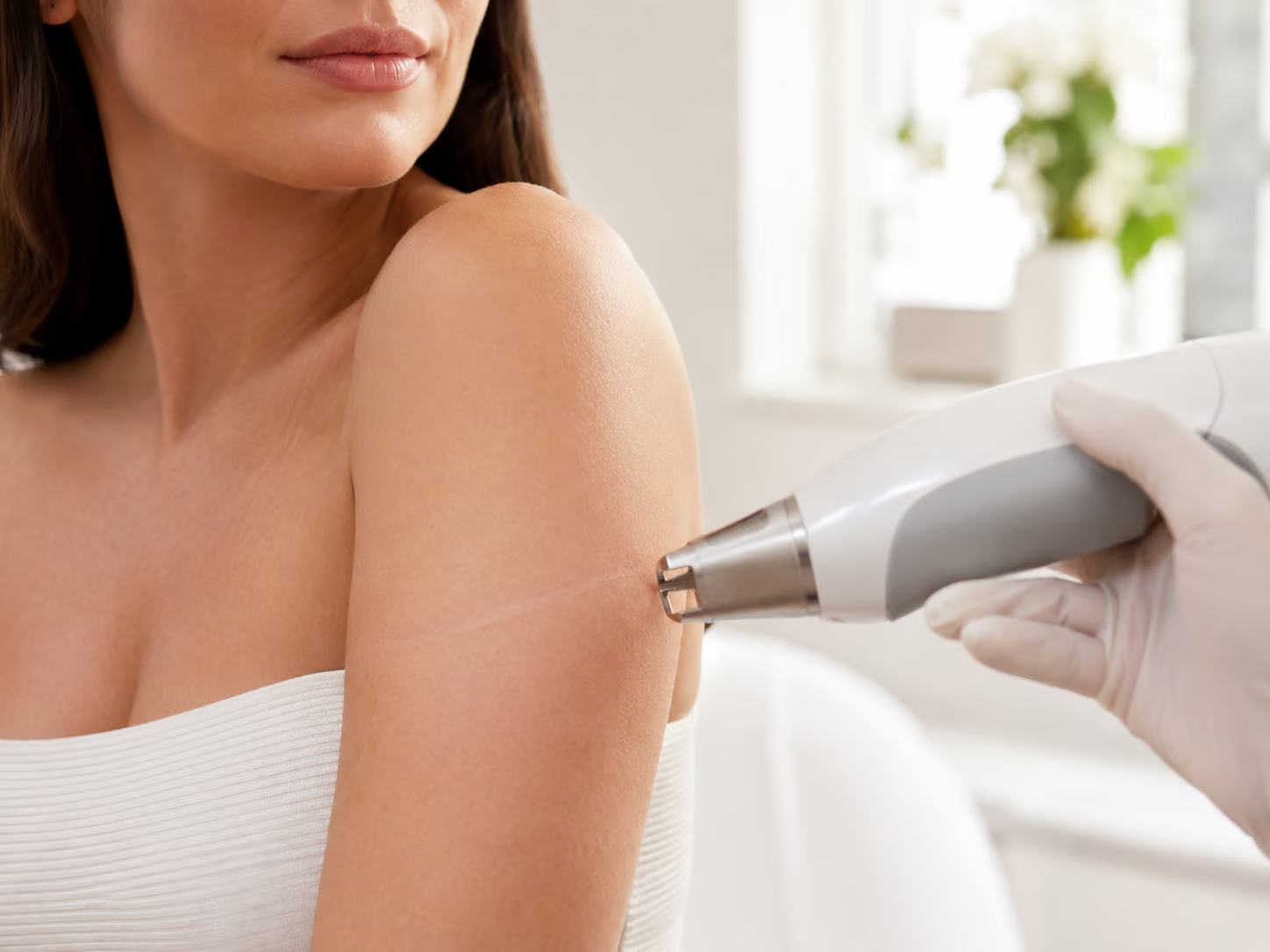
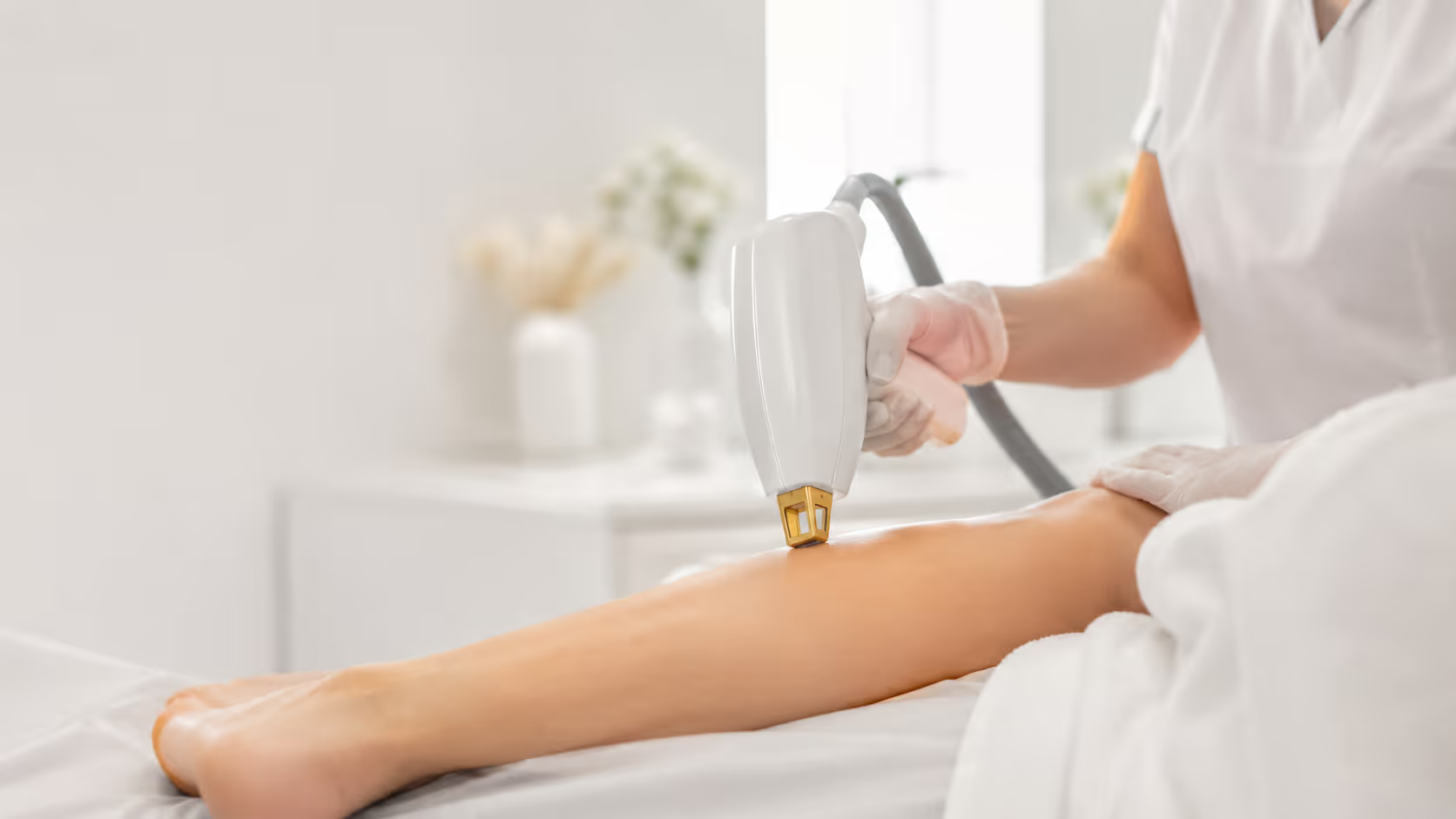
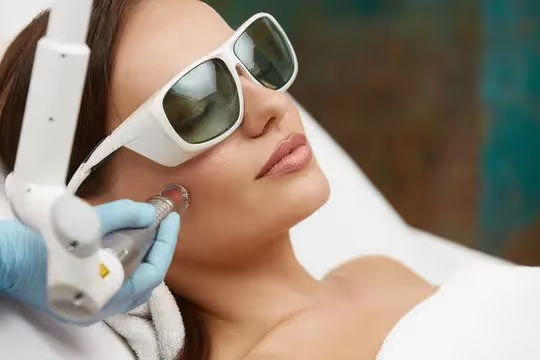
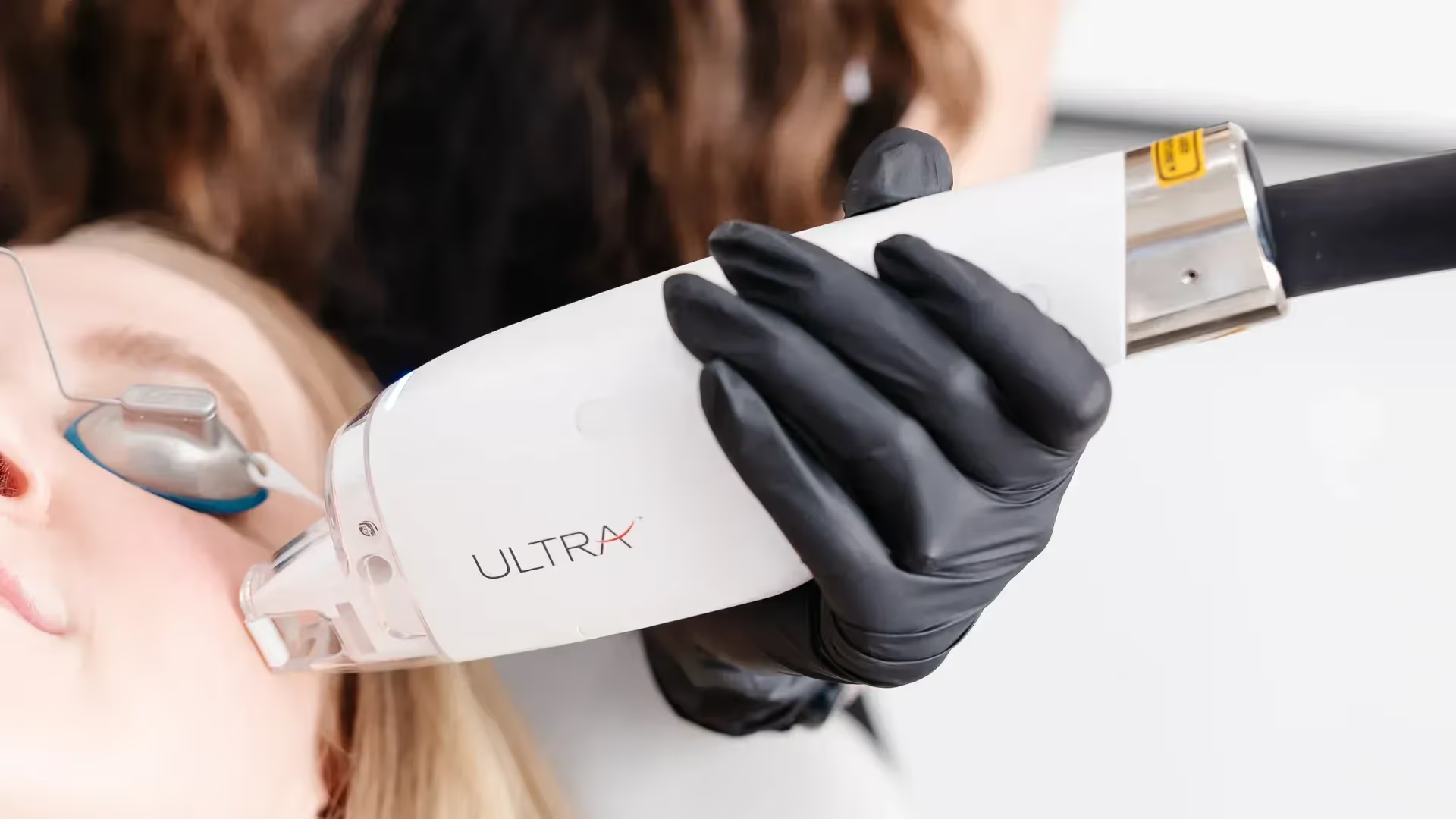
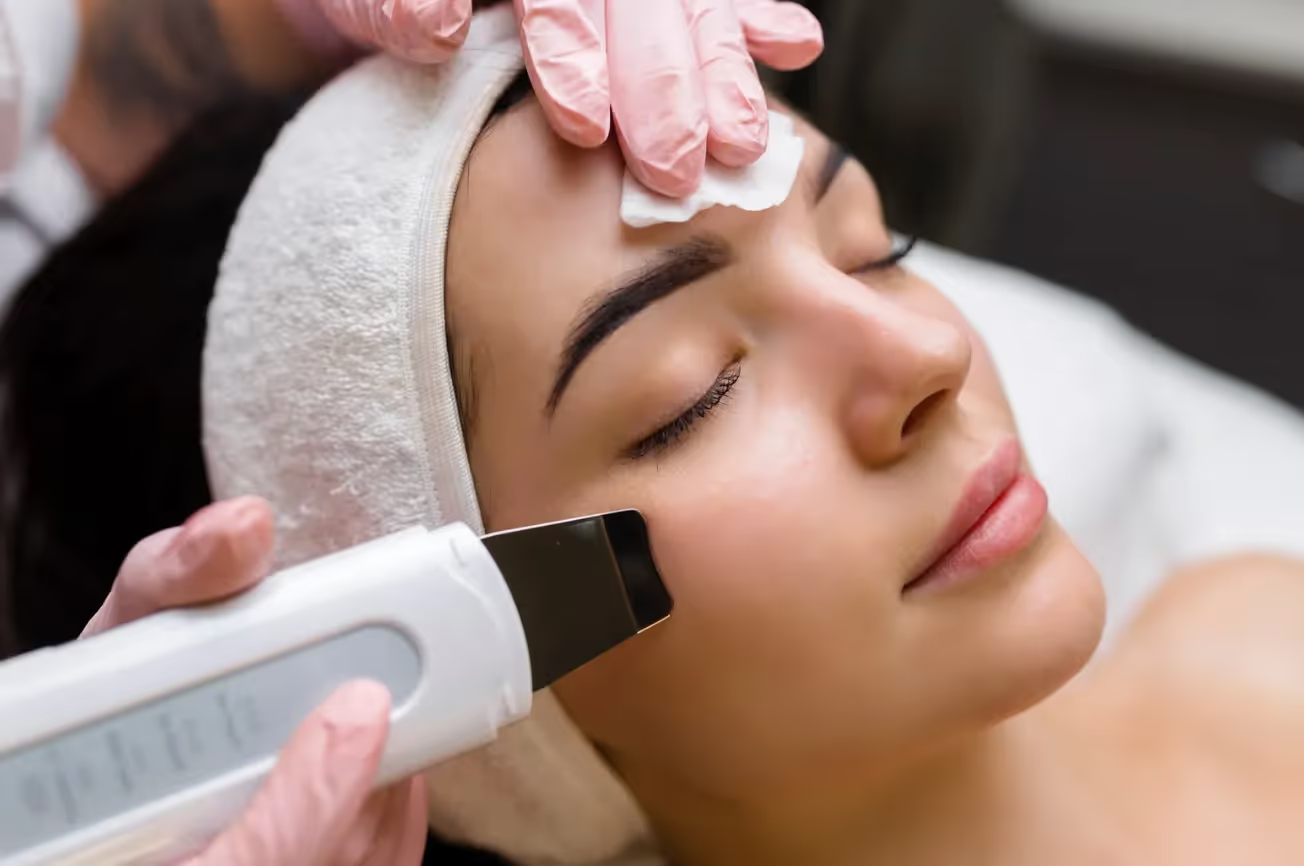
CO2 laser is an ablative technology, meaning it physically removes a controlled layer of tissue rather than simply heating it. A fractional handpiece delivers the laser energy in a grid of microscopic columns, vaporizing skin at each treatment point while leaving the surrounding tissue intact to speed healing.
The mechanism works in two stages:
- Immediate tissue contraction, as heat from the laser causes existing collagen fibers in the treated area to shorten and tighten right away
- Delayed collagen remodeling, as the thermal energy that spreads beyond the vaporized columns triggers fibroblast activity, producing new collagen over the following weeks as the skin heals
A study on continuous wave fractional CO2 laser for upper eyelid dermatochalasis, published in Photomedicine and Laser Surgery, measured actual lid position before and after treatment. Marginal reflex distance, a standard measurement of how far the upper lid sits from the pupil, increased from an average of 0.7 to 2.2 millimeters, and palpebral fissure height increased from 5.6 to 7.4 millimeters at six months, meaning the eyes measurably opened further after treatment. Patients in that study experienced redness, swelling, crusting, and oozing that resolved within fourteen days.
How Radiofrequency (Density) Heats the Deeper Layers
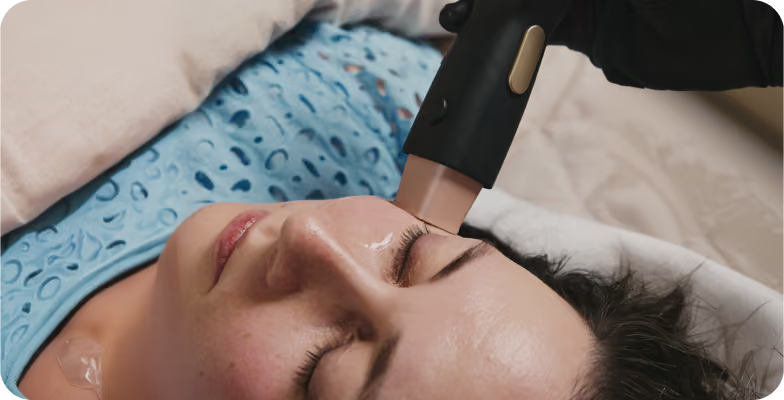
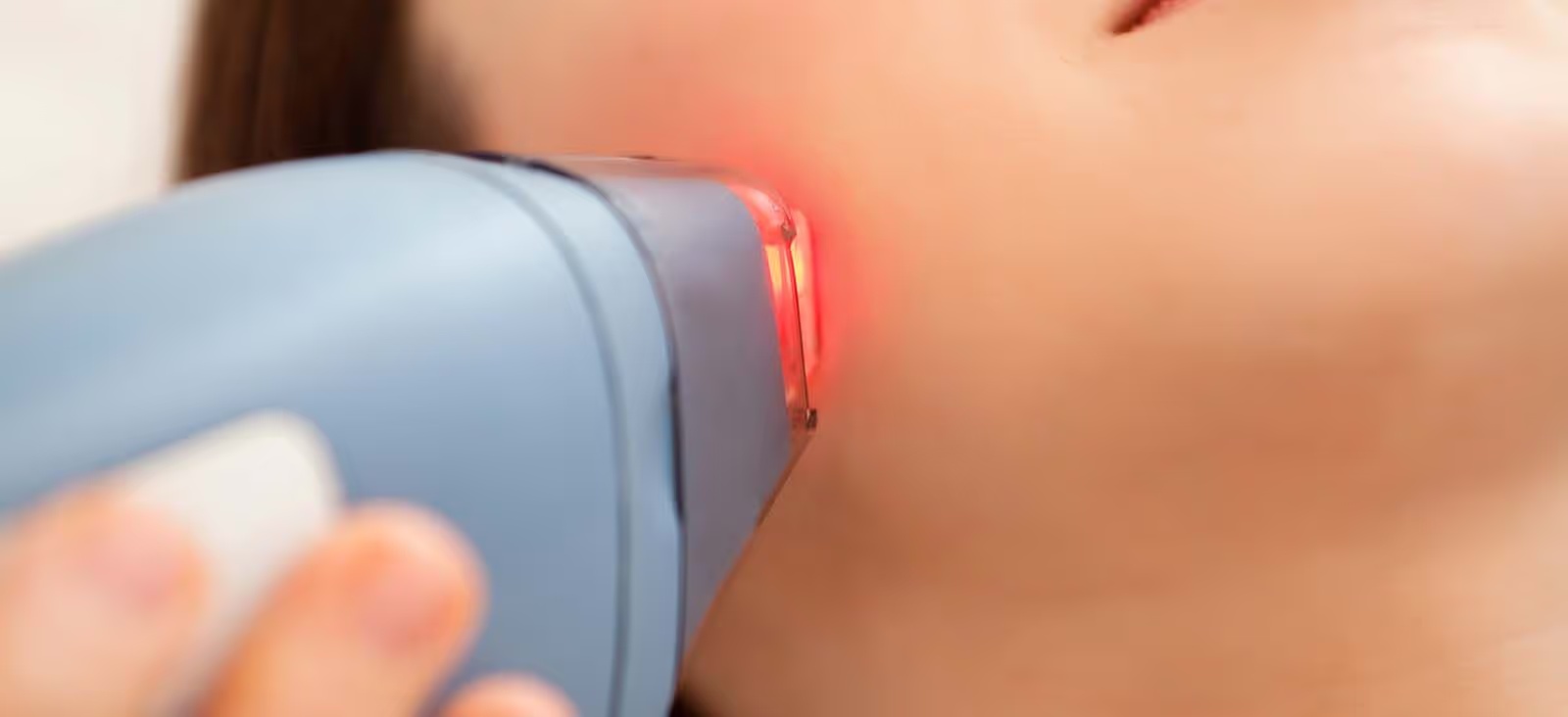
Radiofrequency works on a completely different principle than laser. Rather than delivering light energy that vaporizes tissue, Density passes an electrical current through the skin. The skin's natural resistance to that current converts it into heat, allowing tissue to be heated without ever breaking the surface.
Density's design includes several specific mechanisms:
- Sequential monopolar and bipolar energy, delivered from a single tip: monopolar energy reaches deeper into the dermis while bipolar energy concentrates closer to the surface, heating multiple tissue layers in one pass
- Real-time impedance feedback, which continuously measures each patient's skin resistance and automatically adjusts the energy output to keep delivery consistent and safe
- A five-step gas-spray cooling system that protects the epidermis throughout treatment
- A dedicated eye tip, sized narrower than the standard facial tips, built specifically to treat safely around the orbital bone
A case series published in Plastic and Reconstructive Surgery Global Open documented Density's eye-specific tip delivering roughly 500 shots to the periocular region at a conservative energy setting in one patient, and 600 shots across the cheeks, jawline, and periorbital region in another, with both patients showing visible tightening and softened fine lines around the eyes at six-month follow-up. The controlled heating triggers the same neocollagenesis and neoelastogenesis response that drives CO2 laser's results, achieved here without ever opening the skin surface.
How Ultrasound (Sofwave) Lifts the Brow and Upper Lid Area
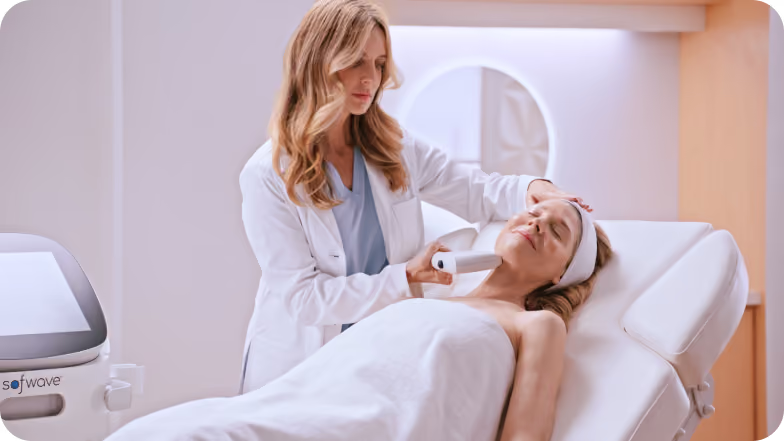
Sofwave uses yet another form of energy: focused, synchronous ultrasound beams delivered through its proprietary SUPERB technology. Unlike radiofrequency's electrical current, ultrasound is acoustic energy, mechanical sound waves that convert to heat only once they reach a specific, predictable depth.
Key elements of how Sofwave works include:
- Seven synchronized transducers that create precise thermal zones reaching 60 to 70 degrees Celsius at a controlled depth of roughly 1.5 millimeters, directly in the mid-dermis where collagen and elastin are produced
- Built-in cooling that protects the epidermis above the treatment zone throughout the session, since the energy is calibrated to a fixed depth rather than the skin's surface resistance
- An FDA clearance specifically for lifting the eyebrow, reflecting that Sofwave's primary target in this area is the tissue supporting the brow rather than the eyelid skin itself
A study published in Dermatologic Surgery measured objective increases in eyebrow height after a single treatment, alongside high patient and investigator satisfaction scores. Sofwave's FDA pivotal trial supporting this indication evaluated 80 subjects across 467 treated facial areas at five investigational sites before the eyebrow-lifting clearance was granted in 2021.
Comparing the Three Mechanisms Side by Side
Each technology reaches the same general goal, stimulating new collagen, through a genuinely different route:
- CO2 laser (ablative): removes a controlled layer of tissue with light energy and heats what surrounds it, producing immediate tightening plus delayed collagen remodeling; requires real downtime but can deliver more dramatic change in a single session
- Density (non-ablative radiofrequency): heats tissue with an electrical current without breaking the skin surface, trading some single-session intensity for zero downtime
- Sofwave (non-ablative ultrasound): heats a fixed, precise depth using acoustic rather than electrical energy; FDA cleared for the eyebrow specifically, rather than the eyelid skin itself
All three ultimately work by prompting the skin to build new collagen, but they get there through different forms of energy, different depths, and different amounts of downtime, which is why matching the mechanism to the patient matters more than picking whichever technology sounds most advanced.
Why FDA Clearance Language Matters for Comparing These Devices
Patients researching these treatments often notice that Sofwave is cleared for lifting the eyebrow specifically, while Density is more broadly cleared as a general-purpose electrosurgical device for tissue coagulation. That difference in language is not a marketing detail. It reflects the specific indications each manufacturer studied and submitted for review, and it is part of why a provider frames these two technologies differently at consultation even though both are non-surgical, no-downtime options for the eye area.
Sofwave's eyebrow-lifting clearance means its manufacturer conducted a clinical study specifically measuring that outcome before marketing it for that purpose, which is the source of the eyebrow-height data cited above. Density's broader clearance means it can be used across many facial and body areas, with the periorbital-specific evidence coming primarily from independently published case series and case reports rather than a device-specific FDA submission for that exact indication. Neither pathway is more or less legitimate, but understanding the difference helps explain why the two technologies are discussed differently in the clinical literature.
What the Clinical Research Actually Shows
The strength of the published evidence differs across these three technologies, and it is worth being direct about that rather than treating them as interchangeable.
- CO2 laser has the longest track record as a blepharoplasty alternative, supported by both the 2014 Dermatologic Surgery review and the Photomedicine and Laser Surgery study measuring actual lid position change
- Density's periorbital-specific data is newer and currently limited to smaller case series, though the results reported so far are consistent and positive across different patient skin types
- Sofwave's brow-lifting indication is backed by an FDA pivotal clinical trial in addition to published case data, giving it a comparatively strong regulatory foundation for that specific use
None of this means one treatment is simply better than another. It means the right choice still depends on matching the mechanism, and the evidence behind it, to what a given patient's eyelids actually need.
Where Dr. Hazany Draws the Line for Non-Surgical Candidates
Understanding the mechanism behind each treatment is what allows Dr. Hazany to set realistic expectations at consultation. A patient with fine lines and early laxity can expect a genuinely different result from Density or Sofwave than a patient hoping to correct hooded lids that are already affecting their vision, no matter how the treatment is marketed.
Good non-surgical candidates typically share a few traits:
- Skin that is thin, crepey, or mildly lax, without a true excess fold
- Realistic expectations for gradual improvement rather than an immediate, dramatic change
- No visual field impairment from upper lid hooding
- A preference to avoid incisions, anesthesia, or extended downtime, even if it means a more modest result
Matching the right mechanism, ablative resurfacing, radiofrequency, or ultrasound, to the right degree of aging is the difference between a treatment plan that meets a patient's expectations and one that does not.
What Happens in the Skin After Treatment Ends
The visible result from any of these three technologies is really the downstream effect of a biological process that continues well after the appointment itself. Controlled thermal injury, whether from ablation, electrical current, or acoustic energy, triggers fibroblasts to produce new type I and type III collagen along with new elastin fibers, a process called neocollagenesis and neoelastogenesis. That process does not happen instantly. It unfolds over weeks as the body's normal wound-healing and tissue-remodeling machinery responds to the controlled injury each device creates.
This is why none of these treatments produce their full effect on the day of the appointment. CO2 laser shows the fastest visible change because ablation and immediate heat-driven contraction happen right away, even though the deeper collagen remodeling continues afterward. Density and Sofwave rely almost entirely on that slower remodeling process, since neither creates the immediate physical tissue change that ablation does, which is the core reason their results take longer to become fully visible even though the underlying cellular response is similar.
How Skin Type Changes the Mechanism's Risk Profile
The same mechanical difference that makes CO2 laser more dramatic is also what makes it riskier in certain patients. A randomized split-face trial on periorbital laser treatment in East Asian patients, published in Dermatology and Therapy confirms that ablative CO2 laser carries a real risk of post-inflammatory hyperpigmentation in East Asian and other deeper-Fitzpatrick patients, especially on the thinner lower eyelid skin, because the same thermal effect that ablates damaged tissue can also overstimulate pigment-producing cells in melanin-rich skin.
Density and Sofwave do not carry this same risk, since neither relies on ablation or generates concentrated heat at the skin's surface. Their electrical and acoustic mechanisms heat tissue at depth while actively cooling the surface throughout treatment, which is part of why both devices are considered appropriate across a broader range of Fitzpatrick skin types than CO2 laser.
This is one of the clearest examples of how understanding a mechanism changes a real clinical recommendation. It is not that CO2 laser is unsafe. It is that its ablative mechanism carries a specific, well-documented risk in specific patients, which is exactly the kind of detail that gets lost when these three treatments are described only by their marketing claims rather than how they actually work.
Why Cooling Technology Matters as Much as the Energy Itself
A detail that gets less attention than it deserves is how each device protects the skin's surface while delivering energy beneath it. CO2 laser's downtime exists precisely because it does not protect the surface, since ablation requires direct contact with the epidermis to work. Density and Sofwave both build active cooling directly into the treatment mechanism for the opposite reason: because their entire value proposition depends on heating tissue below the surface while leaving the surface itself undisturbed.
Density's five-step gas-spray cooling system adjusts in real time based on skin temperature, allowing the device to deliver enough monopolar and bipolar energy to meaningfully heat the dermis without burning the epidermis above it. Sofwave's cooling mechanism serves the same purpose at a fixed depth, protecting the roughly 1.5 millimeters of tissue between the skin's surface and the ultrasound energy's target zone in the mid-dermis. Without this cooling layer, neither device could deliver the amount of energy needed to trigger a meaningful collagen response, which makes the cooling system as functionally important to the final result as the energy source itself.
How Multiple Sessions Compound the Effect
Because Density and Sofwave rely on the body's own collagen-building response rather than immediate tissue removal, the mechanism behind each session builds on the last one. A single treatment triggers neocollagenesis that continues for several weeks, and a second treatment introduced once that process is underway adds further stimulus to a dermis that is already remodeling.
- Radiofrequency and ultrasound: results compound across a short series of sessions, since each treatment builds on collagen remodeling that is still in progress from the one before it
- CO2 laser: produces most of its effect from a single session, since the ablation and immediate thermal contraction do the bulk of the work upfront
- Any additional CO2 laser sessions: generally serve to refine an already-achieved result rather than compound the original mechanism the way a second RF or ultrasound session does
This difference is part of why providers recommend a short series for Density or Sofwave but rarely recommend the same approach for CO2 laser, even though all three technologies ultimately rely on the same underlying collagen response.
Putting the Mechanisms Into Practice
None of this mechanism-level detail changes anything if it does not translate into a practical treatment plan. A patient whose main concern is crepey texture across the whole lower lid, without any true excess skin, is a mechanism match for Density's ability to heat that tissue broadly without disturbing the surface. A patient whose upper lid looks heavy primarily because their brow has dropped, rather than because eyelid skin itself has changed, is a mechanism match for Sofwave, since lifting the supporting tissue above the lid addresses the actual cause rather than the eyelid skin. A patient with visible fine lines and mild skin laxity that has not responded to skincare is often a mechanism match for CO2 laser, since ablation plus heat-driven remodeling can address both texture and tightness in ways that RF and ultrasound, working only through heat, generally cannot match in a single session.
Recognizing which mechanism actually matches a patient's anatomy, rather than choosing a treatment based on which one sounds newest or most advanced, is the difference between a non-surgical plan that delivers a visible result and one that leaves a patient wondering why nothing seemed to change.
How These Mechanisms Differ From Topical Skincare
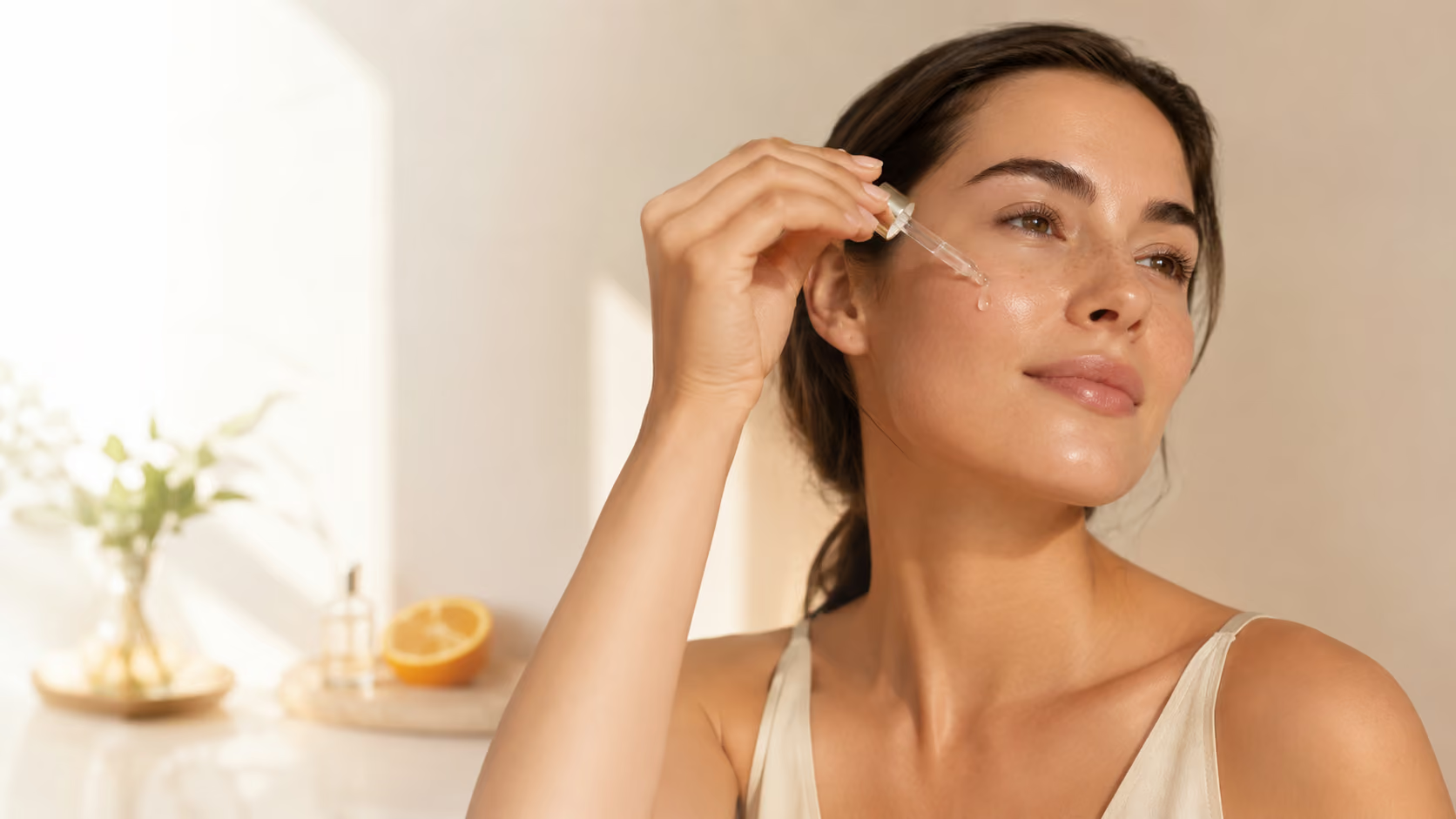
It is worth distinguishing what happens inside a device-driven treatment from what a topical product can achieve, since patients sometimes assume a strong enough skincare routine could replace an in-office session. Retinoids and antioxidant serums work primarily at the epidermis and upper dermis, gradually encouraging cell turnover and offering some antioxidant protection against further collagen breakdown.
They do not deliver the kind of controlled, targeted thermal energy that CO2 laser, Density, or Sofwave use to reach deeper into the dermis and directly trigger neocollagenesis. That difference in depth and intensity is why topical products are generally considered a maintenance tool that supports these treatments rather than a substitute for the specific mechanism each one relies on. A patient applying retinol nightly is still working at a different layer of the skin entirely from a patient receiving controlled thermal energy at 1.5 millimeters of depth, even though both are, in a broad sense, trying to support collagen.
What the Science Means for Your Treatment Plan
None of this mechanism-level detail is meant to turn patients into laser physicists. It is meant to explain why Dr. Hazany recommends what he recommends, rather than defaulting to whichever treatment happens to be newest or most heavily marketed. A patient whose eyelid concern comes from thin, crepey skin is being offered a genuinely different tool than a patient whose concern comes from a descended brow, even if both walk in describing their eyes as "tired looking."
At Hazany Derm, that distinction is the starting point for every consultation, not an afterthought. Dr. Hazany examines which layer of tissue is actually driving a patient's concern and matches it to the mechanism built to reach that layer, whether that means the immediate ablation of CO2 laser, the deep electrical heating of Density, or the precise acoustic energy of Sofwave. Understanding how these treatments work is what allows Hazany Derm to set expectations a patient can actually count on, rather than promising a single technology as a solution for every kind of eyelid aging. If you're trying to decide which of these options is actually right for you, rather than how each one works beneath the surface, see our guide on choosing between eyelid surgery, CO2 laser, and radiofrequency.
Frequently Asked Questions
What is the main difference between CO2 laser and radiofrequency for the eyes?
CO2 laser is ablative, meaning it physically removes a thin layer of tissue with light energy, while radiofrequency devices like Density heat tissue with an electrical current without breaking the skin surface. Hazany Derm explains this distinction to patients because it directly affects both downtime and the intensity of a single session. Ablative treatments tend to produce more dramatic change per session, while non-ablative radiofrequency trades some of that intensity for zero recovery time.
Is Sofwave a type of radiofrequency treatment?
No, and this is a common point of confusion. Sofwave uses focused ultrasound energy through its SUPERB technology, not an electrical current, even though it is often grouped with radiofrequency devices in casual conversation. Hazany Derm is careful to describe Sofwave accurately as an ultrasound platform, since its FDA clearance and mechanism are genuinely distinct from Density's radiofrequency technology.
Why does CO2 laser require downtime but radiofrequency does not?
CO2 laser's downtime comes directly from its ablative mechanism, since vaporizing tissue at the skin's surface leaves a wound that needs to heal. Density and Sofwave both heat tissue beneath the surface while actively cooling the epidermis, so the skin surface itself is never disrupted. Hazany Derm sets expectations around this difference at consultation so patients understand why a more dramatic single-session result generally comes with more recovery time attached.
How does Density's eye tip work differently from its regular tips?
Density's eye-specific tip is narrower than the standard facial tips, built to deliver monopolar and bipolar radiofrequency energy safely around the orbital bone. Hazany Derm uses this dedicated tip specifically for periorbital treatment rather than a general facial tip, since the eye area requires more precise, lower-volume energy delivery than the cheeks or jawline. This is part of why Density can be used safely on skin as delicate as the eyelid area.
What is neocollagenesis, and why does it matter for these treatments?
Neocollagenesis is the process by which controlled thermal injury prompts fibroblasts to produce new collagen, and it is the underlying mechanism behind all three treatments discussed here. Hazany Derm relies on this same biological response whether the initial trigger is CO2 laser ablation, Density's electrical current, or Sofwave's ultrasound energy. Understanding that all three treatments are ultimately triggering the same cellular process helps explain why results from any of them take weeks to fully develop rather than appearing immediately.
Is CO2 laser safe for all skin tones around the eyes?
CO2 laser carries a higher risk of hyperpigmentation and scarring in deeper skin tones, particularly on the thinner lower eyelid skin, which is why Fitzpatrick skin type is part of every candidacy conversation at Hazany Derm. Density and Sofwave carry a more favorable safety profile across a broader range of skin tones since neither relies on ablation. Patients with deeper skin tones are often steered toward radiofrequency or ultrasound first for this reason.
How many radiofrequency or ultrasound sessions will I need to see results?
Density typically works best as a short series of sessions spaced weeks apart, since each treatment builds on collagen remodeling still underway from the last one. Sofwave is frequently effective after a single session per area, reflecting how its FDA clearance was studied and granted. Hazany Derm adjusts the recommended number of sessions for either treatment based on how an individual patient's skin responds after the first visit.
Can these mechanisms be combined for a better result?
Yes, and Hazany Derm often builds treatment plans that use more than one mechanism over time rather than relying on a single technology. A patient might start with Density for early crepiness and add Sofwave later if brow descent becomes more noticeable, or use CO2 laser and radiofrequency together in a staged plan as their eyelid concerns evolve. Combining mechanisms works because each one addresses the skin, and the tissue supporting it, in a genuinely different way.