






%201.avif)



Hair Restoration


Reviving Your Scalp &
Regrowing Your Hair
Thinning hair and hair loss affect both men and women, and the right treatment depends on the cause and stage. Dr. Hazany offers a full range of hair restoration options — from PRP and exosome therapy to FUE transplantation — to revive dormant follicles and regrow natural, lasting hair. With advanced techniques and a cosmetic dermatologist's eye for natural results, he builds a plan around your specific pattern of loss.
HairLASE & PRP Injections
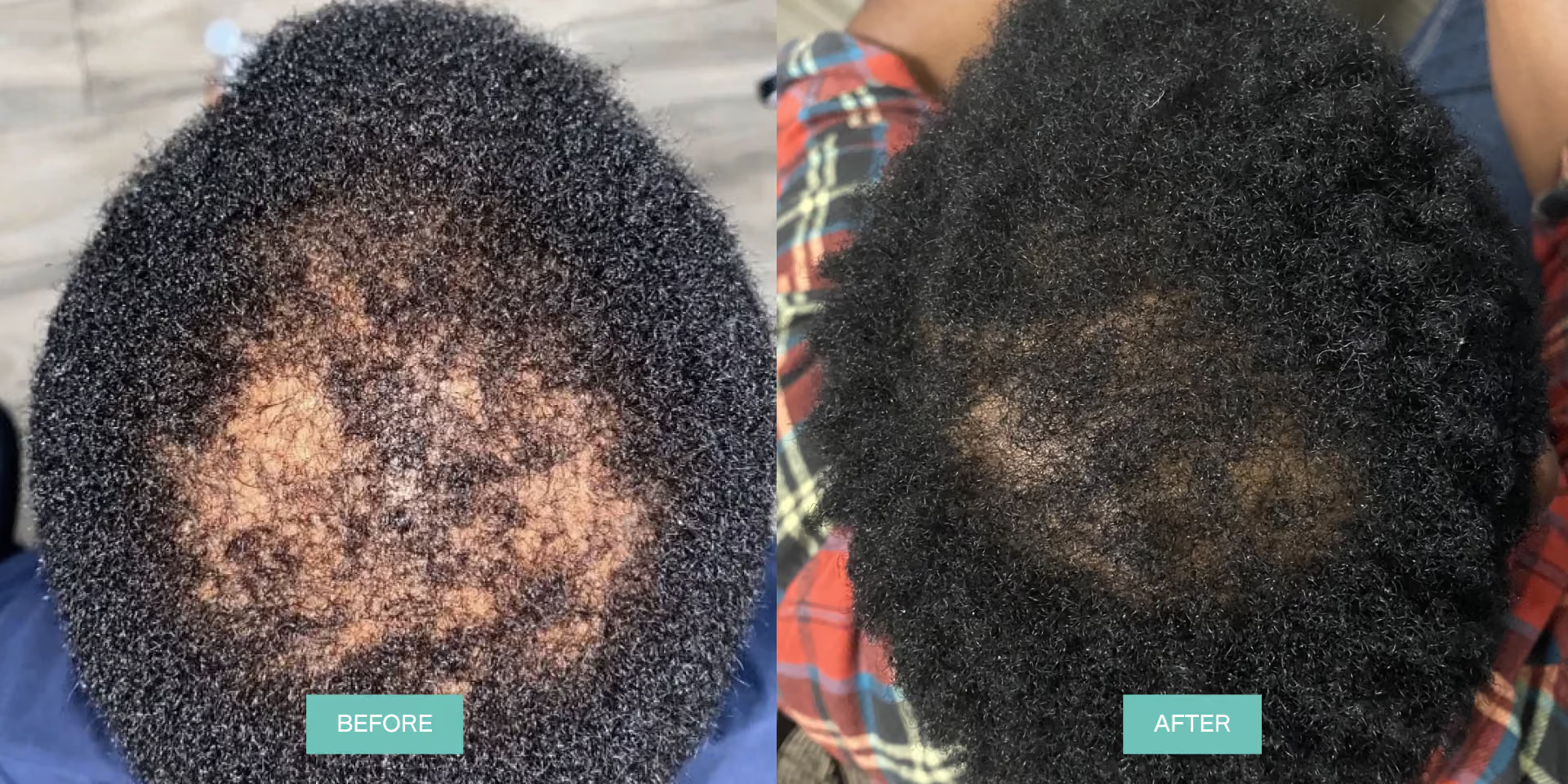
Platelet-rich plasma (PRP) is a product of your own blood that is extracted through a very careful process that involves centrifuging whole blood to separate and concentrate the most useful growth factors and to use them to our advantage. When prepared and concentrated at our office, we find that this substance is an effective vehicle with which we deliver many other vital components into the treatment area. We have been using PRP as an injectable with a special combination of growth factors and exogenous and endogenous stem cells to increase the density and thickness of the hair. This provides an excellent option for both men and women that may not be ready for a hair transplant. Furthermore, many patients choose to have our treatments to help maintain any previous hair loss surgery.
Exosome Therapy
Hair loss is a natural part of aging. Over time, hair follicles lose the ability to produce melanin and enough keratin to sustain thick and continuous hair growth. For men, hair loss is further exacerbated by testosterone. There are several ways to treat hair loss, including hair serums, which contain local testosterone-blockers, autologous injections, and lasers. All of these treatments have proven to be effective for restoring hair, especially if done multiple times.
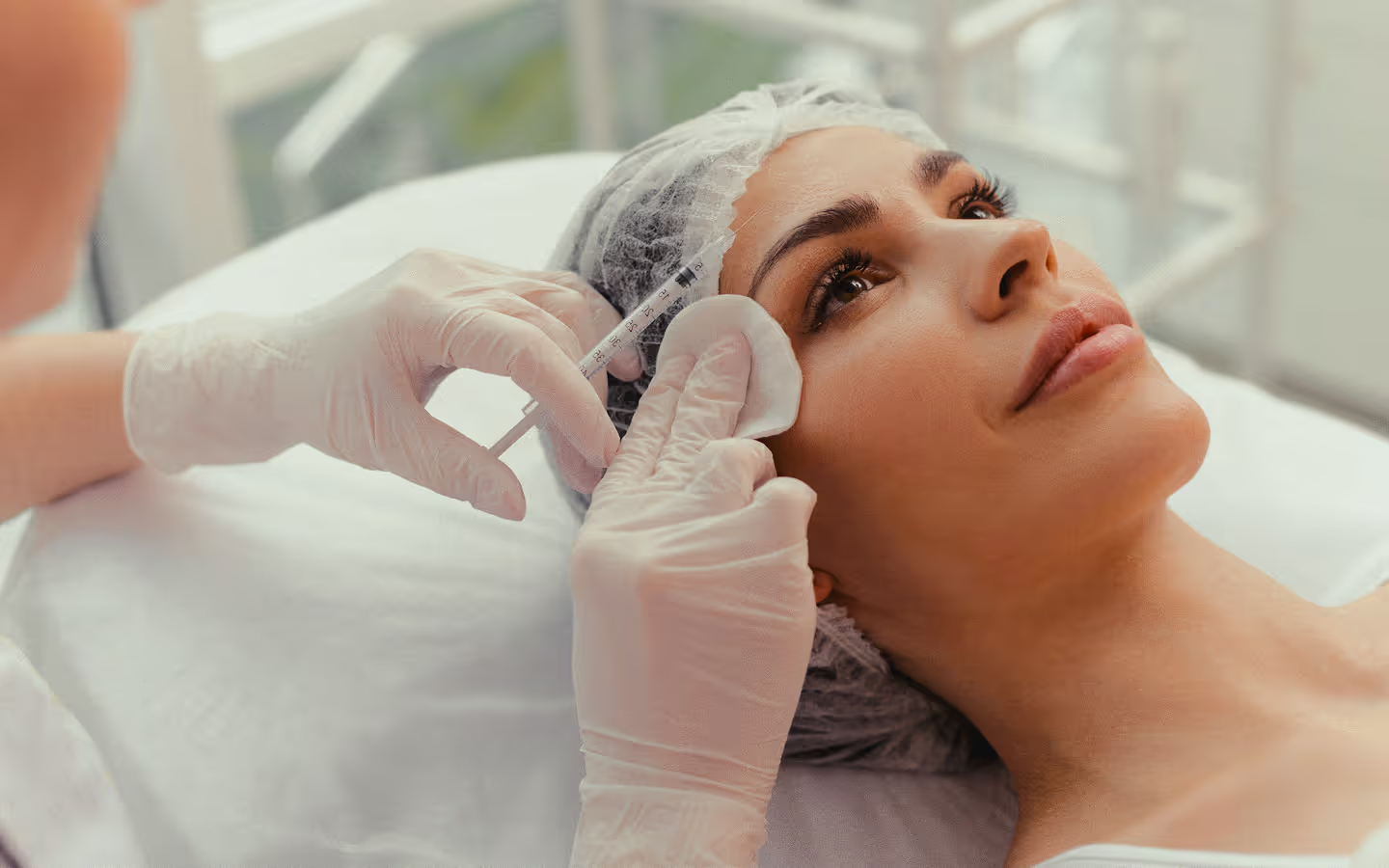
More recently, however, the latest cutting-edge research has shown that exosomes may be the future for hair regeneration. Exosomes are extracellular vesicles packed with thousands of different signaling factors, all of which facilitate healing, regeneration, and cellular growth and communication. In fact, the sheer quantity of growth factors present in exosomes is several magnitudes higher than that of autologous injections. To obtain the exosomes, human amniotic cells are harvested and extracted in a special process that isolates these signaling factors - billions of exosomes can be concentrated into one vial! Upon injection, the exosomes activate hundreds of dormant hair follicles through gene and protein regulation to start producing hair again over time
Patient Experiences That
Speak for Themselves
FUE Hair Transplant
How does FUE work?
For the follicular unit extraction (FUE) procedure, the surgeon harvests individual hair follicles from an area that is genetically resistant to hair loss and grafts it to the balding area. Hair naturally grows in groupings of one to four hairs called “follicular units.” By harvesting and grafting each follicle unit-by-unit this transplantation procedure creates a natural hair growth pattern. FUE can be used to restore hairlines, eyelashes, eyebrows, and facial hair. FUE can also be used to cover scars.
Does FUE provide permanent results?
Harvesting hair follicles in areas that are genetically resistant to hair loss confers this resistance to the balding area to which it is grafted. Therefore, FUE provides long-lasting hair regrowth. However, hair loss is a progressive process whereby the hair surrounding the grafting site begins to thin over time. Patients may need additional procedures to address the peripheral hair loss that occurs outside the original graft site.
Why get FUE with Dr. Hazany?
Dr. Hazany is an expert at FUE transplantation. He has been performing FUE hair transplants since 2008 and has pioneered tools to enhance the procedure. With his training in cosmetic dermatology, Dr. Hazany prioritizes giving his patients a natural result.
How do I know if I am a good candidate for FUE?
FUE is an ideal treatment for both men and women suffering from hair loss. Since this procedure involves transplanting hair from one area to another, an ideal candidate should have enough hair to transplant to the balding area. Typically, FUE candidates are between the ages of 25 and 65. For patients younger than 25, the nature of their hair loss may change over time.
For patients older than 65, hair from the donor site is often too thin to be transplanted. Patients who do not fall within this age range still may be good candidates for FUE. It is best to schedule a consultation to see if FUE is the right treatment for you.
How much hair can be transplanted?
When it comes to hair transplantation, the number of hairs being transferred is referred to as the number of grafts. A graft is a grouping of hairs, usually 3 or 4 follicles that are combined on a single piece of tissue. During one transplantation procedure, the maximum number of grafts that can be transplanted is 4000 and can take up to 8 hours. Anywhere from 0 to 1000 grafts will be used for light hair loss, 1000 to 2500 grafts for mild hair loss, and 2500 grafts and up for severe hair loss.
Frequently Asked Questions
Hair restoration procedures address hair loss through transplantation and advanced techniques for natural-looking results.
What causes hair loss and when should treatment be considered?
Hair loss has multiple causes including genetics, hormonal changes, stress, nutritional deficiencies, and medical conditions. Androgenetic alopecia (male and female pattern baldness) is the most common, caused by genetic sensitivity to DHT hormone. Treating hair loss early prevents further loss and often achieves better results. Early intervention with medications like finasteride or minoxidil can slow or stop hair loss. Hair transplantation works best when hair loss has stabilized. Continued hair loss after transplant may require additional procedures. Addressing the underlying cause of hair loss is important for long-term success. Dr. Hazany evaluates hair loss causes and recommends appropriate treatments. Early consultation prevents unnecessary hair loss while options remain.
What is hair transplantation and how does it work?
Hair transplantation moves hair follicles from areas of adequate hair (usually the back of the scalp) to balding areas. The procedure involves two main techniques: FUT (follicular unit transplantation) and FUE (follicular unit extraction). FUT removes a strip of scalp containing hair follicles, then individual follicles are extracted and implanted. FUE extracts individual hair follicles one at a time without removing scalp strips. FUE has no linear scar but is more time-intensive. FUT is faster but leaves a linear scar hidden by hair. Both techniques transplant healthy hair follicles to areas where they'll grow. Transplanted hair grows naturally as it retains original genetics. Multiple transplant sessions may be needed for significant hair loss. Dr. Hazany selects the appropriate technique based on hair loss extent and patient factors. Results take months to appear as transplanted hair goes through growth cycles.
What is the recovery like after hair transplantation?
Hair transplantation recovery varies slightly by technique but generally involves minimal downtime. Small scabs form at transplant sites, typically falling off within 7-10 days. The linear scar from FUT (if performed) heals within 2 weeks. Transplanted hair sheds within 2-3 weeks after transplantation—this is normal and expected. Hair regrowth begins within 2-3 months from transplant sites. Most patients can return to work within 3-5 days. Hair washing resumes gently after 7-10 days. Strenuous exercise and heavy lifting should be avoided for 2-3 weeks. Hats can be worn after initial healing to conceal appearance. Results gradually improve over 6-12 months as transplanted hair grows. Final results appear 12-18 months after transplant. Most patients find the gradual improvement process worthwhile. Dr. Hazany provides detailed post-operative care instructions.
Are hair transplant results permanent?
Hair transplant results are essentially permanent because transplanted hair retains genetics of the donor area. Hair follicles from the back of the scalp are genetically resistant to DHT hormone that causes male pattern baldness. Transplanted hair continues growing for a lifetime. However, native hair in the recipient area may continue thinning from ongoing hair loss. The contrast between transplanted hair and thinning native hair may become noticeable over time. Some patients require additional transplants to address ongoing hair loss. Medications like finasteride can slow further hair loss. Additional transplants can be performed if needed. Most patients are satisfied with permanent transplanted hair results. Dr. Hazany discusses realistic expectations about transplant permanence and possible future hair loss.
How many hair transplants are needed for significant hair loss?
The number of transplants needed depends on hair loss extent, density goals, and donor hair availability. Mild to moderate hair loss may be addressed with one transplant session. Extensive hair loss may require multiple sessions spaced 3-6 months apart. Each session can transplant a limited number of follicles without overdepleting the donor area. Sessions are spaced to allow healing between procedures. Multiple sessions allow natural appearance development as density gradually increases. Some patients achieve satisfactory results with one session while others need 2-4 sessions. Limitations in donor hair availability may restrict total transplantable hair. Dr. Hazany evaluates hair loss extent and develops appropriate treatment plans. Realistic discussion of achievable density is important during consultation.
What makes hair transplant results look natural?
Natural-looking hair transplants depend on meticulous surgical planning and technique. Hair direction and angle of transplanted follicles must match native hair for natural appearance. Hairline design requires artistic skill to create natural-looking edges. Hair density should be built gradually to appear natural rather than obviously transplanted. The hairline typically looks better when slightly lower than the original—an unnatural high hairline is obvious. Strategic placement of slightly coarser or lighter follicles along the hairline creates soft edges. Spacing follicles to avoid 'pluggy' appearance is important. Experienced surgeons like Dr. Salar Hazany understand hair transplant aesthetics. Dr. Hazany's artistry produces results appearing as natural hair growth. Before-and-after photos demonstrate natural-looking results.
Can hair transplants be combined with other hair loss treatments?
Yes — hair transplantation is often combined with PRP, exosome therapy, and medications like finasteride or minoxidil for the best results. The transplant restores hair to bald areas, while these therapies strengthen and preserve surrounding native hair to slow future loss. Dr. Hazany frequently layers these treatments into one long-term plan.