




%201.avif)



Active Acne + Acne Scarring Treatment
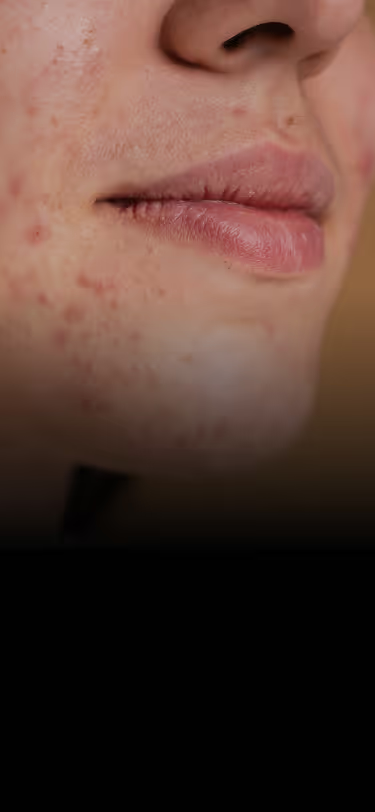
Active Acne & Scarring Specialist in Los Angeles
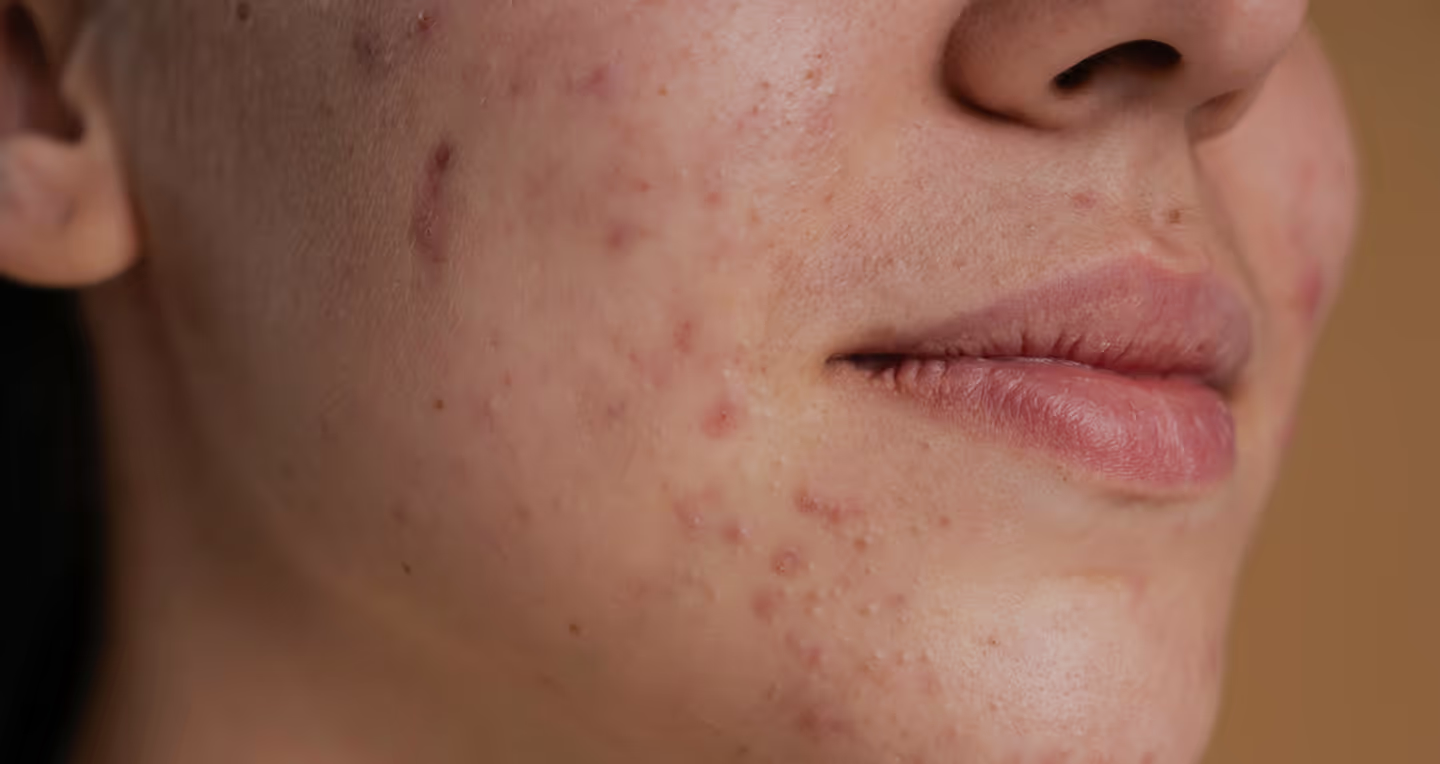
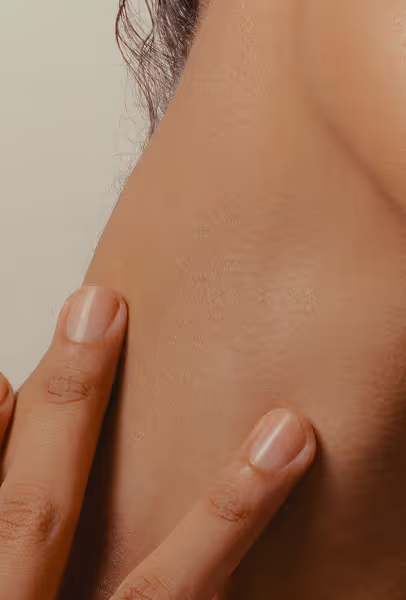
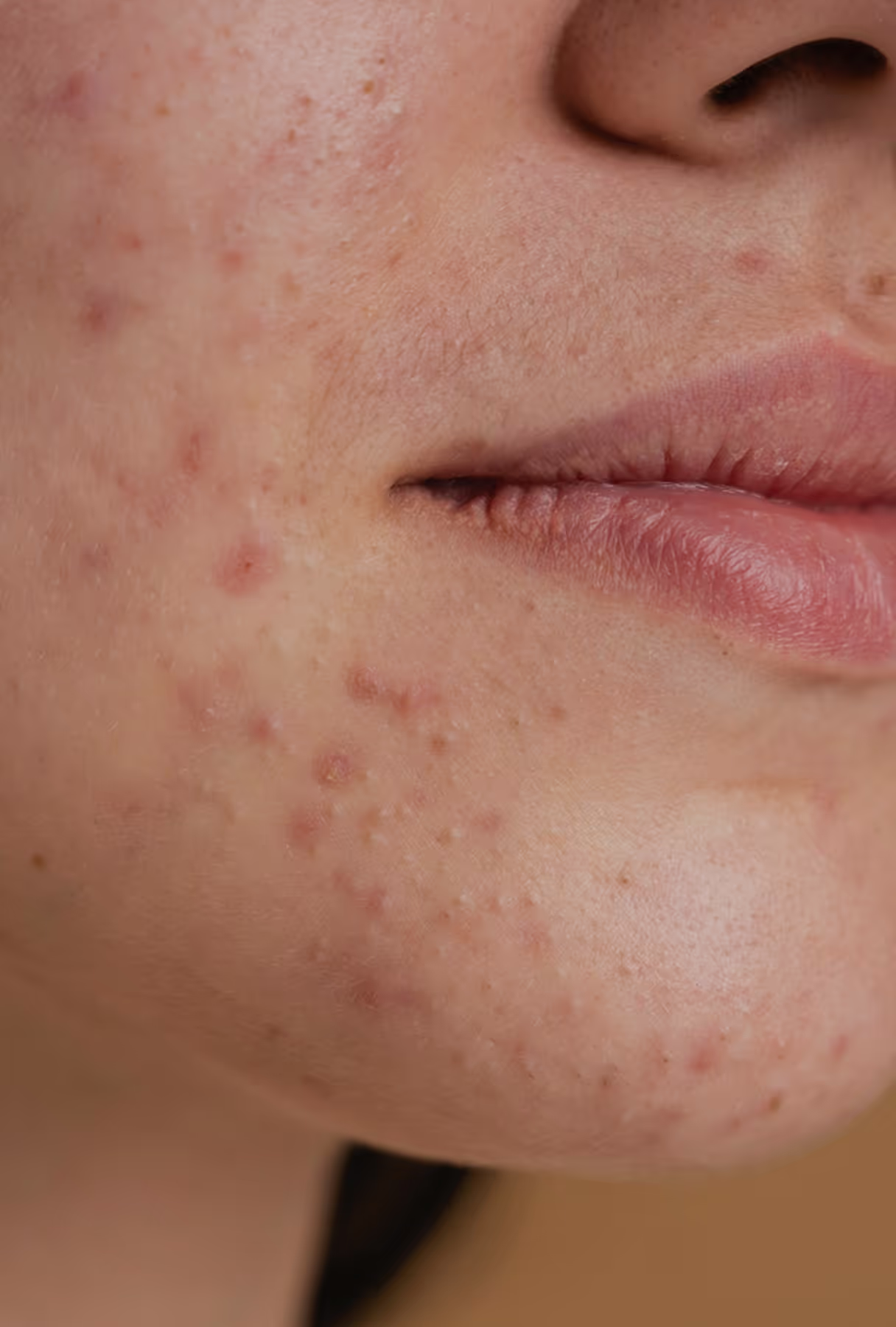
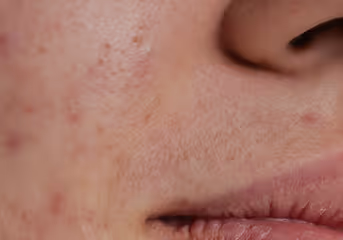
Are you looking for the best acne and acne scar treatment in Los Angeles? Dr. Hazany has devoted much of his medical career to understanding acne and acne scarring treatment intricacies. Dr. Hazany specializes in face, back and shoulder acne treatment, in addition to acne outbreaks on other parts of the body.
He empathizes with the emotional distress that his patients experience with acne and acne scarring. Dr. Hazany can help you overcome your acne and acne scarring and restore your self-confidence.
Dr. Hazany is a fellowship-trained Mohs surgeon in Beverly Hills with world-class training and more than 25,000 successful surgeries.

Patient Experiences That
Speak for Themselves
Frequently Asked Questions
Comprehensive acne and acne scarring treatment options in Los Angeles addressing active breakouts and long-term scar healing.
What is the relationship between untreated acne and scarring?
Acne scarring occurs when severe acne damages the skin's deeper layers during healing. Deep, inflammatory acne lesions—particularly cysts and nodules—are most likely to scar. The inflammation and infection destroy collagen, creating permanent indentations or raised scars. Early, aggressive treatment of acne prevents severe inflammation and reduces scarring risk. Picking or squeezing acne lesions significantly increases scarring likelihood by traumatizing tissue. Some individuals are genetically predisposed to scarring more easily than others. Acne on the back and chest scars more readily than facial acne. The longer severe acne persists, the greater the cumulative scarring risk. Dr. Hazany emphasizes that treating acne early prevents the scarring many patients later regret. Even for patients with existing severe acne, prompt treatment prevents additional scarring while allowing treatment of existing scars.
Why do some people scar from acne while others don't?
Scarring susceptibility involves both the severity of acne and individual healing characteristics. Severe, inflammatory acne is more likely to scar than mild breakouts. Genetics significantly influence scarring tendency; some families are prone to hypertrophic or keloid scarring. Skin type matters—darker skin types are more prone to postinflammatory hyperpigmentation and keloid scarring. Age may influence scarring, with some research suggesting teenage acne is more likely to scar. Hormonal factors affecting acne severity indirectly influence scarring risk. Individual healing capacity varies, with some people forming more robust scar tissue. Picking or manipulating acne lesions substantially increases scarring likelihood. Delayed acne treatment allows more opportunity for deep inflammation and subsequent scarring. Understanding individual risk factors helps Dr. Hazany and his team provide personalized acne management focused on preventing scarring.
Are acne scars permanent or can they be improved?
While acne scars can't be completely erased, they can be significantly improved with appropriate treatment. The depth and type of scar determine what improvement is possible. Shallow scars often respond well to resurfacing treatments like laser or chemical peels that remodel the skin surface. Depressed scars (atrophic scars) can be improved through subcision, which releases tethering beneath scars, allowing skin to rise. Combination approaches using multiple treatments on the same scarred areas often yield superior results. Some scars improve with time as collagen naturally remodels, though this is a slow process. Professional treatment accelerates improvement compared to waiting for natural healing. Dr. Hazany has extensive experience treating even severe acne scarring and achieves impressive improvements. Results vary by individual and scar characteristics, but most patients see substantial aesthetic improvement. Treatment results often exceed patients' expectations with appropriate technique and persistence.
What is the best approach to treating active acne to prevent scarring?
The best scarring prevention is treating active acne effectively and promptly. Early treatment prevents progression to severe, scarring-prone forms of acne. Topical retinoids reduce inflammation and promote healing while preventing clogging. Benzoyl peroxide reduces bacterial colonization and inflammation. Oral antibiotics address bacterial infection and inflammation for moderate acne. Hormonal treatments like oral contraceptives help hormonally-driven acne in women. For severe acne, isotretinoin is highly effective and prevents scarring by curing acne completely. Regular follow-up ensures acne stays controlled and doesn't progress. Avoiding acne manipulation (squeezing, picking) prevents additional scarring trauma. Sun protection allows optimal healing without hyperpigmentation complications. Dr. Hazany emphasizes treating each patient's acne based on severity and root causes. Appropriate treatment prevents scarring far better than treating existing scars.
How does acne scarring differ between facial and body areas?
Acne scarring differs significantly between facial and body locations due to different healing characteristics and skin thickness. Facial acne tends to cause depressed scars (indentations) that are visible but typically less severe than body scarring. Body acne, particularly on the back and chest, more commonly results in hypertrophic or keloid scars that are raised and often more disfiguring. Body scars tend to be deeper and more extensive due to thicker skin and different healing patterns. Darker skin types are at higher risk for postinflammatory hyperpigmentation and keloid scarring on the body. Facial scarring is often easier to camouflage with makeup or hairstyles. Body scars are often more visible when exposed due to larger affected areas. Treatment approaches may differ; what works well for facial scarring might need modification for body areas. Dr. Hazany's experience treating scarring on all body areas informs individualized treatment planning.
What treatment options are available for severe acne scarring?
Severe acne scarring benefits from combination treatment approaches using multiple modalities. Subcision is particularly effective for depressed scars, releasing tethering beneath scars and allowing elevation. TCA CROSS (trichloroacetic acid chemical reconstruction of skin scars) works well for ice-pick scars by chemically remodeling scar tissue. Laser treatments, including fractional lasers and CO2 lasers, resurface scarred skin and stimulate collagen. Microneedling triggers collagen remodeling and can be combined with radiofrequency energy for enhanced results. Dermal fillers provide temporary improvement while other treatments stimulate collagen. Combination approaches using several treatments sequenced over months often yield superior results compared to single treatments. Dr. Hazany's extensive experience with acne scarring includes innovative approaches and sequencing of treatments. The most severe scars improve through this comprehensive, combination approach.