




%201.avif)



Acne Scar
Removal & Treatment


You Deserve Clear Skin
Are you looking for the best acne and acne scar treatment in Los Angeles? Dr. Hazany has devoted much of his medical career to understanding acne and acne scarring treatment intricacies. Dr. Hazany specializes in face, back and shoulder acne treatment, in addition to acne outbreaks on other parts of the body.
He empathizes with the emotional distress that his patients experience with acne and acne scarring.
Dr. Hazany can help you overcome your acne and acne scarring and restore your self-confidence.
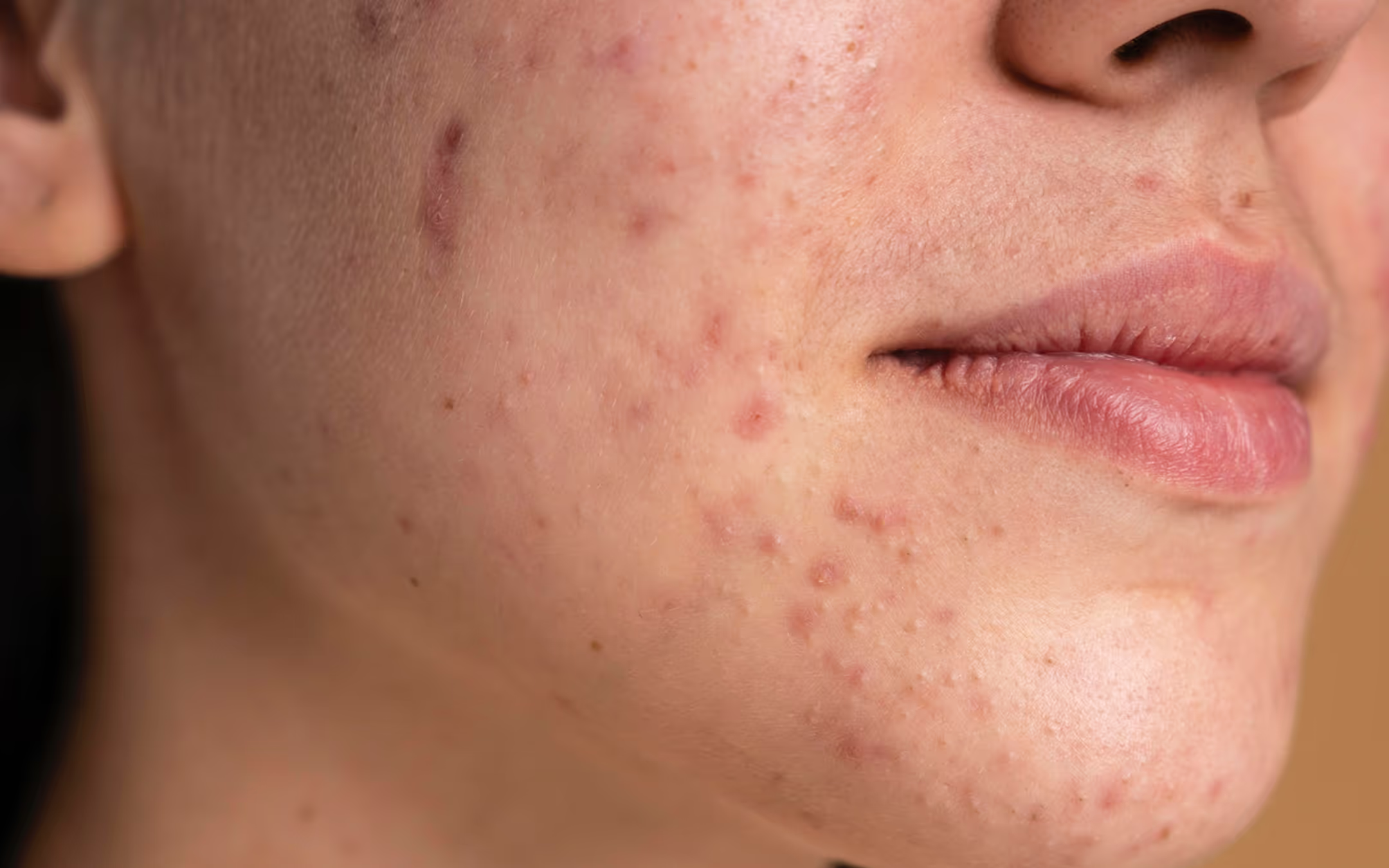
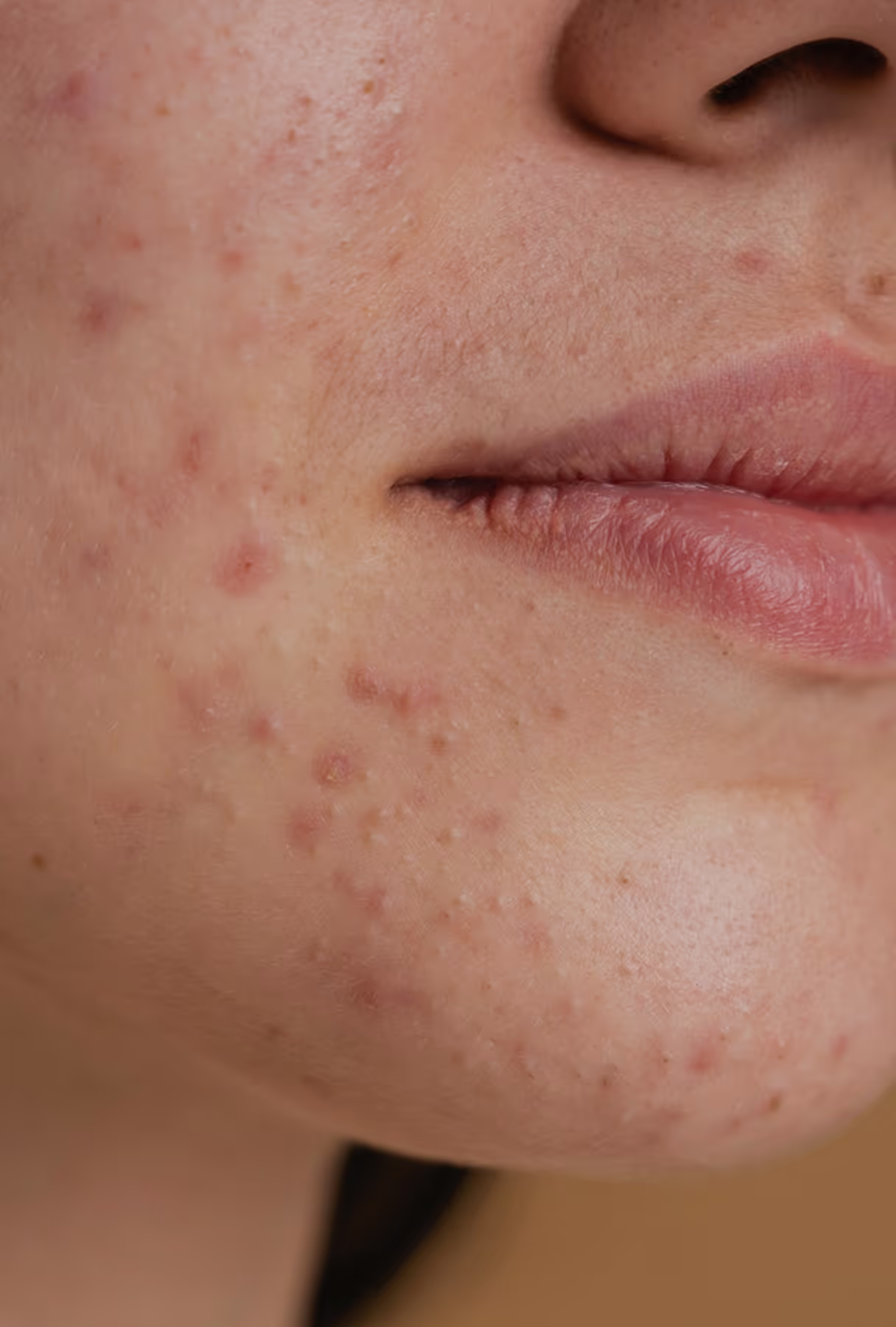
What is Acne Scarring?
Acne scarring is the permanent indentations and texture changes in the skin that results from active acne. Acne “scarring” does not refer to the temporary brown and red marks that appear during the early stages of acne healing. Acne scarring refers to the more permanent skin changes that result from severe active acne.


Why Acne Leaves Scars
When deep breakouts damage healthy skin and disrupt its ability to heal properly,
long-lasting scars can form — often on the face, chest, and back.
Severe Acne Damages Skin Tissue
Deep, pus-filled cysts can injure healthy tissue beneath the skin’s surface, leading to long-term marks.
Improper Healing Causes Scars
When the skin doesn’t regenerate normally during healing, permanent acne scars form in those damaged areas.
Excess Collagen Can Create Raised Scars
Sometimes the body produces too much scar tissue, resulting in thick, lumpy scars like hypertrophic or keloid scars.
How to Treat and Remove Acne Scars?


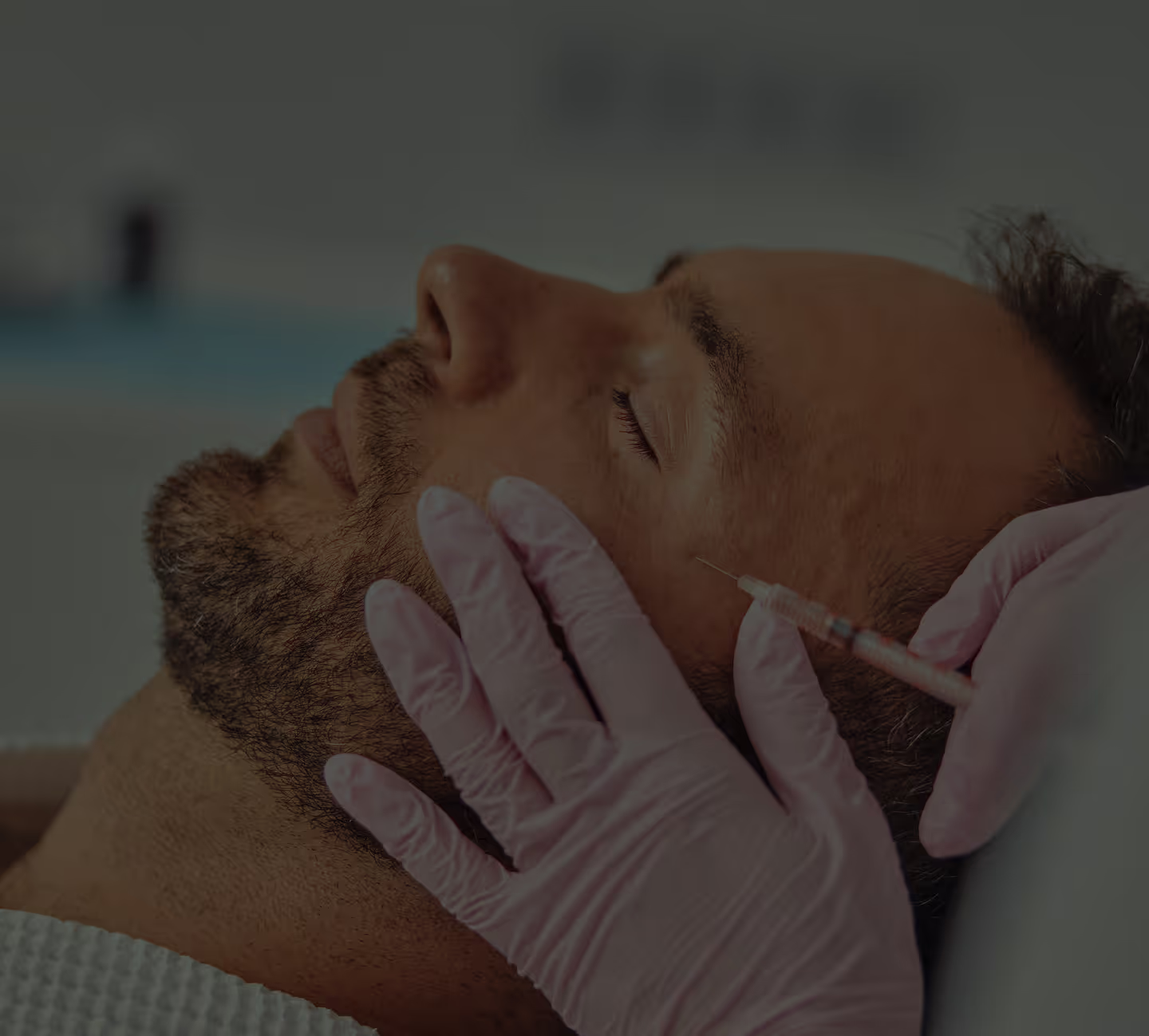
TCA Cross
When deep breakouts damage healthy skin and disrupt its ability to heal properly, long-lasting scars can form — often on the face, chest, and back.
Subcision
When deep breakouts damage healthy skin and disrupt its ability to heal properly, long-lasting scars can form — often on the face, chest, and back.
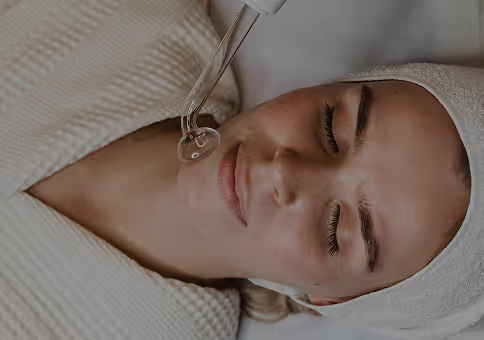
Laser
When deep breakouts damage healthy skin and disrupt its ability to heal properly, long-lasting scars can form — often on the face, chest, and back.
Patient Experiences That
Speak for Themselves
Frequently Asked Questions
Comprehensive acne scar removal treatments including laser, subcision, and chemical peels for significant scar improvement.
Why is treating acne scars important?
Acne scars significantly impact quality of life, affecting self-esteem and psychological well-being beyond the physical appearance. Many patients delay seeking scarring treatment despite the emotional impact. Early treatment prevents additional scarring from ongoing or recurring acne. Acne scars can become more pronounced with age as skin loses elasticity. Treating scars while patients are younger optimizes outcomes through better skin healing. Scars can interfere with professional success and social confidence. Skin cancer risk increases with certain scar types due to altered skin integrity. Functional issues can occur if scars impair facial movement or create contractures. Modern treatment options have become increasingly effective, making treatment worthwhile. Dr. Hazany emphasizes that treatment can significantly improve even severe scarring. Many patients report that scar treatment has transformative effects on confidence and quality of life.
What is subcision and how does it treat acne scars?
Subcision is a procedure that treats depressed acne scars by releasing the fibrous tethering beneath scars. Using a sharp needle or specialized instrument, the dermatologist separates scar tissue from underlying tissue. This release allows the scar to rise toward normal skin level. Subcision is particularly effective for rolling and depressed scars with defined edges. The procedure stimulates collagen production in the released space, improving long-term results. Subcision is performed under local anesthesia with minimal discomfort. Results develop over weeks to months as collagen remodels and new collagen is laid down. Bruising and swelling are common but temporary complications. Multiple subcision treatments may be needed for optimal results. Combining subcision with other treatments like laser or fillers enhances results. Dr. Hazany's meticulous technique in subcision produces excellent outcomes for depressed scars.
How effective is laser treatment for acne scars?
Laser treatments are highly effective for improving acne scars through multiple mechanisms. Fractional CO2 lasers vaporize the scar surface while heating deeper layers, triggering collagen remodeling. Fractional erbium lasers work similarly with potentially less downtime. Laser treatments create controlled injury stimulating wound healing and new collagen production. Laser treatments reduce scar depth, improve texture, and promote blending with surrounding skin. Results appear gradually as collagen remodels over months following treatment. Multiple laser sessions spaced months apart provide cumulative benefits. Post-laser downtime varies with laser type, ranging from minimal to 7-10 days depending on aggressiveness. Combination with other treatments like subcision or fillers enhances results. Proper aftercare including sun protection is essential for optimal outcomes. Dr. Hazany selects laser wavelengths and settings based on scar characteristics and patient factors.
What is TCA CROSS and how does it treat ice-pick scars?
TCA CROSS (trichloroacetic acid chemical reconstruction of skin scars) is a specialized technique for treating ice-pick scars. A concentrated solution of trichloroacetic acid is carefully applied into individual ice-pick scars using a wooden applicator. The chemical causes controlled destruction and resorption of scar tissue. The scars then heal and often fill partially or completely through remodeling. TCA CROSS is particularly effective for ice-pick scars because of their deep, narrow configuration. Multiple treatments spaced months apart provide cumulative improvement. Results develop as the body remodels scar tissue over weeks to months. Temporary crusting and redness occur post-procedure but typically resolve within days. TCA CROSS can be combined with other scar treatments for comprehensive improvement. The procedure requires careful application to avoid spreading TCA to surrounding skin. Dr. Hazany's experience with TCA CROSS produces excellent results for ice-pick scarring.
Can dermal fillers improve acne scars?
Dermal fillers provide temporary improvement for depressed acne scars by filling the indentation and raising the scar level. Hyaluronic acid fillers are commonly used due to their safety and gradual absorption. Results are immediately visible but gradually diminish as the filler absorbs. Fillers work best as temporary solutions while stimulating treatments like laser or subcision create permanent improvement. Combining fillers with other treatments can enhance results during the remodeling period. Semi-permanent and permanent fillers exist but carry higher complication risks. Fillers are useful for patients seeking quick improvement before more aggressive treatments. Touch-up treatments are necessary every 6-12 months to maintain results. Multiple filler treatments over time can lead to overcorrection if not carefully managed. Dr. Hazany uses fillers strategically as part of comprehensive scar treatment plans.
How long does acne scar treatment take and what are results?
Acne scar treatment timelines depend on scar severity and treatment approach. Single treatments produce immediate improvement but incomplete results. Combination approaches using multiple treatments spaced weeks to months apart produce superior outcomes. Most patients see 50-75% improvement in significant scarring with appropriate combination treatment. Very severe scarring may reach 75-90% improvement with persistence. Results develop gradually over months as collagen remodels following treatments. The best results typically appear 3-6 months after final treatment as collagen remodeling completes. Some scars improve further even years after treatment through continued remodeling. Perfect scar elimination is often unrealistic, but dramatic improvement is achievable. Patient satisfaction is typically high given the often severe starting point. Dr. Hazany's comprehensive approach to scarring produces results that exceed many patients' expectations. The investment in multiple treatments typically yields results patients feel are worthwhile.