




%201.avif)



Minimally-Invasive Mini Face Lift


What is a Blepharoplasty?
Dr. Hazany has performed thousands of surgeries on the eyelids, the thinnest and most delicate skin area on the body. When it comes to your eyes, you need the best blepharoplasty surgeon with fine-motor experience to ensure a safe and beautiful result in the most sensitive area on your face.
Blepharoplasty, also known as eye lift, is a procedure that aims to correct eyelid defects and deformities. By tightening loose skin around the eyes, this procedure improves the patient's line of sight and restores eyelid functionality. In addition to functional enhancement, this procedure accentuates the eyes and enhances the face's overall appearance.
Dr. Hazany is an expert in four different types of blepharoplasty: non-surgical upper blepharoplasty, non-surgical lower blepharoplasty, surgical upper blepharoplasty, and surgical lower blepharoplasty.
Decrease jowling
Decrease prominence of nasolabial folds and marionette lines
Raise and restore drooping cheeks
Restore cheek fullness and volume
Tighten loose neck skin and vertical bands
Restore jawline definition
What is the Difference Between a Full and Mini Face Lift?
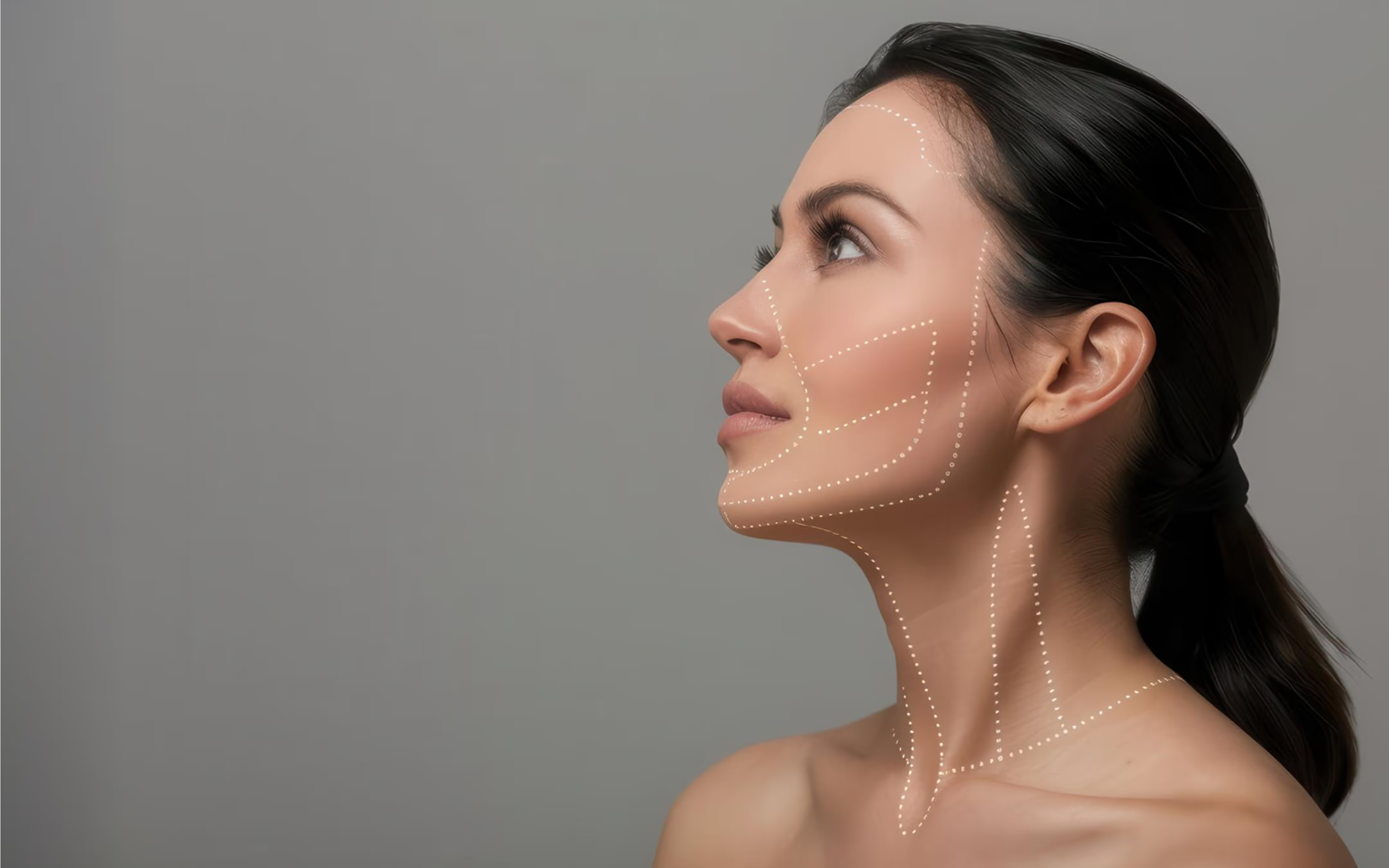
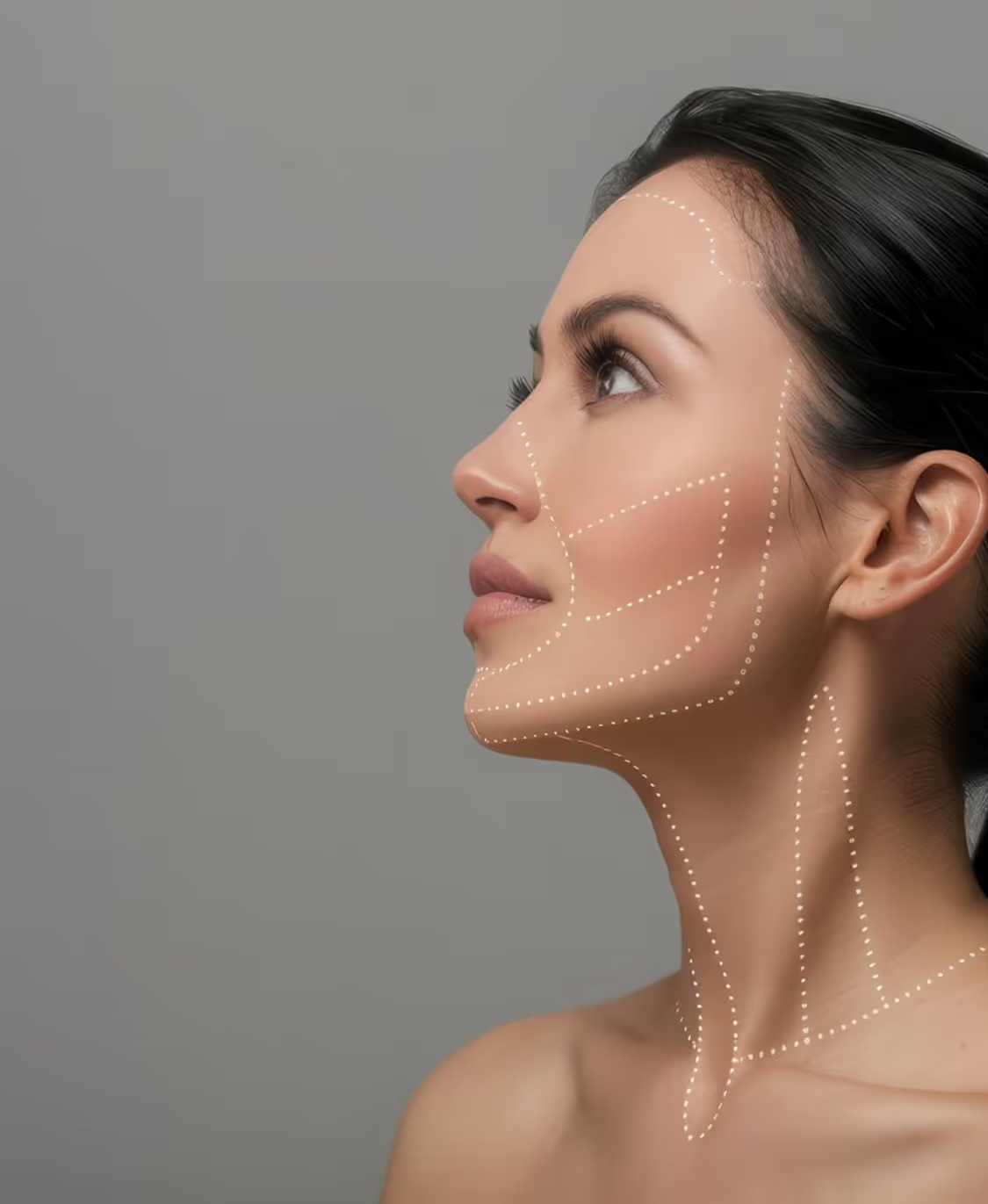
Unlike a full facelift, which tightens the upper parts of the face, a mini face lift focuses on the mid-face, lower face, and neck. A mini face lift reduces and eliminates the development of jowls, wrinkles, and creases in these areas.
Because a mini face lift is less invasive than a full facelift, Dr. Hazany uses local anesthesia (i.e, “twilight” sedation) or a mild oral sedative rather than general anesthesia, which can be unnecessarily risky. After sedation, the surgeon makes small incisions under the chin and behind the ears to remove excess skin and tighten facial muscles.


What is the Downtime
for a Mini Face Lift?
After one week, facial swelling should decrease and incisions should heal enough to allow the patient to resume normal activity. The timeline for resuming more rigorous activities may vary. It is important to discuss post-operative instructions and healing timelines with your surgeon in your consultation.

How Long Do Mini Face Lift Results Last?
The longevity of your mini facelift results depends on the extent of your procedure and your lifestyle after the surgery. If you have a more extensive procedure, the results may last longer. Additionally, maintaining a healthy, nutritious diet and avoiding tobacco consumption should increase your mini facelift's longevity. Schedule a consultation with Dr. Hazany to determine how to optimize your mini facelift results.
How Much Does a Mini Face Lift
Cost in Beverly Hills?
A less invasive mini face lift costs less than a full face lift. Here in Beverly Hills, a mini face lift depends on surgeon experience and the procedure's scope, among other considerations. When it comes to your health and your face's appearance, make sure you decide on the highest quality cosmetic surgeon to achieve the best results. Seek the top surgeon who is an expert in facial rejuvenation. Schedule a consultation with Dr. Hazany to determine the best course of action for your aesthetic goals.
Patient Experiences That
Speak for Themselves
Frequently Asked Questions
Mini facelift in Beverly Hills provides facial rejuvenation for moderate sagging with shorter recovery than full facelift.
What is a mini facelift and who is it appropriate for?
A mini facelift is a less invasive surgical procedure that addresses moderate facial sagging and aging signs. The procedure is ideal for those with moderate, not severe, sagging in the jowls, cheeks, and neck area. Mini facelifts work best for patients in their 40s-60s with moderate aging but good skin elasticity. The procedure requires smaller incisions than full facelifts, reducing scarring and recovery time. Results are visible but less dramatic than full facelifts, which is appropriate for moderate aging. The procedure addresses sagging that non-surgical treatments can't adequately improve. Candidates should have realistic expectations about achieving significant rejuvenation without major surgery. Dr. Salar Hazany carefully evaluates patients to determine if a mini facelift is appropriate or if other procedures are better. The procedure is ideal for those seeking meaningful improvement without extensive surgery.
How does a mini facelift differ from a full facelift?
Mini facelifts use smaller incisions than full facelifts, typically hidden in the hairline and around the ear. Full facelifts use longer incisions allowing more extensive undermining and repositioning. Mini facelifts lift and tighten tissue in limited areas—jowls, cheeks, and possibly neck. Full facelifts address the entire face and neck. Mini facelifts have shorter recovery—typically 1-2 weeks versus 2-4 weeks for full facelifts. Scarring is less visible with mini facelifts. Full facelifts provide more dramatic results for severe sagging. Mini facelifts are less expensive than full facelifts. Mini facelifts may need revision sooner as aging continues. Full facelifts address more extensive aging changes. Dr. Hazany discusses both options during consultation, helping patients understand which is appropriate.
What is the recovery like after mini facelift surgery?
Mini facelift recovery is quicker than full facelift recovery. Swelling and bruising are typical, peaking within 24-48 hours. Most visible swelling resolves within 1-2 weeks. Stitches are removed within 7-10 days. Pain is usually mild, managed with prescribed medication. Numbness around incisions and ears is common but temporary, usually resolving within weeks. Most patients can resume work within 10-14 days. Strenuous exercise should be avoided for 3-4 weeks. Hair styling and other normal activities resume gradually. Results become apparent as swelling resolves—final results appear within 4-8 weeks. Scars fade significantly over months. The shorter recovery compared to full facelift makes mini facelift attractive to many patients. Dr. Hazany provides detailed post-operative care instructions.
How long do mini facelift results last?
Mini facelift results typically last 5-10 years or longer depending on aging rate and skin characteristics. The procedure tightens and lifts tissue, but gravity and continued aging gradually reverse some benefits. Results last longer than non-surgical treatments but not as long as full facelifts. Some patients choose revision procedures years later if they desire further rejuvenation. Sun protection and good skincare extend results. Overall facial aging continues despite the procedure. However, the rejuvenation achieved makes most patients feel the results justify the procedure even if temporary. Dr. Hazany discusses expected result longevity during consultation. Many patients are satisfied with results 7-10+ years after surgery.
Will mini facelift scars be noticeable?
Mini facelift scars are typically well-hidden due to strategic incision placement. Incisions are usually placed in the hairline and around the ears in natural creases. Hairline incisions are hidden by hair. Preauricular incisions (in front of ears) are hidden in ear creases. Postauricular incisions (behind ears) are naturally concealed. Scars fade significantly over 3-6 months as collagen remodels. Makeup can camouflage any early scars. Hair styling can hide incision locations. Experienced surgeons like Dr. Hazany place incisions to minimize visibility. Patients should expect some initial redness that fades with time. Most people cannot detect mini facelift scars once healed. The well-hidden incision locations are among mini facelift advantages.
What should I expect during a mini facelift consultation?
During consultation, Dr. Hazany examines facial structure, skin quality, and degree of sagging. Discussion of specific concerns and aesthetic goals helps guide recommendations. Examination determines if mini facelift or another procedure is appropriate. Realistic results discussion prevents unrealistic expectations. Discussion of surgical technique and incision locations occurs. Recovery timeline and post-operative restrictions are reviewed. Cost and financing options are discussed. Before-and-after photos show typical results in similar patients. Questions are encouraged and thoroughly answered. Dr. Hazany explains why mini facelift is or isn't appropriate for your situation. This comprehensive consultation helps patients make informed decisions.
How does mini facelift compare to non-surgical alternatives?
Non-surgical treatments like injectables, lasers, and radiofrequency can improve mild to moderate aging without surgery. These treatments have no downtime and lower cost. However, results are temporary and less dramatic than surgical lifting. Non-surgical treatments work best for wrinkles and texture; they cannot address significant sagging. Mini facelift addresses structural sagging that non-surgical approaches cannot adequately improve. Mini facelift provides longer-lasting results than non-surgical treatments. Mini facelift has more downtime and higher cost than non-surgical alternatives. Many patients combine mini facelift with non-surgical treatments for comprehensive rejuvenation. Some patients start with non-surgical treatments and consider surgery later. Dr. Hazany helps patients understand when surgery is necessary versus when non-surgical options suffice.