





%201.avif)



Aura 3D Facial Imaging in Beverly Hills
See your skin the way your dermatologist does, in photorealistic 3D, before a single treatment begins.


What Is Aura 3D Imaging?
Aura is a Swiss-made 3D imaging system that captures a photorealistic model of your face and neck in a single scan. Built on Hexagon reality capture technology, it uses multiple cameras and lighting units to record your features in a fraction of a second, then renders them as a rotatable three-dimensional digital twin.
It is not a filter and not a beauty app. It is a diagnostic imaging tool that measures what is actually happening in your skin, so the plan we build for you starts from data rather than an educated guess.
A standard before and after photo changes every time the lighting, angle, or your expression changes. A 3D scan does not. That consistency is what makes real progress visible.
%201.avif)
%201.avif)
How the Scan Works
The capture
You sit comfortably while the system records your face and neck. Nothing touches your skin. There is no dye, no radiation, and nothing applied beforehand. The capture itself is over in a fraction of a second.
Your digital twin appears
Within seconds, the software builds a photorealistic 3D model you can see on screen and rotate from any angle.
We read the analysis together
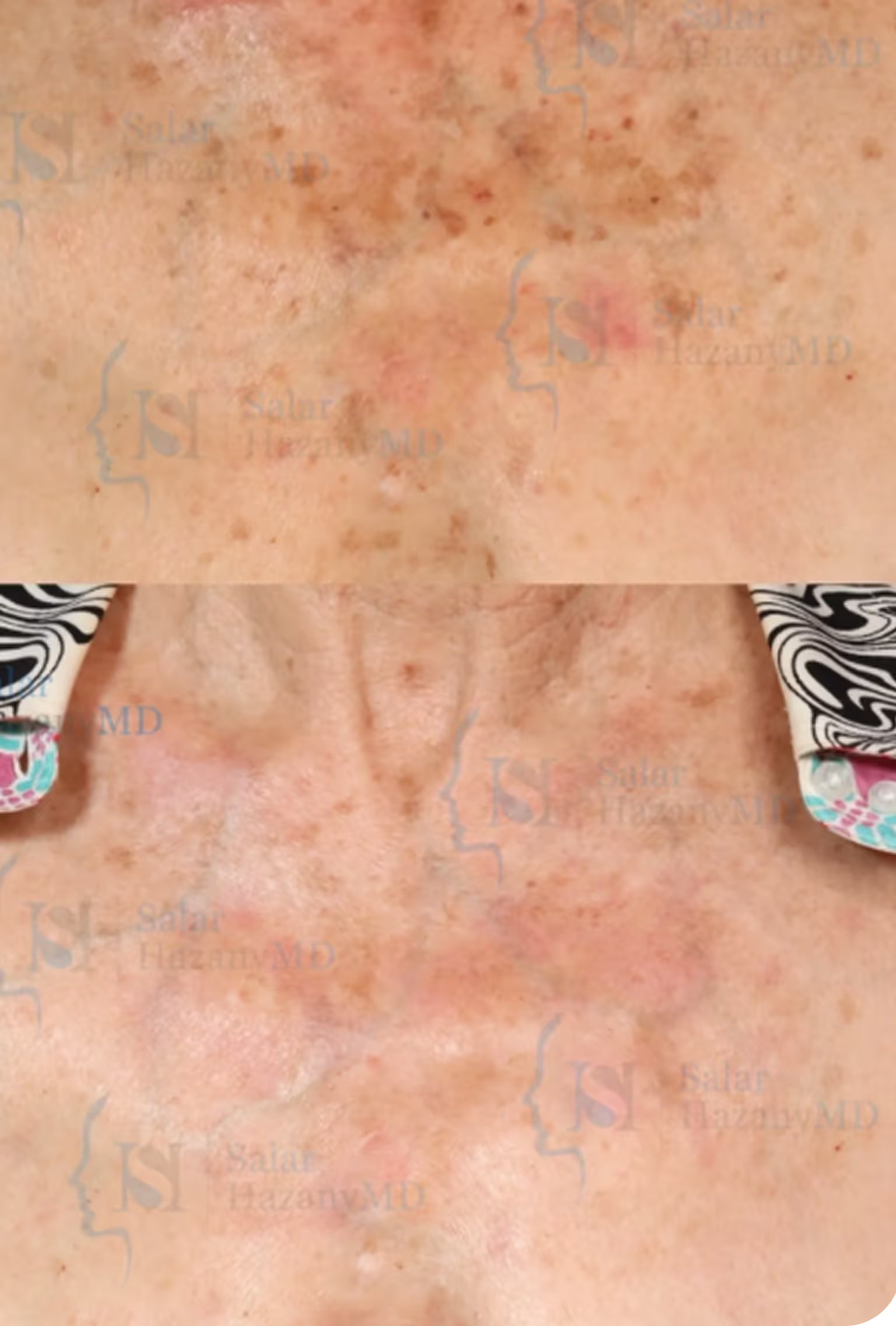
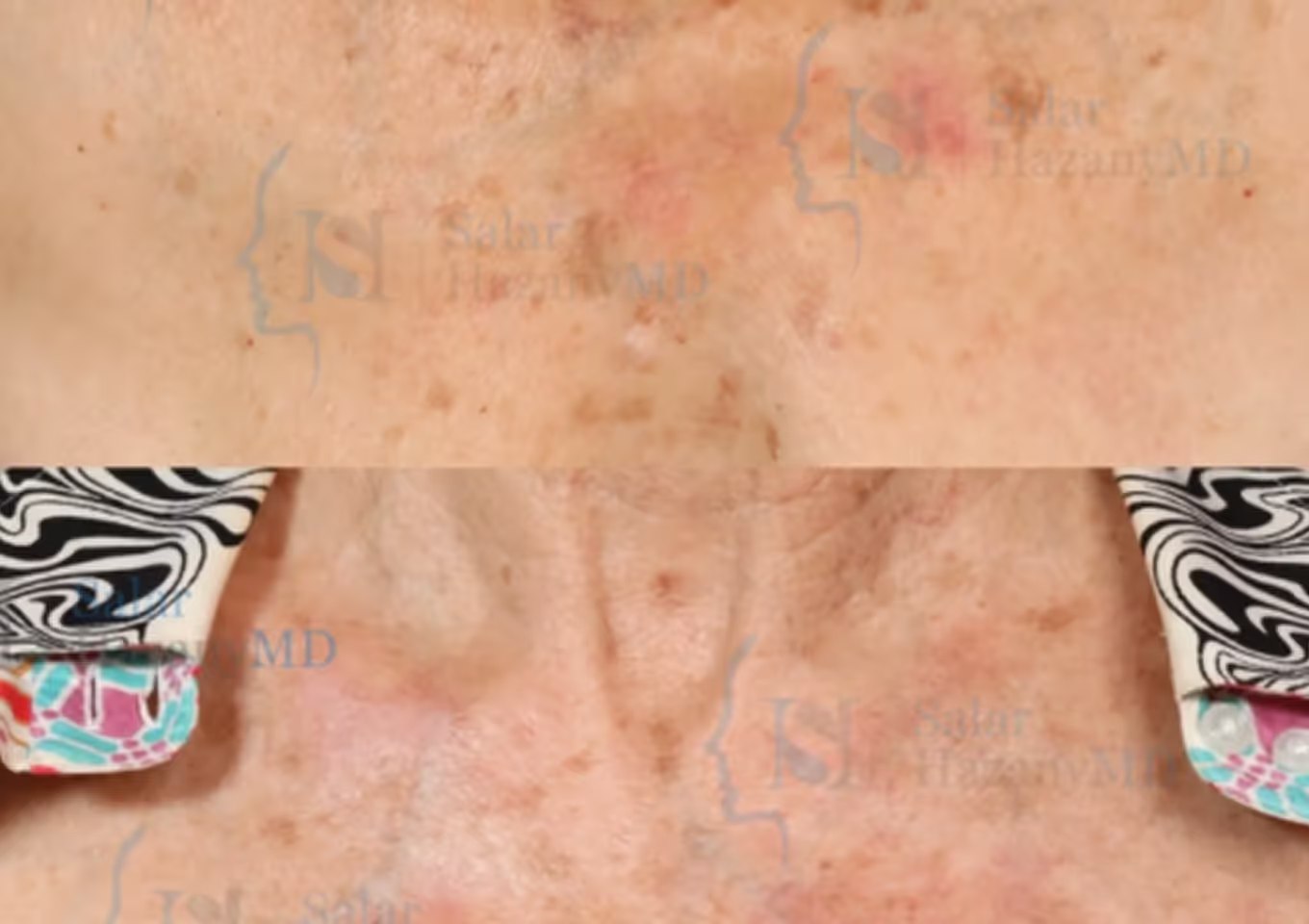
Wrinkles, pores, red areas, brown spots, and texture are mapped and scored directly on your model. Your provider can draw on the image and adjust the lighting to show you exactly what is being discussed, so you are looking at the same thing at the same time.
You leave with a record
Your scan becomes the documented baseline we measure every future visit against.
What Your Scan Reveals
Skin analysis
Wrinkles, pores, red areas, brown spots, texture, and overall skin scoring across the face and neck.
Facial measurements
Proportions, angles, and distances measured precisely rather than estimated by eye.
Volume and vectors
Objective evidence of volumetric change, with vectors that show where tissue has lifted or fallen.
Treatment simulation
Modeled outcomes across the temples, cheeks, under-eye area, chin, jawline, and submental region, so you can explore a direction before committing to it.
Before and after digital twins
Standardized comparisons that remove lighting and angle from the equation entirely.
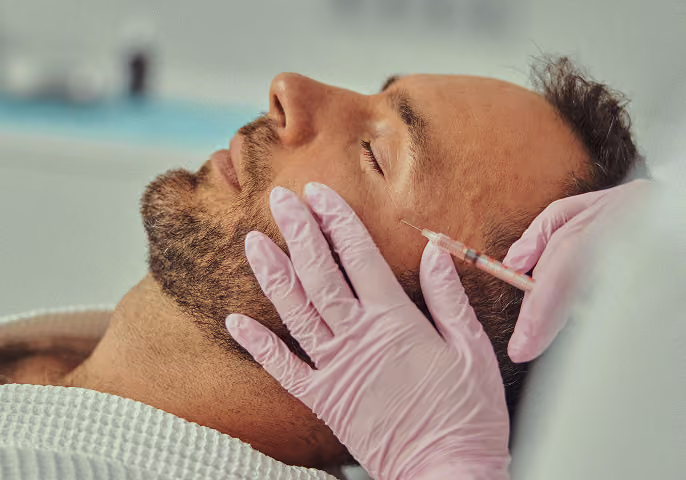


At your first consultation
We scan before we recommend. Establishing a documented baseline first means the plan addresses what your skin is actually doing, which is consistent with how this practice approaches every condition: treat the underlying cause, not just what is visible on the surface.
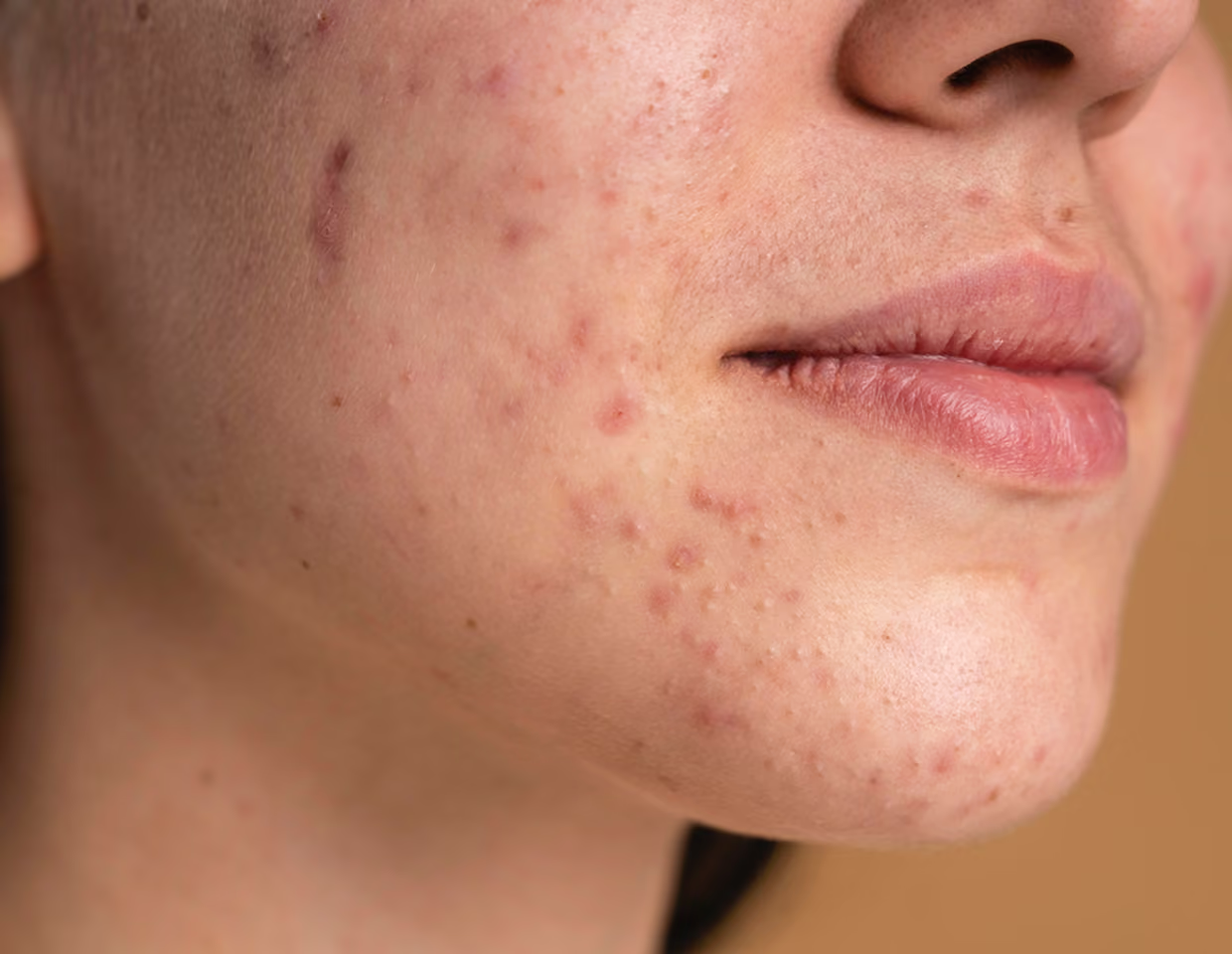
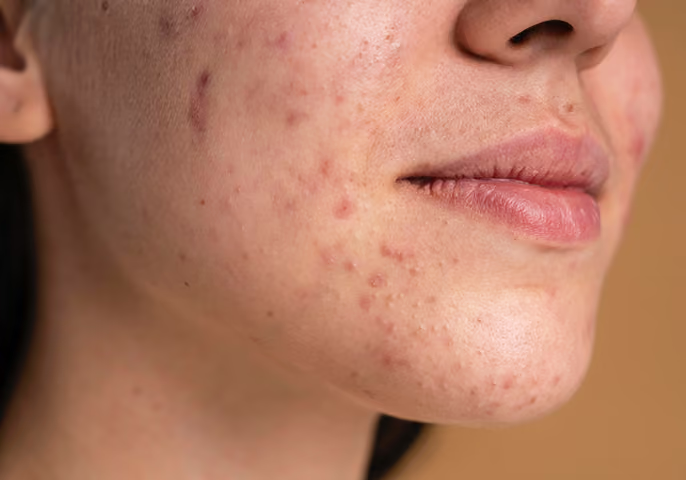
Acne scarring
Scar type drives treatment selection here. Ice pick, rolling, and boxcar scars each respond to different approaches, from TCA CROSS to subcision to laser resurfacing. Depth and texture data helps us match the method to the scar, and gives you measurable proof of progress across a treatment course that can otherwise feel slow in the mirror.
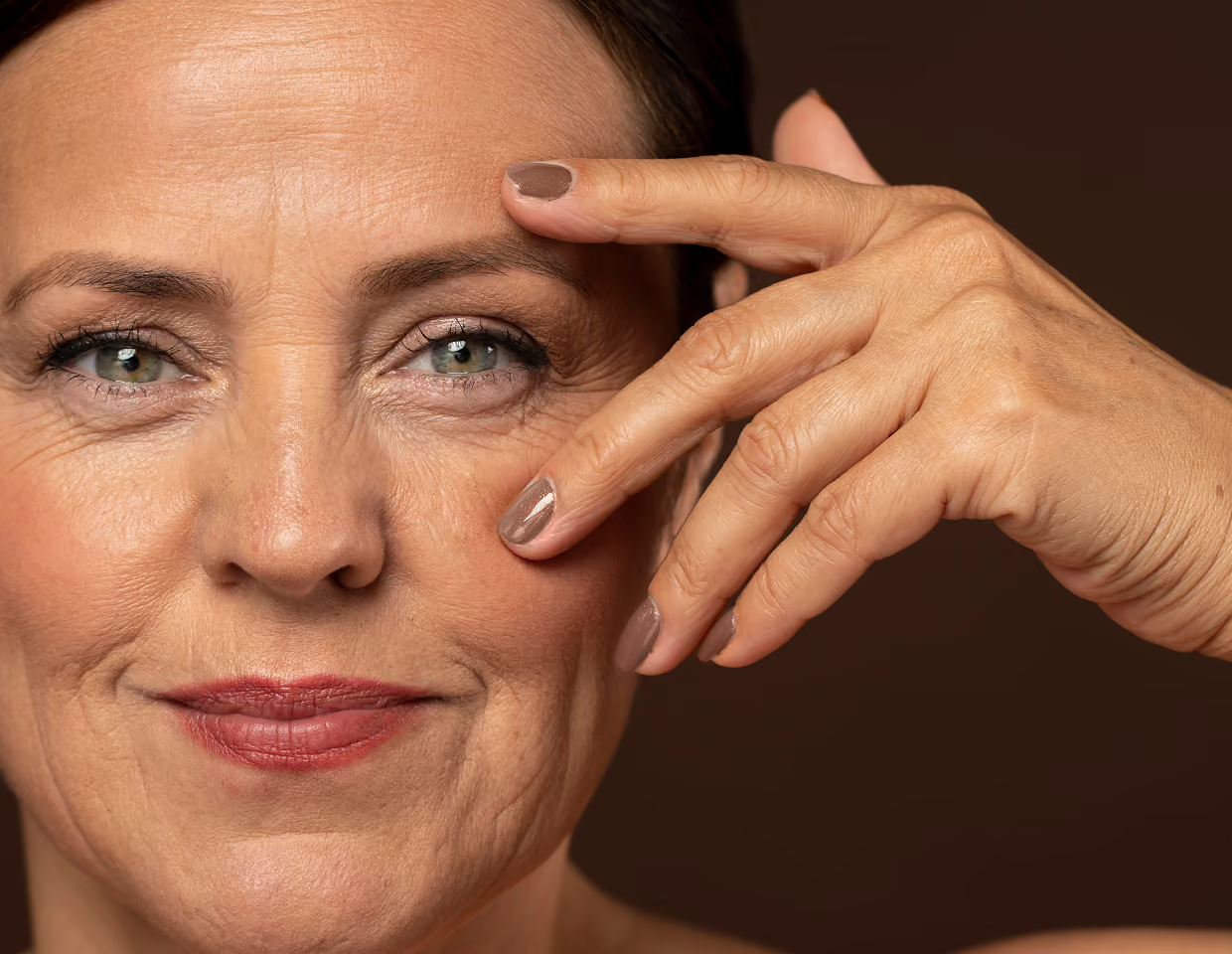
Cosmetic and anti-aging planning
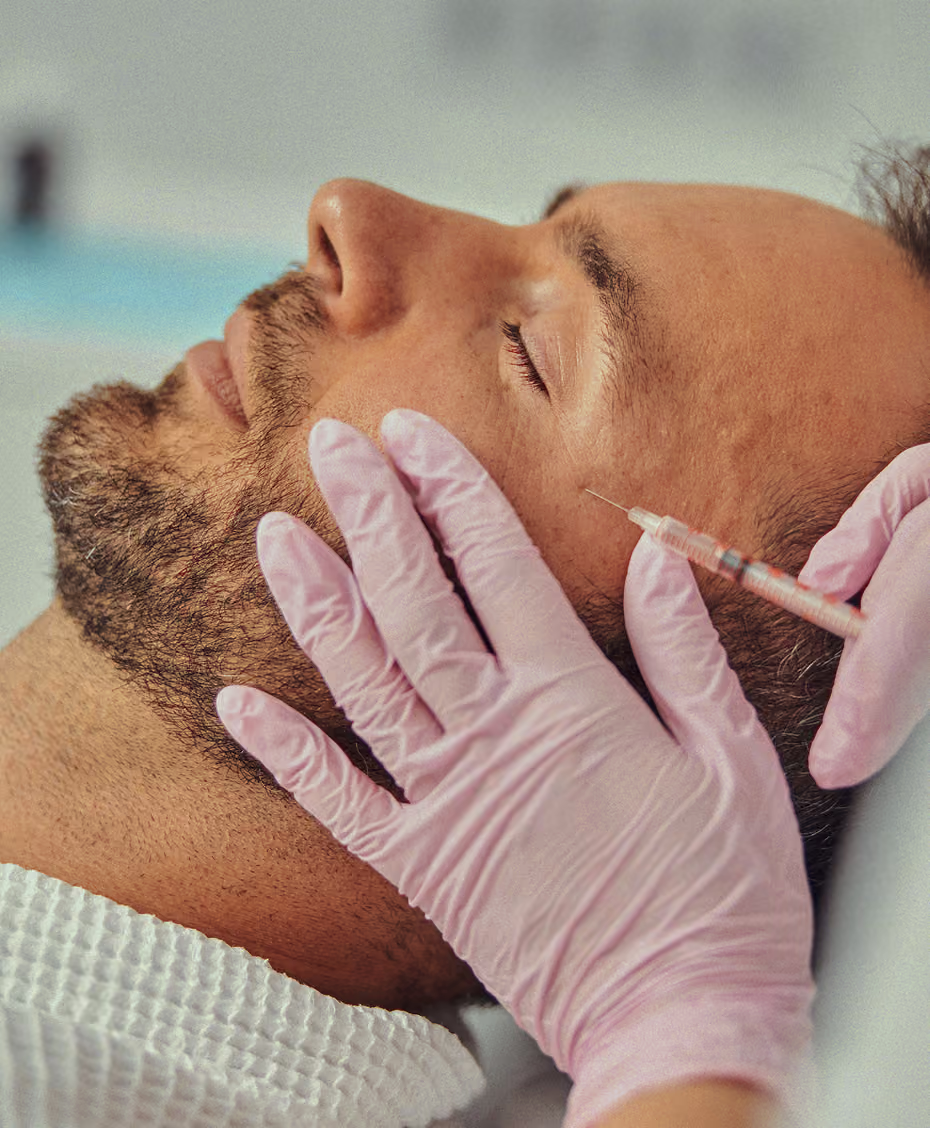
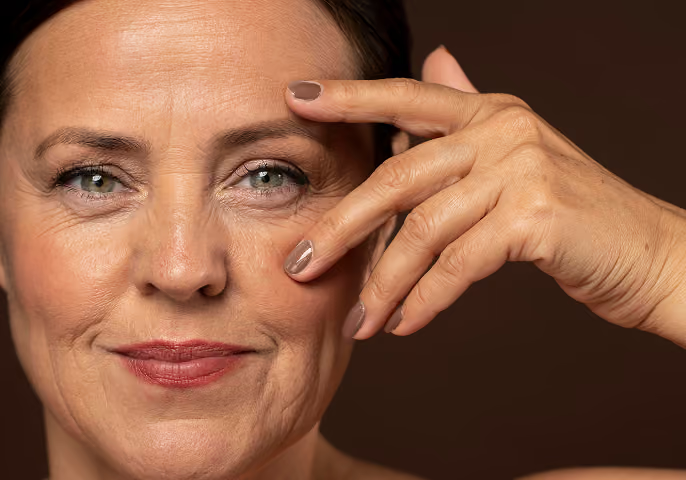
Volume and vector analysis informs where injectable treatment will do the most good, and simulation helps align expectations before anything begins. For patients weighing a brow lift, mini face lift, or mini neck lift, seeing the structure in three dimensions makes the conversation far more concrete.
Laser and resurfacing progress
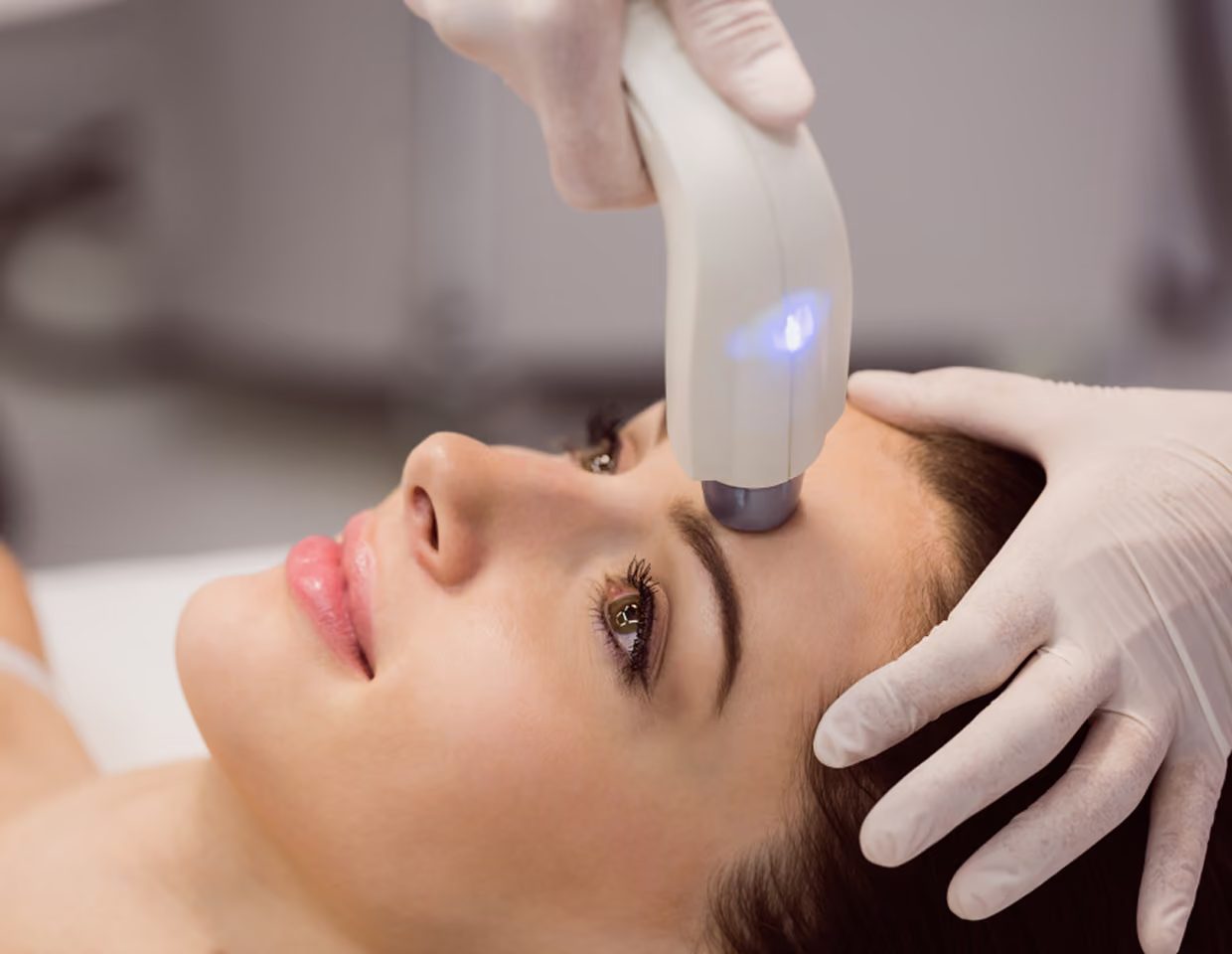
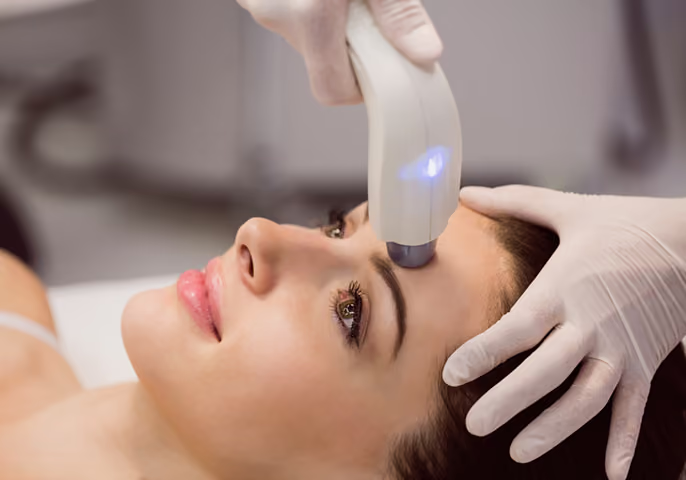
Across a course of CO2, Fotona 4D, or other resurfacing treatment, standardized comparison lets us measure improvement rather than rely on memory.
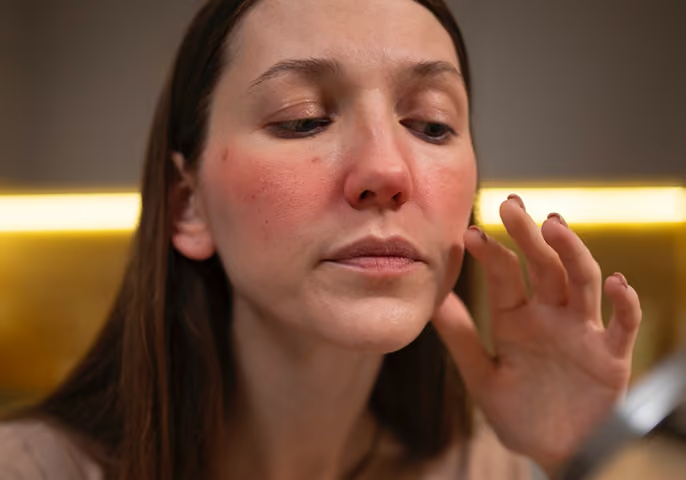
Pigment and redness conditions
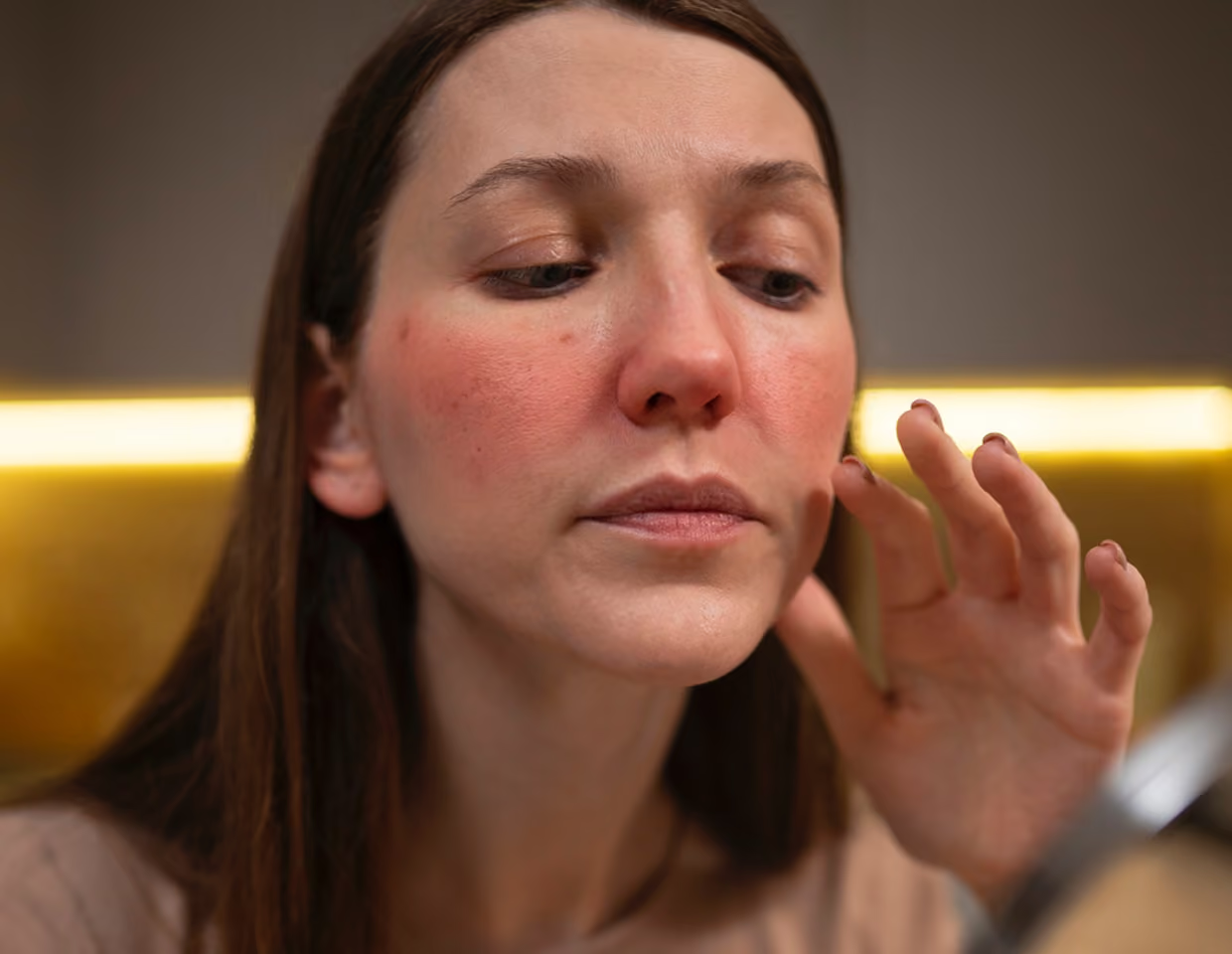
Brown spot and red area mapping provides useful documentation when managing melasma, rosacea, and related concerns over time.
Why It Changes Your Consultation
Most patients leave a cosmetic consultation with a recommendation and no real way to evaluate it. Imaging changes that dynamic.
- You understand what is being recommended and why, because you can see it.
- You and your dermatologist are looking at the same picture, which makes agreeing on a plan straightforward.
- You can preview a direction before you commit to it.
- You get standardized, measurable proof of your own progress over time rather than an impression of it.


Advanced Technology, Board-Certified Care
Imaging is only as useful as the physician interpreting it. Dr. Salar Hazany is a board-certified dermatologist and fellowship-trained Mohs surgeon whose practice has treated more than 10,000 patients and completed more than 5,000 cosmetic procedures. The technology adds precision to that judgment. It does not replace it.
Your scan is part of your medical record and is handled in accordance with our notice of privacy practices.
Patient Experiences That
Speak for Themselves
Frequently Asked Questions
What is Aura 3D facial imaging?
Aura is a Swiss-made 3D imaging system that captures a photorealistic model of your face and neck in a single scan. Built on Hexagon reality capture technology, multiple cameras and lighting units record your features in a fraction of a second, then render them as a rotatable three-dimensional digital twin. The system maps and scores wrinkles, pores, red areas, brown spots, and texture directly onto that model.
Is the Aura scan safe? Does it use radiation?
Yes, the Aura scan is safe. It uses no radiation. Aura captures your face using cameras and light only — the same way a photograph does, in three dimensions. Nothing touches your skin, no dye or contrast is used, and nothing is applied beforehand. The capture itself is over in a fraction of a second.
How long does the Aura scan take, and does anything touch my skin?
The scan adds only a few minutes to your visit, and the capture itself takes a fraction of a second. Nothing touches your skin at any point. You sit comfortably while the system records your face and neck, and within seconds the software builds a 3D model you can see on screen and rotate from any angle.
How is Aura different from regular before and after photos?
A standard before and after photo changes every time the lighting, angle, or your expression changes, which makes real progress hard to see. A 3D scan does not. Aura produces standardized, measurable comparisons that remove lighting and angle from the equation entirely, so improvement can be measured rather than estimated by memory.
Can Aura show me what I will look like after treatment?
Aura can model outcomes across the temples, cheeks, under-eye area, chin, jawline, and submental region, so you can explore a direction before committing to it. A simulation is a planning tool, not a promise — it helps align expectations before anything begins. Your actual result depends on your anatomy, your treatment plan, and how your tissue responds.
Can Aura detect skin cancer?
No. Aura is not a skin cancer screening tool and should never be used in place of one. It measures skin quality, facial structure, and volume — wrinkles, pores, pigment, redness, and texture — to plan and track cosmetic and scar treatment. Any suspicious mole or lesion needs an in-person examination by a dermatologist, and biopsy where indicated.
How often should I be rescanned?
We rescan at intervals appropriate to your treatment, so improvement can be measured rather than guessed at. The right interval depends on what you are being treated for — a course of acne scar treatment is tracked differently from injectable maintenance or a resurfacing series. Your rescan schedule is set with your dermatologist at your first consultation.
Who can see my Aura scan, and how is it stored?
Your scan is part of your medical record and is handled in accordance with our notice of privacy practices. It is used by your care team to plan and track your treatment.
Do I need to prepare for my Aura scan?
Arrive with clean skin and no makeup for the most accurate reading. Makeup, sunscreen, and skincare products sit on the surface and can alter how pore, pigment, and texture readings are scored. Nothing else is required, and there is nothing to recover from afterward.
Rediscover Skin You
Feel Confident In
Take the next step toward clear, healthy, and radiant skin with care tailored to you. Your transformation starts with a single consultation.