




%201.avif)



Referred for a Skin Graft After Mohs Surgery? What to Know



Being referred to a different surgeon for a skin graft after Mohs surgery is common, since removing skin cancer and reconstructing the defect draw on different skill sets. This guide covers what to bring to that reconstruction consultation, questions worth asking, what to expect at the first visit and during recovery, and how to evaluate a surgeon you've never met before. It also addresses timing, since research shows grafts placed after a short, deliberate delay can have higher success rates, along with practical guidance on insurance logistics, requesting medical records, and what realistic complication rates actually look like.
Being referred for skin graft reconstruction after Mohs surgery is more common than most patients expect. Your Mohs surgeon just told you the wound is too large to stitch closed. You need a skin graft, and you're being sent somewhere else to get it. Plenty of providers who perform Mohs surgery well simply don't handle the closure themselves, which leaves you to track down a second surgeon, often within days. Here's what that next appointment should cover, and what to bring so it goes smoothly.
Why You Were Referred Out in the First Place
Removing skin cancer and rebuilding the site afterward are really two different procedures stitched into one appointment. A surgeon can be excellent at the layer-by-layer margin checking that makes Mohs surgery so effective without having deep training in reconstructive closure. Small defects rarely expose that gap. Direct closure with sutures is simple enough for almost any provider to handle. Larger defects expose it fast, which is why many practices route graft cases to a separate surgeon with dedicated fellowship training in reconstruction.
Nothing went wrong here. Dermatologic surgery divides labor this way constantly. What matters now is finding a surgeon with the specific training to handle the graft well, especially somewhere visible like your face.
What a Skin Graft Actually Is
A skin graft is healthy skin taken from a donor site elsewhere on your body and placed over the wound your Mohs surgery left behind. A flap stays attached to its original blood supply. A graft does not; it's fully detached, and it has to grow new blood vessels once it's stitched into place. Two main types exist. Split-thickness grafts usually come from the thigh and cover larger or less visible areas. Full-thickness grafts come from behind the ear or the collarbone, chosen specifically because that skin matches facial skin more closely in color and texture.
Curious how the excision itself creates a defect this size in the first place? Hazany Derm's overview of Mohs surgery and reconstruction walks through the layer-by-layer process.
What to Bring to Your Reconstruction Consultation
Showing up prepared can save you a second visit:
- Your pathology report or surgical notes. These document the exact size and depth of the defect and confirm your margins are clear.
- Photos of the wound, if you have any. A picture from right after your Mohs surgery, before any dressing changes, gives your new surgeon a real head start.
- A current medication list, especially anything that thins your blood.
- Any wound care instructions you've already been given. Your original surgeon may have started a temporary dressing plan the new one needs to know about.
- A written list of questions. You'll forget half of them the second you sit down in the exam room.
Questions Worth Asking at That Appointment
A few specific questions tend to reveal whether a surgeon has really thought through your case, rather than reciting a standard plan:
- What type of graft do you recommend for this specific defect, and why?
- Where will the donor site be, and what will that scar look like?
- Is a flap a realistic alternative here, or has that already been ruled out?
- What's the timeline from today's consultation to the day of the procedure?
- What should I expect in the first week, and what would be a reason to call your office?
There's no wrong number of questions to bring, and a rushed answer to any of these is itself useful information. If a surgeon brushes past your question about whether a flap was considered, or can't say why a particular donor site was chosen, that's worth noting alongside whatever else you learn during the visit.
What Happens at the First Visit with a New Reconstructive Surgeon
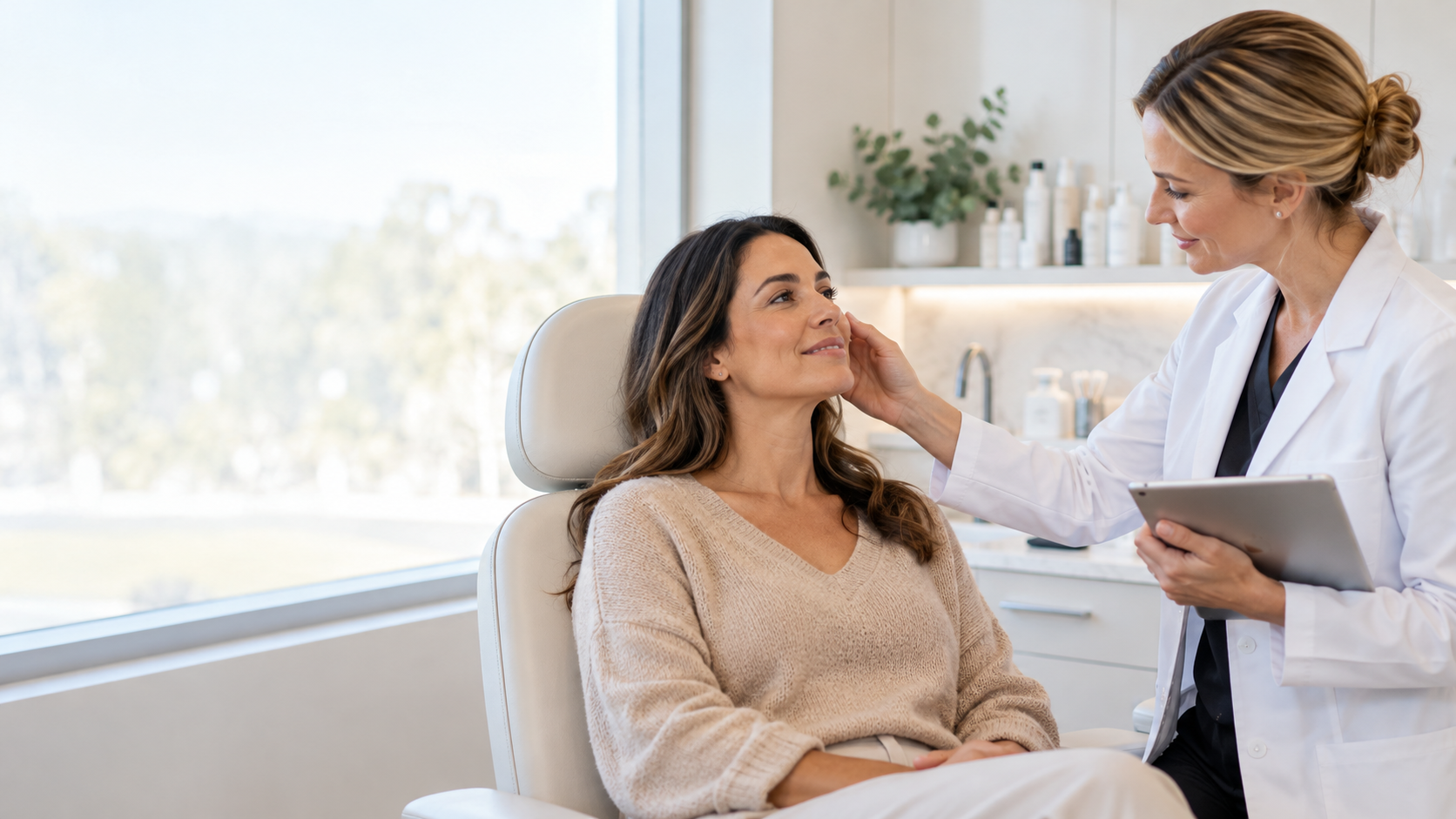
The surgeon examines the wound in person, since photos and written measurements only tell part of the story. They'll assess the depth of the defect, the health of the tissue at its base, and how much nearby skin is available, all of which affects whether a graft is really the best option or whether a flap makes more sense. If a graft is confirmed, donor site options get discussed, and in many cases the procedure can be scheduled for the same visit.
Raise your recovery goals here too. Minimizing a scar on your nose, getting back to an active routine quickly, wanting to know what the area looks like at six months rather than six days: say it out loud, because it shapes how your surgeon plans the repair.
What Recovery Looks Like After the Graft Is Placed
Healing happens in fairly predictable stages, and knowing what to expect at each one makes the process far less unsettling.
- First week: the bolster dressing stays on. This is the fragile stretch, so keeping the area still and dry matters more than anything else.
- Two to six weeks: the graft strengthens while the donor site keeps healing. Pink, mismatched, slightly raised: all of that is normal, not a problem.
- Months one through twelve: gradual softening and blending, sometimes taking a full year before the scar truly settles.
Hazany Derm's own breakdown of long-term healing after Mohs surgery is worth keeping alongside these timelines as your graft progresses.
What If You Don't Have a Referral Yet?
Not every Mohs surgeon proactively refers patients out. Some just tell you the defect is too large for direct closure and leave finding a reconstructive surgeon up to you. If that's your situation, you haven't missed some deadline by tracking one down yourself. What matters is doing it promptly: an open wound needs closing within days, not weeks, to keep infection risk down and stop the defect from stretching further.
Start by asking your Mohs surgeon's office directly whether they have a preferred reconstructive surgeon they typically refer to, even if nobody mentioned one during your visit. Most practices do, even when the referral doesn't happen automatically. If that doesn't turn up an option that feels right, searching for a fellowship-trained reconstructive surgeon in your area and calling directly to ask whether they accept post-Mohs referrals is a reasonable next step. Mentioning that you have an open wound needing timely closure tends to get you worked into the schedule faster than a routine cosmetic consultation would.
A quick way to vet a provider for a referred graft case: ask directly whether they regularly accept post-Mohs referrals from other practices, and whether their fellowship training is specifically reconstructive.
Is a Graft Actually the Right Call for Your Defect?
Because a second surgeon is now evaluating you, it's fair to ask whether a graft is truly the best option or just the default suggestion. A few things worth understanding first:
- Defect depth and the wound bed. A graft needs a well-vascularized bed to survive. Exposed cartilage or bone at the base usually rules a graft out on its own.
- How much nearby skin is available, since meaningful laxity can make a flap a realistic alternative worth raising.
- The cosmetic priority for that area. On the nose especially, some surgeons weigh color match heavily, even when a graft would be technically simpler.
None of this means the original recommendation was wrong. Most of the time a graft is suggested because it genuinely fits the defect. But asking the question, and getting an independent read on your wound, is reasonable due diligence before any procedure.
A Note on Insurance and Referral Logistics
Reconstruction after a confirmed skin cancer is typically billed as medically necessary care, not a cosmetic procedure, though exact coverage varies by plan. When you're seeing a different surgeon than the one who did your excision, confirm ahead of time that your insurance authorization covers an out-of-network or new-provider evaluation. Bringing your pathology report and any paperwork you already have speeds up both the administrative side and the clinical one.
It's worth calling your insurance directly before the appointment, rather than assuming the new practice will handle every detail, since coverage rules and prior-authorization requirements vary considerably between plans and can affect how quickly the procedure gets scheduled. Ask specifically whether a referral or prior authorization is required for a provider you weren't originally assigned to, and how long that approval typically takes to come through. Getting ahead of that logistics question early can shave real time off the overall timeline, especially since an open wound doesn't wait on paperwork.
If your original Mohs surgery happened outside the immediate Los Angeles area, Hazany Derm's page for out-of-town patients outlines how visits, travel, and recovery logistics are typically coordinated.
Talking to Your Original Surgeon About the Referral
You don't need to frame this as a conflict. A simple, direct request works: ask your original surgeon's office to send your operative notes, pathology report, and any photos to the new practice, and let them know you've arranged reconstruction elsewhere. Most offices handle this routinely, since referring out for reconstruction is already normal practice for many Mohs-only providers.
If your original surgeon drags their feet on releasing records, note it, but don't let it stop you. You're entitled to your own medical records, and a new surgeon can still evaluate and treat the wound directly even without every piece of paperwork, though having them does make planning more precise.
What Research Says About Timing: Immediate vs. Delayed Grafting
Timing matters more than most patients assume.
A 2026 systematic review in the journal Dermatologic Surgery pooled data from 24 studies and 665 patients who underwent full-thickness skin grafting after skin cancer removal, most commonly on the nose. Grafts placed after a short delay, roughly two to three weeks after the original excision, had a higher success rate than grafts placed within the first week, and the overall graft success rate across the pooled group was 89.6% at an average follow-up of about 13 months. The review's patient population had an average age of 63.8, and most cases involved basal or squamous cell carcinoma, similar to most Mohs patients.
That doesn't mean every graft should wait. Plenty of defects are still grafted the same day as the Mohs excision with excellent results, and your surgeon will make that call based on your specific wound. But if a delay gets suggested rather than an immediate graft, that's not disorganization. It may be a deliberate call to let the wound bed stabilize first.
A Realistic Timeline From Referral to Healed Scar
Stitching together everything above, here's roughly how the whole process unfolds from the day of your Mohs surgery to a settled scar:
- Day of Mohs surgery: the defect gets measured, and if reconstruction isn't happening same-day, a temporary dressing goes on along with referral information.
- Within a few days: your reconstruction consultation should happen. This isn't a window to delay; an under-covered wound is more vulnerable to infection the longer it sits open.
- Day of the graft procedure: often the same visit as the consultation or within a few days, under local anesthesia, outpatient.
- The following one to two weeks: the most active healing phase at both sites, with a follow-up visit to remove the bolster dressing.
- The following months: gradual softening, flattening, and color blending, sometimes for a year or more.
Choosing Who Performs the Repair
You don't have to use whichever surgeon your original provider suggests. At Hazany Derm in Beverly Hills, Dr. Salar Hazany's fellowship training was specifically in Mohs micrographic and reconstructive surgery, and referred-in patients seeking skin graft after Mohs surgery reconstruction alone make up a regular part of his practice.
Vetting a surgeon you've never met before entrusting them with a visible repair is reasonable, not excessive. Ask directly about fellowship training, how often the practice takes referred-in graft cases, and whether they're willing to reconsider the original plan if their own exam of the wound suggests a different approach. A surgeon confident in their training will answer all of this plainly rather than treating the question as a challenge.
What Complications Actually Look Like, and How Rare They Are
It helps to see real numbers instead of worst-case imagination. A retrospective review of 544 nasal reconstructions using full-thickness grafts after Mohs surgery found a total complication rate of just 3.9%. Partial graft failure occurred in 0.7% of cases, complete failure in 0.2%, hematoma in 0.4%, infection at the graft site in 0.6%, and infection at the donor site in 2.0%. Patients who received a bolster dressing had noticeably fewer non-donor-site complications than those who didn't, which is part of why that dressing gets used so routinely.
Call your surgeon's office if you notice spreading redness beyond the graft margin, a fever, pus or foul-smelling drainage, pain that gets worse after the third or fourth day instead of easing up, or a bolster dressing that comes loose before your scheduled follow-up. None of these are common. Most grafts heal exactly the way they're supposed to, quietly and without drama, but it's worth knowing what would actually warrant a call rather than guessing.
What Your Donor Site Will Look Like
Patients tend to focus entirely on the graft site and forget to ask about the donor site, which will also carry a permanent scar. The two heal differently, and the difference is worth knowing before you agree to a specific donor location.
- Thigh (typical split-thickness donor site): heals over on its own within about two weeks, left uncovered by sutures. The result is usually a flat, lighter-colored patch that fades over months but rarely disappears completely, similar in texture to a healed abrasion.
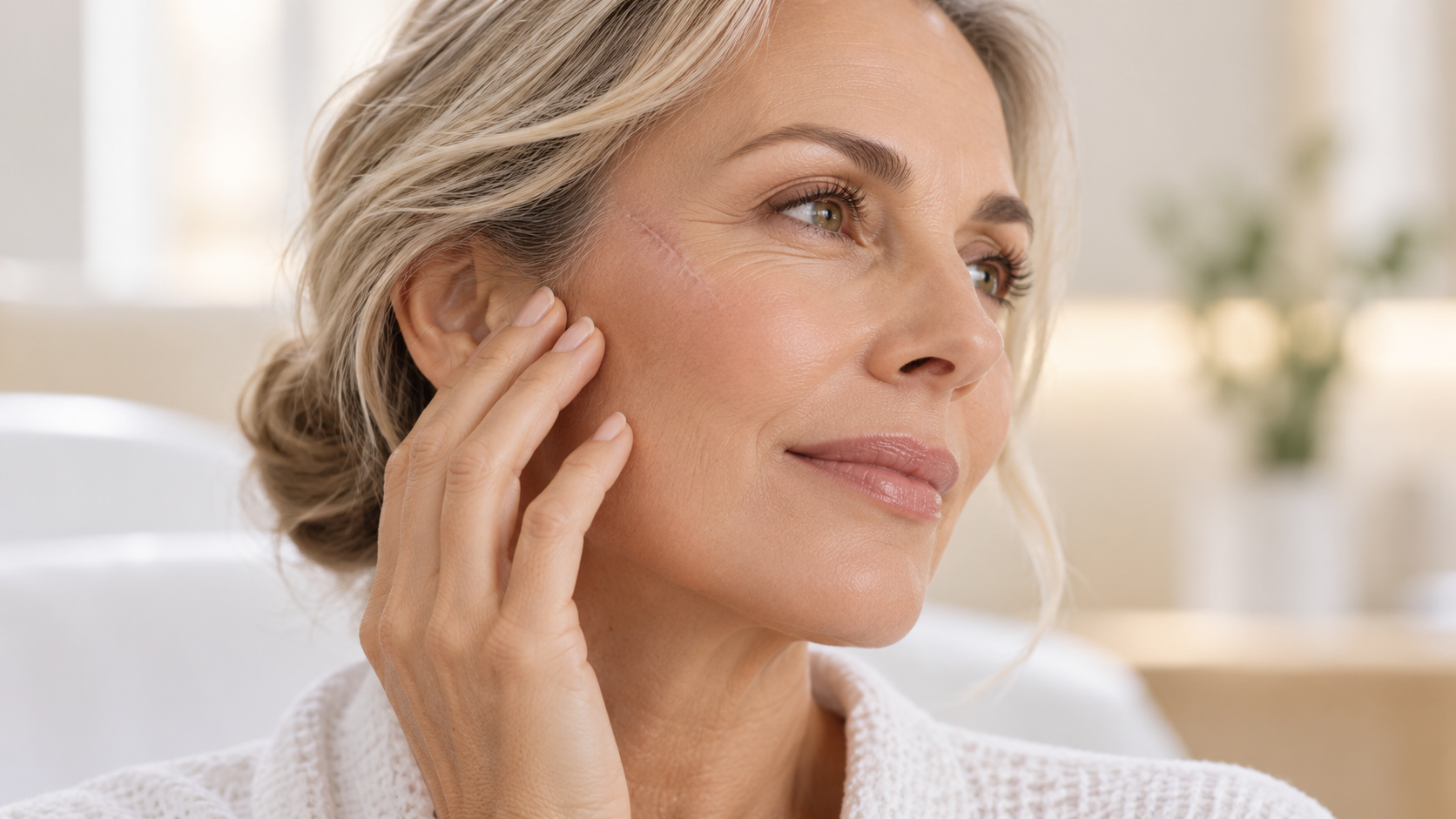
- Behind the ear or the collarbone area (typical full-thickness donor sites): closed directly with sutures and usually heals into a thin line rather than a patch, since the wound is smaller and the edges are brought together rather than left to regrow on their own.
- The supraclavicular area, sometimes used for larger full-thickness grafts, heals similarly to the postauricular site but sits somewhere more visible in low-cut clothing, worth mentioning if that matters to you.
Ask specifically where your donor site will be before the procedure, not just what type of graft you're getting. Two full-thickness grafts of the same size can come from very different places depending on what your surgeon has available and what you're comfortable showing.
How to Evaluate a Reconstructive Surgeon You've Never Met
Being handed a name and a phone number isn't the same as knowing whether that surgeon is actually a good fit for your specific defect. A few concrete things are worth checking before you commit to a first appointment, beyond just accepting the referral at face value.
Ask whether the surgeon's fellowship training was specifically in reconstructive surgery, not just general dermatology or Mohs excision alone. The two skill sets overlap but aren't the same, and a surgeon who trained specifically in reconstruction has seen a wider range of graft and flap outcomes than one who picked up closure technique as a secondary skill. It's also fair to ask how often the practice sees referred-in graft cases specifically, since a surgeon who regularly handles post-Mohs referrals from other practices has a workflow built around exactly your situation, including how quickly they can typically get you scheduled.
Photos matter too, if the practice can show them. Not necessarily a defect identical to yours, since no two are exactly alike, but examples from a similar facial location give you a realistic sense of what the surgeon's results actually look like, rather than relying on a verbal description. And it's worth asking directly what happens if, once they examine your wound in person, they think a flap would serve you better than the graft you were referred for. A surgeon willing to revisit the original plan based on what they actually see, rather than proceeding with whatever was written on the referral, is generally a good sign.
Curious why a graft, rather than a flap, was the recommendation in the first place? Skin Flap vs. Skin Graft: How Surgeons Decide walks through that reasoning in detail. And if a flap does end up being part of your plan somewhere along the way, How Skin Flaps Preserve a Natural Look After Skin Cancer Surgery covers what a well-healed flap actually looks like.
Frequently Asked Questions
Do I have to get my skin graft from the same place that did my Mohs surgery?
No, and this surprises a lot of patients. Nothing about being sent elsewhere means anything went wrong with your care. It usually just means your defect was large enough to expose a gap that already exists in how dermatologic surgery divides labor: excision and reconstruction draw on different skill sets, and not every Mohs surgeon has dedicated fellowship training in the second one. What matters going forward is finding a surgeon who does, especially somewhere visible like your face. Dr. Salar Hazany at Hazany Derm, for instance, completed a fellowship specifically in Mohs micrographic and reconstructive surgery, which is the kind of dual training that closes exactly this gap.
How soon after my Mohs surgery do I need to have the graft placed?
Most grafts go on within days of the excision, since an open wound needs covering fairly quickly to keep infection risk down and stop the defect from stretching further. That said, timing isn't always immediate by design. Research pooling data across hundreds of patients has found that grafts placed after a short, deliberate delay, roughly two to three weeks after the original excision, can have a higher success rate than grafts placed within the first week, likely because it gives the wound bed time to stabilize first. That doesn't mean every graft should wait. Plenty of defects are still grafted the same day as the Mohs excision with excellent results, and your surgeon will make that call based on your specific wound. At Hazany Derm, referred patients are typically worked in for evaluation as soon as the schedule allows, and in many cases the procedure itself can be scheduled for that same visit once the wound has been assessed in person.
Will a second opinion delay my treatment?
Rarely, if at all. A second opinion Mohs reconstruction consultation to confirm the plan, review your pathology report, and examine the wound in person doesn't take long, and it's a reasonable step even when time matters. An open wound does need closing within days rather than weeks to keep infection risk down, but that timeline accommodates a second opinion in most cases. Urgent post-Mohs referrals tend to get priority scheduling at Hazany Derm precisely because the practice recognizes how time-sensitive an open wound is. If anything, getting an independent read on your defect, whether a graft is genuinely the best option or whether a flap deserves a second look, tends to clarify the plan rather than slow it down. Bringing your pathology report, any photos of the wound, and a current medication list to that consultation helps the visit move efficiently.
What if my original surgeon already scheduled me with someone else?
You can, and you're entitled to make that choice at any point before the procedure actually happens. Your original Mohs surgeon's referral is a suggestion based on their usual working relationships, not a binding assignment, and dermatologic practices route reconstruction referrals out constantly, so requesting a different surgeon doesn't create the friction it might in some other areas of medicine. Quite a few patients end up at Hazany Derm exactly this way, after researching their own options and deciding they want a surgeon with specific fellowship training in reconstruction rather than whoever happened to be suggested first. If you switch, a simple, direct request to your original surgeon's office, asking them to send your operative notes, pathology report, and any photos to the new practice, is usually all it takes, and most offices handle this routinely. The only real time pressure is the wound itself: switching surgeons doesn't reset any clock on how quickly it needs to close, so it's worth basing the decision on fit rather than rushing to avoid delay.
Does it matter where the donor skin comes from?
Yes, quite a bit, and it's a detail worth asking about specifically rather than assuming it's fixed once you know the graft type. Split-thickness grafts usually come from the thigh, heal over on their own within about two weeks without sutures, and leave a flat, lighter-colored patch that fades over months but rarely disappears completely. Full-thickness grafts come from behind the ear or the collarbone, chosen specifically because that skin matches facial skin more closely in color and texture, and those donor sites close directly with sutures into a thin line rather than a patch. The supraclavicular area is sometimes used for larger full-thickness grafts and heals similarly to the postauricular site, though it sits somewhere more visible in low-cut clothing. Two full-thickness grafts of the same size can come from very different places depending on what your surgeon has available and what you're comfortable showing, so it's worth asking specifically where your donor site will be before the procedure.
Can I request my medical records to bring to a new surgeon myself?
Yes. Your pathology report, operative notes, and photos of the wound belong to you, and you can request them directly from your original provider's office at any time. A simple, direct ask, requesting that your records and any wound photos be sent either to you or straight to your new surgeon's office, is usually all it takes, since referring out for reconstruction is already standard practice for many Mohs-only providers. If your original surgeon's office is slow to release your records, note it, but don't let it hold up your care. An open wound needs attention within days, not weeks, and a new surgeon can still examine and treat the defect directly even without every piece of paperwork in hand, though having your pathology report and any photos does make planning more precise. Hazany Derm's office can also request these records directly from your original provider on your behalf if that's easier than handling it yourself.