




%201.avif)



Which Eyelid Rejuvenation Option Is Right for You? Surgery vs. CO2 Laser vs. Radiofrequency



Traditional blepharoplasty is no longer the only path to a refreshed eye area. CO2 laser resurfacing and two energy-based devices, Density by Jeisys (radiofrequency) and Sofwave (ultrasound), now give patients with mild to moderate laxity a way to improve the eyelids without an incision. But these options are not interchangeable, and choosing the wrong one, or assuming more downtime always means a better result, can leave a patient disappointed. This guide breaks down what each option actually corrects, who is a genuine candidate for each, and how downtime, session count, and results timeline compare across surgery, CO2 laser, Density, and Sofwave. It also covers when a non-surgical approach is not enough, how skin type affects candidacy, and how Dr. Hazany builds a staged treatment plan for patients whose eyelid concerns fall between mild and moderate aging rather than defaulting every consultation toward surgery.
Eyelid aging shows up earlier, and more visibly, than almost anywhere else on the face. Patients researching a solution quickly discover there is no longer a single path forward. Traditional blepharoplasty remains the most predictable way to remove excess skin and reset the eyelid's contour, but it is not the only option anymore. CO2 laser resurfacing and radiofrequency or ultrasound skin tightening now give patients with mild to moderate laxity a way to improve the eye area without an incision.
The right choice depends less on personal preference and more on three practical factors: how much excess skin and fat are actually present, how much downtime a patient can tolerate, and how quickly a patient wants to see a final result. This guide walks through what each option actually does, who tends to benefit most from it, and how Hazany Derm helps patients decide between them. For a closer look at the mechanism behind each technology, see our companion guide on how non-surgical eyelid treatments actually work.
What Traditional Blepharoplasty Actually Corrects
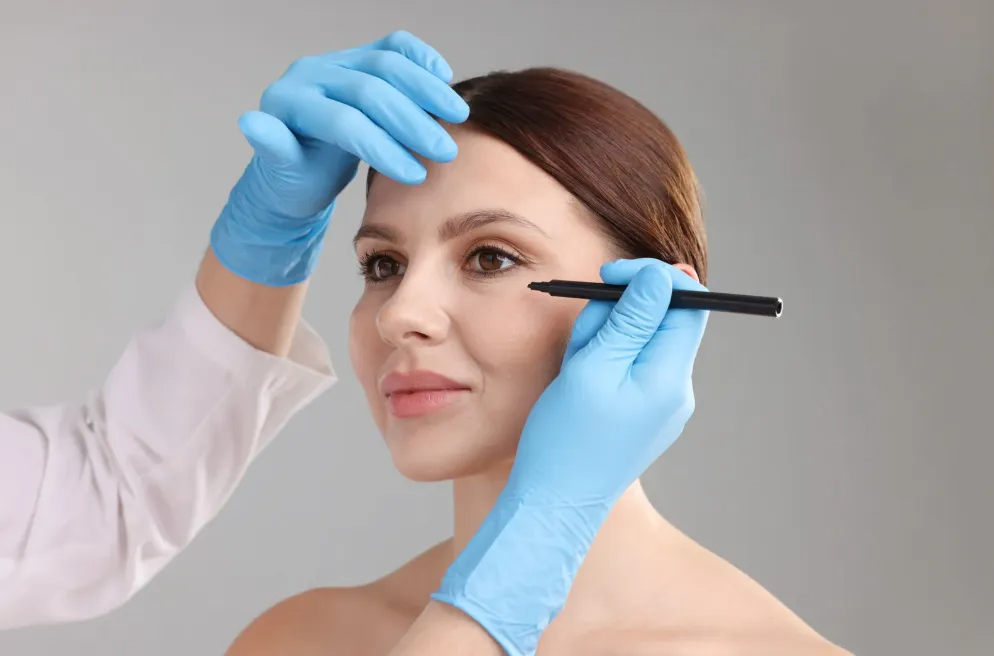
Surgical blepharoplasty removes or repositions excess eyelid skin and, in many cases, the small pockets of fat that create puffiness or bags. Because the procedure physically removes tissue rather than tightening it in place, it remains the gold standard for patients with genuinely redundant skin, meaningful fat herniation, or lids heavy enough to affect vision.
Blepharoplasty typically addresses:
- Hooded, drooping upper lids that crowd the lash line or obstruct the upper visual field
- Under-eye bags caused by fat that has pushed forward through a weakened orbital septum
- Excess lower lid skin and fine wrinkling that does not respond to surface treatments
- Redundant skin folds left behind after significant weight loss or long-term sun damage
Recovery is more involved than any non-surgical option, with visible bruising and swelling in the first one to two weeks and full healing, including final scar maturation, typically taking around six weeks. For patients whose main concern is true excess skin or fat rather than surface texture, no energy-based device can substitute for what surgery physically removes.
CO2 Laser: Tightening the Eyelid Without an Incision
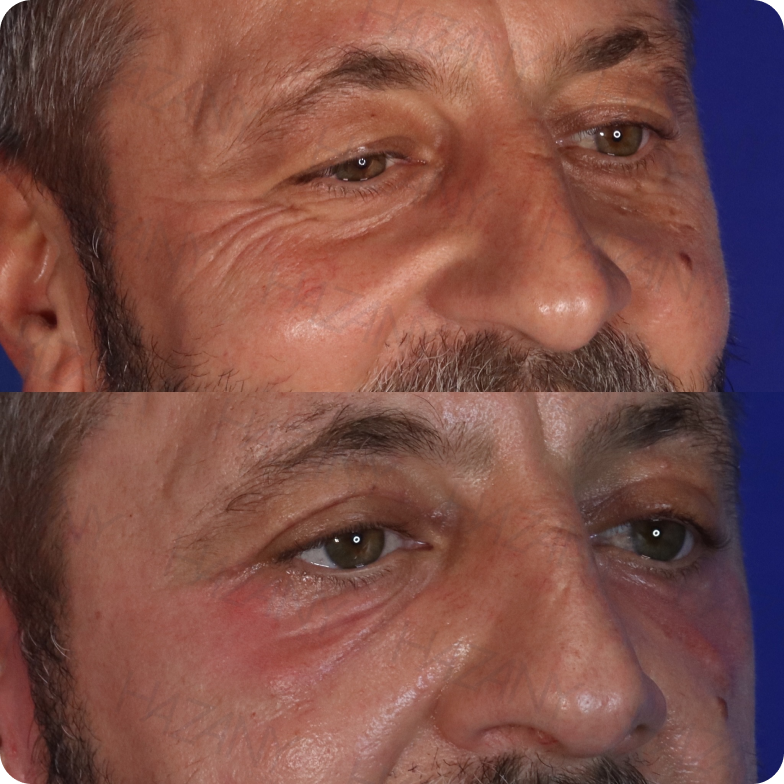
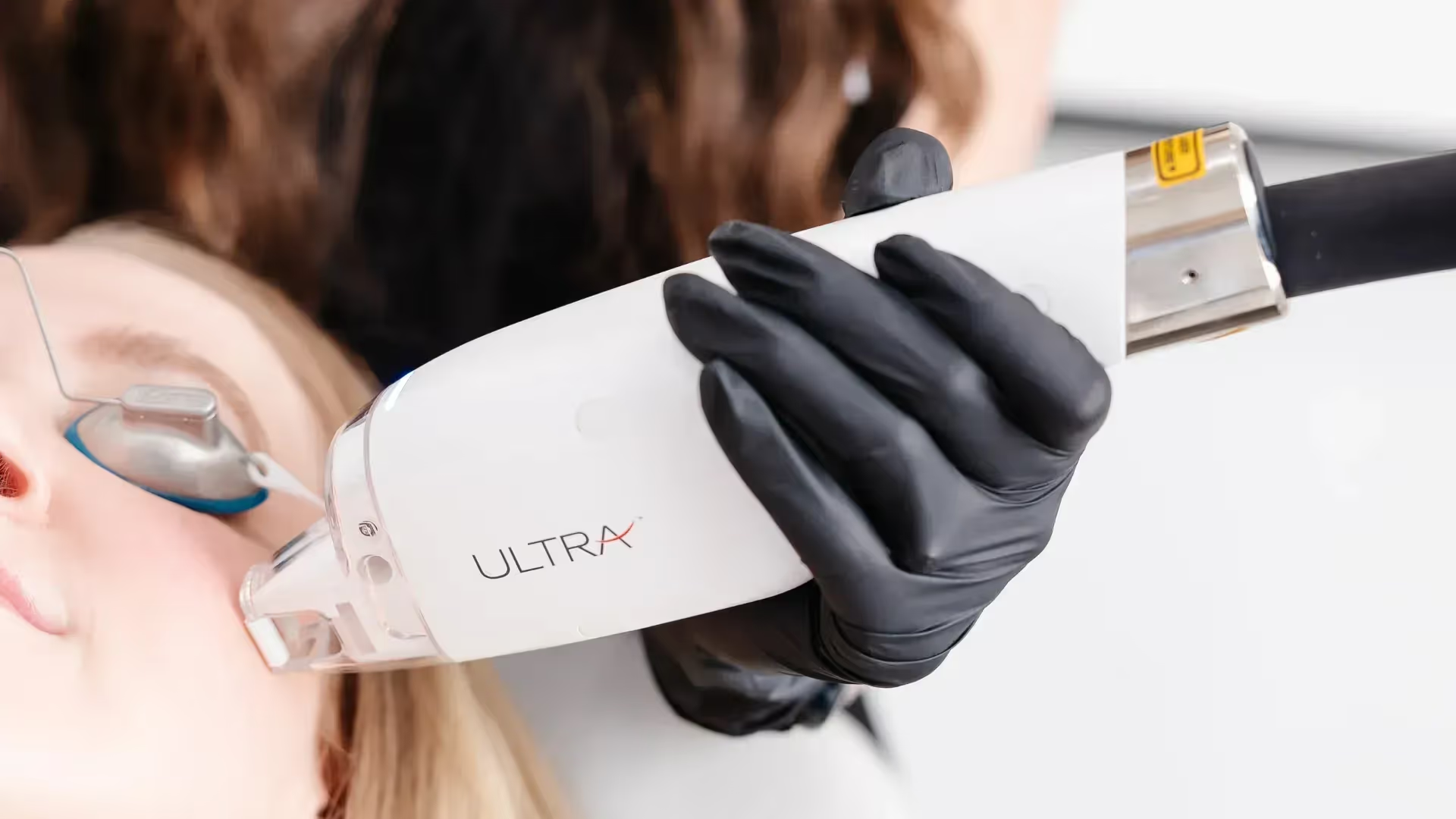
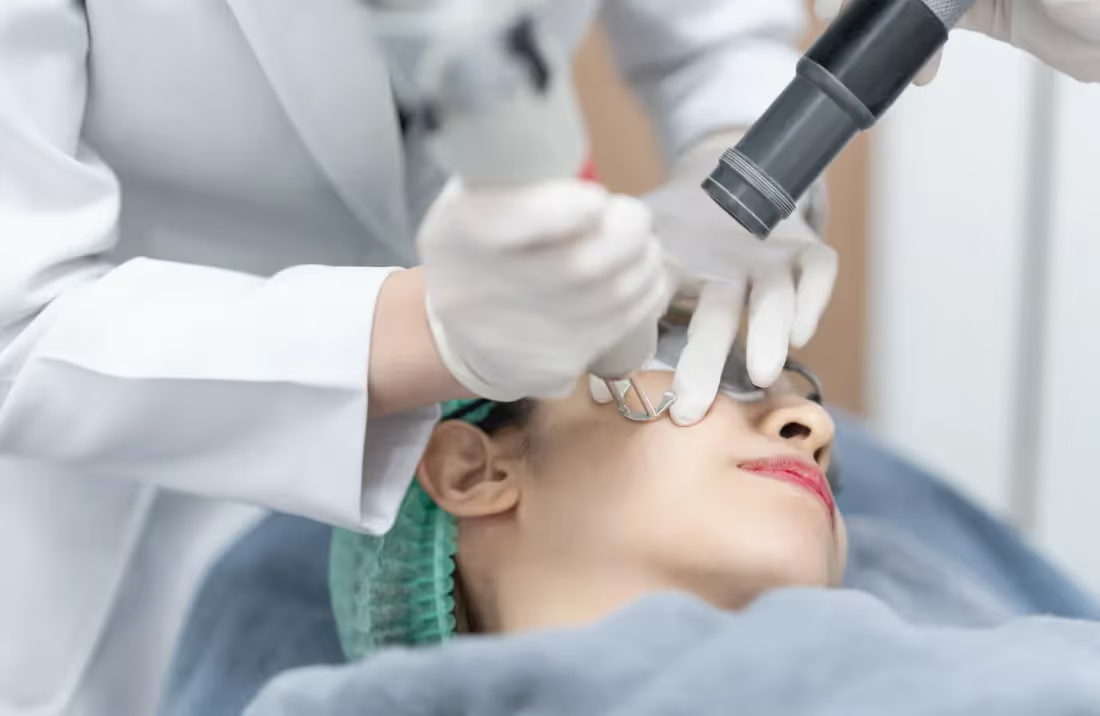
Fractional CO2 laser resurfacing has a longer clinical track record as a blepharoplasty alternative than any other non-surgical option available today. The laser delivers controlled thermal energy to the eyelid skin, vaporizing thin columns of tissue while heating the surrounding dermis, which stimulates new collagen production as the skin heals.
A 2014 review published in Dermatologic Surgery concluded that fractional ablative CO2 laser remains an excellent alternative to traditional blepharoplasty for appropriately selected patients. A separate, later prospective study on upper eyelid dermatochalasis found measurable increases in how far the eyes opened after a single treatment.
CO2 laser tends to work best for:
- Mild to moderate skin laxity and crepey texture on the upper or lower lid
- Fine wrinkling around the eyes that has not yet developed into a true skin fold
- Patients who want a more dramatic result than radiofrequency or ultrasound but are not ready for surgery
- Combination cases, where a light CO2 pass refines the skin after a surgical blepharoplasty has already addressed excess tissue
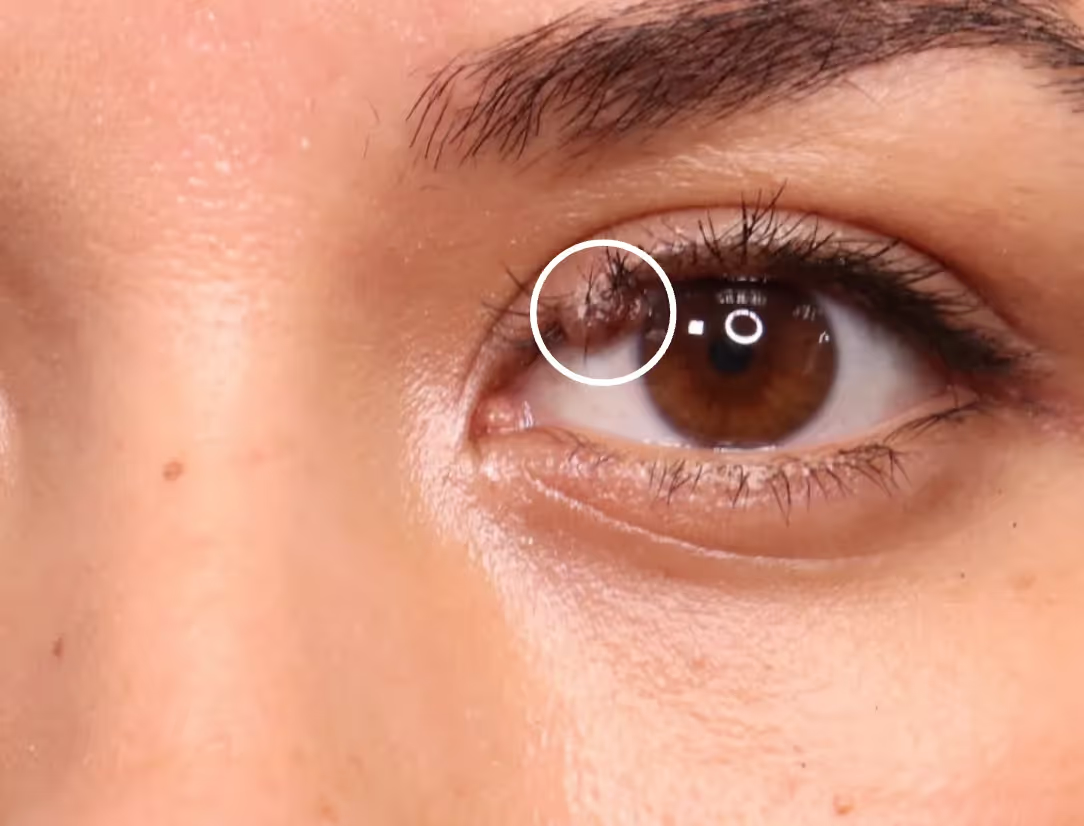
It does not remove herniated fat or significantly redundant skin the way surgery does, so patients with more advanced hooding or true excess skin folds are typically better served by blepharoplasty. Recovery involves five to ten days of redness, swelling, and crusting, considerably shorter than surgical recovery but still requiring real downtime and time away from makeup.
Radiofrequency: Density as a No-Downtime Option
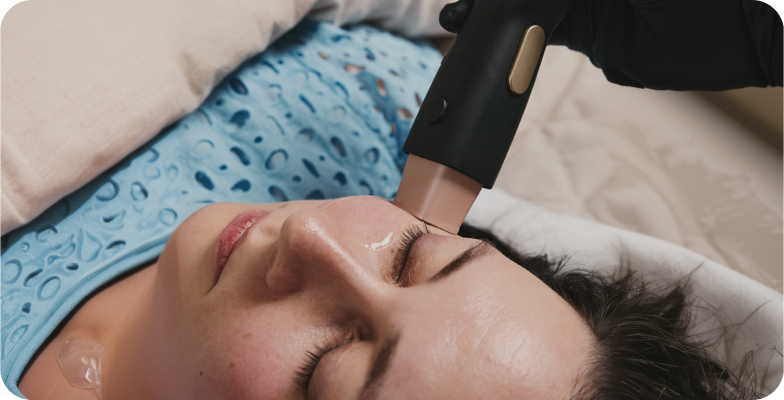
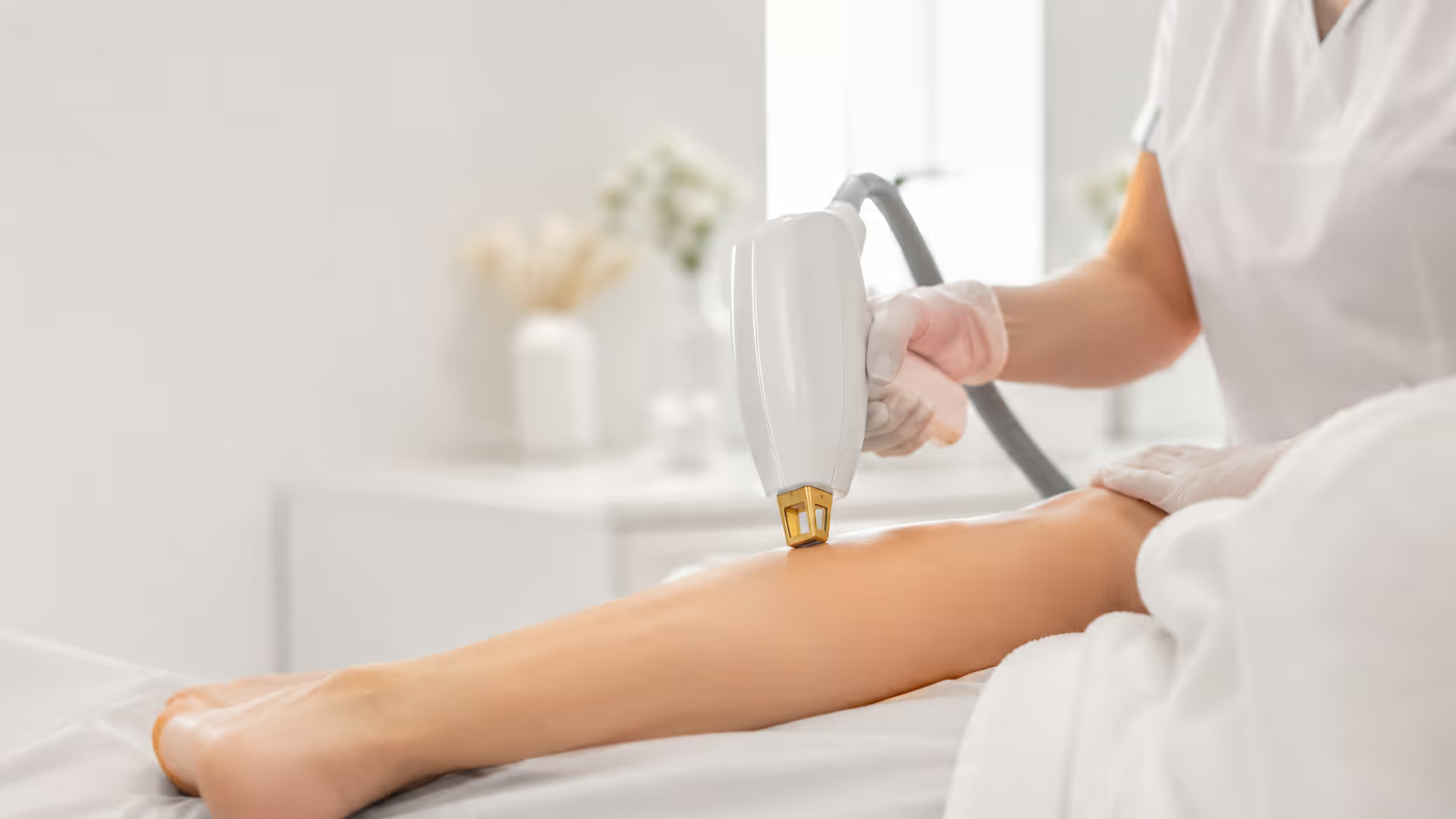
Density by Jeisys is a true radiofrequency device, using sequential monopolar and bipolar RF energy delivered through a dedicated eye tip sized for the delicate periorbital area. Because the energy heats tissue through electrical resistance rather than vaporizing it, the skin surface stays completely intact throughout treatment.
A case series published in Plastic and Reconstructive Surgery Global Open documented Density's dedicated eye tip delivering hundreds of shots to the periocular region in a single session, with patients showing visible tightening and softened fine lines around the eyes at follow-up and no reported adverse effects.
Density is best suited to patients who:
- Have early laxity, crepiness, or fine lines without a true excess skin fold
- Want zero downtime and are comfortable with gradual, multi-month results as new collagen forms
- Are not good candidates for laser or surgery due to skin type, medical history, or a preference to avoid ablative treatment
- Want a maintenance treatment to extend results after CO2 laser or surgical blepharoplasty
Ultrasound: Sofwave and the Brow-Eye Relationship
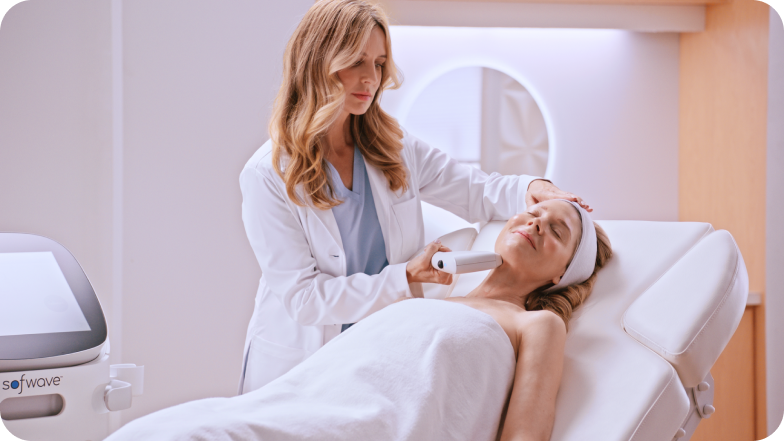
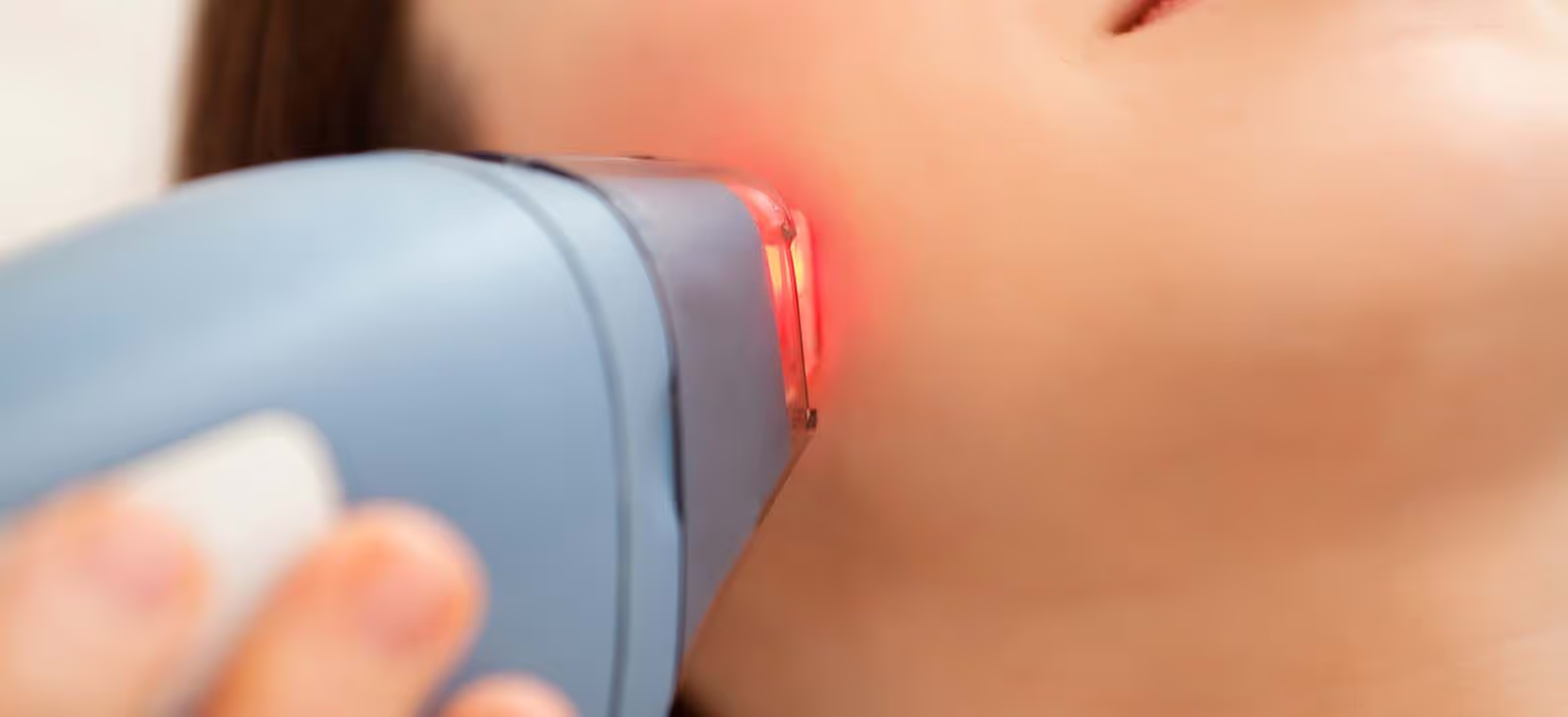
Sofwave works on a different principle than Density. It is an ultrasound device, not a radiofrequency one, using its proprietary SUPERB technology to deliver acoustic energy to a precise depth in the mid-dermis. It is FDA cleared specifically for lifting the eyebrow, and because brow position directly affects how heavy or hooded the upper eyelid appears, a Sofwave brow lift can visibly open the eye area even though it never treats the eyelid skin itself.
A study in Dermatologic Surgery documented objective, measurable eyebrow height increases and high patient satisfaction after a single treatment, and Sofwave's own FDA pivotal trial evaluated the eyebrow-lifting indication across dozens of patients at multiple investigational sites before clearance was granted.
Sofwave is a good fit for patients whose main concern is a heavy or lowered brow contributing to upper lid hooding, rather than excess eyelid skin itself. Like Density, it requires no anesthesia and no downtime, though results build gradually over the weeks following treatment rather than appearing immediately.
Quick Comparison at a Glance
Before going deeper into mechanism and candidacy, here is how the four options stack up against each other at a glance:
- Traditional blepharoplasty: removes excess skin and fat; most dramatic and permanent result; one to two weeks of visible downtime; best for true excess skin, fat herniation, or vision impairment
- CO2 laser: resurfaces and tightens eyelid skin without incisions; five to ten days of downtime; best for mild to moderate crepiness and fine lines
- Density (radiofrequency): heats deeper tissue to stimulate collagen; no downtime; best for early laxity and as a maintenance treatment
- Sofwave (ultrasound): lifts the eyebrow and supporting tissue; no downtime; best when brow position, not eyelid skin, is driving the hooded appearance
The sections below walk through the reasoning behind each of these summaries in more detail, since the right fit depends on more than downtime alone.
Matching the Treatment to the Degree of Laxity
The honest answer to which option is best is that it depends on what a patient's eyelids actually need. Fine lines, mild crepiness, and early laxity with an intact skin fold typically respond well to Density or Sofwave alone. Moderate crepiness or early hooding that has not yet become a true excess skin fold often responds best to CO2 laser, sometimes combined with a maintenance RF or ultrasound session. Genuine excess skin, fat herniation, or hooding significant enough to affect vision generally requires surgery, since no energy-based device can remove tissue that is already redundant.
Patients often assume more aggressive treatment always produces a better outcome, but matching the tool to the actual problem matters more than intensity. A patient with only mild crepiness who chooses surgery accepts real downtime for a result that a no-downtime RF or ultrasound treatment could likely have delivered. A patient with true excess skin who chooses only radiofrequency will likely be disappointed, since Density and Sofwave are not designed to remove tissue that is already redundant.
Downtime and Recovery Trade-Offs
Recovery is often the deciding factor for patients weighing these options against each other, since the practical cost of a treatment is not only its price but the time it takes out of a patient's normal routine.
- Blepharoplasty: one to two weeks of visible bruising and swelling, roughly six weeks to full healing and final scar settling
- CO2 laser: five to ten days of redness, swelling, and crusting, with makeup typically restricted until crusting resolves
- Density: no downtime; mild redness that resolves within hours; results build over the following weeks to months
- Sofwave: no downtime; occasional mild warmth or redness that resolves the same day; results build gradually over one to three months
Patients with an upcoming event, a demanding work schedule, or limited flexibility for time off often let this factor override every other consideration, which is a reasonable way to narrow the decision as long as the chosen option can still address the underlying laxity.
Who Should Still Consider Surgery
A non-surgical approach is not the right starting point for everyone. Patients are typically better served by blepharoplasty, sometimes paired with a non-surgical treatment afterward, when they have:
- Upper eyelid skin heavy enough to obstruct part of the visual field
- Significant under-eye fat herniation or bags that persist regardless of sleep or hydration
- A true excess skin fold that remains even when the brow and surrounding tissue are gently lifted
- A strong preference for the most dramatic, longest-lasting result available in a single procedure
In these cases, CO2 laser or radiofrequency can still play a role as a complementary treatment after surgery, helping maintain skin quality and delay the need for a second procedure, but they are not a substitute for the initial surgical correction.
Skin Type and Safety Considerations
Candidacy for these treatments is not only about the degree of laxity present. Skin type factors into which option is safest, particularly for CO2 laser.
A randomized split-face trial on periorbital laser treatment in East Asian patients, published in Dermatology and Therapy, confirms that ablative CO2 laser carries a real risk of post-inflammatory hyperpigmentation in East Asian and other deeper-Fitzpatrick patients, particularly around the periorbital area, which is one reason Fitzpatrick skin type is part of every candidacy discussion before an ablative treatment is recommended.
Density and Sofwave carry a more favorable safety profile across a broader range of skin tones, since neither device relies on ablation or generates the same surface-level thermal risk. That difference is part of why some patients with deeper skin tones are steered toward radiofrequency or ultrasound first, reserving CO2 laser for cases where its more dramatic resurfacing effect is worth the additional risk profile.
How Many Sessions Each Option Typically Requires
Session count is another practical factor that often gets less attention than downtime, even though it directly affects both the total time commitment and how soon a patient can expect to see their final result.
- Blepharoplasty: a single procedure, with results considered final once healing and scar maturation are complete
- CO2 laser: often a single session for mild to moderate laxity, though some patients choose a second treatment months later for further refinement
- Density: results build with a small series of sessions spaced weeks apart, with periodic maintenance treatments to sustain the effect over time
- Sofwave: frequently a single session per treated area, since its FDA-cleared indication was studied and cleared based on results from one treatment, though some patients opt for a second pass for additional lift
None of these session counts are fixed rules. Dr. Hazany adjusts the recommended number of sessions based on how a patient's skin responds to the first treatment, which is one more reason an initial consultation matters more than any general guideline.
How These Options Compare to Skincare and Injectables
Patients sometimes ask whether a strong retinoid, a vitamin C serum, or a filler could accomplish something similar without an in-office energy-based treatment. Topical retinoids and antioxidant serums can meaningfully support skin quality at the surface level and are reasonable to use alongside any of the treatments discussed here, but they work on a different layer of the skin and at a different intensity than a device delivering targeted thermal energy to the mid-dermis. Filler addresses a different problem entirely, replacing lost volume rather than tightening lax skin, which is why a hollow under-eye area and a crepey, lax one are generally not solved by the same tool.
None of this means skincare or filler are unnecessary. Many patients use a retinoid regimen to maintain results between energy-based treatments, and some combine filler with CO2 laser, Density, or Sofwave to address volume loss and skin laxity as separate but related concerns. The distinction matters mainly for setting realistic expectations about what any single product or procedure can and cannot deliver on its own.
Combining Treatments for a More Complete Result
These options are not always an either-or decision. Building a plan in stages, rather than committing to one treatment as a permanent decision, is often the most realistic way to manage how the eye area changes over years rather than months.
- Patients recovering from a surgical blepharoplasty sometimes return months later for a Density or Sofwave maintenance session to extend how long their surgical result looks fresh
- Patients who start with CO2 laser for moderate crepiness sometimes add Sofwave later if brow descent becomes the more noticeable issue as they continue to age
- Patients who begin with Density for early laxity sometimes graduate to CO2 laser once crepiness advances beyond what radiofrequency alone can meaningfully improve
Dr. Hazany discusses these staged options at consultation rather than presenting a single treatment as a final, permanent answer, since most patients' eyelid concerns continue to evolve for decades after their first visit.
What Results Look Like Over Time
The timeline for seeing a final result differs as much across these options as the downtime does. Blepharoplasty results are visible almost immediately once swelling resolves, typically within two to three weeks, and continue to refine as the scar matures over the following months. CO2 laser results emerge gradually over four to six weeks as the treated skin heals and new collagen forms beneath it, with continued subtle improvement for up to three months.
Density and Sofwave both work on a slower timeline precisely because neither one creates an immediate wound-healing response the way CO2 laser does. Patients typically notice early, modest tightening within the first few weeks, with the fuller effect building over two to three months as new collagen accumulates in the treated tissue. Setting this expectation at consultation matters, since patients who expect an ablative-laser timeline from a no-downtime treatment are often disappointed by how gradual the early results feel, even when the eventual outcome meets their goals.
Preparing for Your Consultation
Because the right option depends on an in-person evaluation of skin laxity, fat position, and brow height, a consultation is the only reliable way to know which of these four paths fits a given patient. Coming prepared helps make that conversation more productive.
- Bring or describe any previous eyelid treatments, including injectables, laser, or prior surgery in the area
- Note whether hooding or heaviness affects your vision, particularly toward the outer corners of your eyes
- Think through your realistic downtime window, since a busy work or travel schedule often narrows which option makes sense right now
- Bring a list of any medications or supplements that affect bleeding or healing, since these can influence both surgical and laser timing
Dr. Hazany uses this information alongside a physical examination to build a recommendation that matches both the anatomy present and the patient's practical constraints, rather than defaulting to whichever treatment is most often requested.
How Dr. Hazany Approaches the Decision
Dr. Hazany evaluates the degree of skin laxity, fat herniation, and functional impact at consultation before recommending a path forward. For many patients, that conversation results in a single, well-matched treatment. For others, particularly those in a gray zone between mild and moderate aging, it results in a staged plan, starting with a non-surgical option and moving to surgery only if and when it becomes the better tool for the job.
The goal at Hazany Derm is always the least invasive treatment that will actually deliver the result a patient is looking for, not the most dramatic option available. That approach is why the practice offers all three technologies rather than defaulting every eyelid consultation toward surgery.
Frequently Asked Questions
How do I know if I need surgery or a non-surgical eyelid treatment?
The main factor is whether there is true excess skin or fat, or whether the concern is mainly texture and mild laxity. Hazany Derm evaluates this at consultation by examining how much skin can be gently lifted or pinched, whether fat is visibly herniated, and whether hooding affects vision. Patients with genuinely redundant skin or functional impairment are usually steered toward blepharoplasty, while those with early crepiness or fine lines are often good candidates for CO2 laser, Density, or Sofwave instead.
Can CO2 laser really replace a surgical blepharoplasty?
For mild to moderate laxity, yes, and published research supports CO2 laser as a genuine alternative for appropriately selected patients. It cannot remove true excess skin folds or herniated fat the way surgery can, so Dr. Hazany reserves that comparison for patients whose main concern is skin quality and mild sagging rather than significant redundant tissue. Hazany Derm discusses this distinction directly at consultation so patients know which category they fall into before choosing a treatment.
Is Density or Sofwave better for the eye area?
They address different problems, so neither is universally better. Density's radiofrequency energy is better suited to fine lines and crepiness across the eyelid skin itself, while Sofwave's ultrasound is FDA cleared specifically for lifting the eyebrow, which indirectly opens the upper eyelid. Hazany Derm sometimes recommends both in combination for patients whose concerns involve both eyelid texture and brow position.
How much downtime should I expect from each option?
Blepharoplasty involves one to two weeks of visible bruising and swelling, CO2 laser involves five to ten days of redness and crusting, and both Density and Sofwave involve no downtime at all. Hazany Derm walks through this timeline in detail at consultation so patients can plan treatment around work, travel, or upcoming events. The right choice often comes down to how much recovery time a patient can realistically build into their schedule.
Will insurance cover any of these eyelid treatments?
Generally no, since all four options are considered cosmetic in most cases. The exception is upper blepharoplasty, which may be partially covered if documented visual field testing shows the excess skin is impairing a patient's vision. Hazany Derm can help patients understand whether their case may qualify for this exception during a consultation.
Can I combine a non-surgical treatment with blepharoplasty?
Yes, and many patients do. Hazany Derm often recommends a Density or Sofwave maintenance session months after a surgical blepharoplasty to help extend how long the surgical result looks fresh, since the underlying collagen-supporting tissue continues to age even after surgery corrects the excess skin. CO2 laser is sometimes used the same way, refining skin texture around an incision once it has fully healed.
How long do results from CO2 laser or radiofrequency actually last?
CO2 laser results are considered long lasting since the treated tissue does not regrow the way it was before treatment, though normal aging continues afterward. Density and Sofwave results depend on the new collagen the treatments stimulate, which is why Hazany Derm recommends periodic maintenance sessions rather than expecting a single treatment to hold indefinitely. None of these treatments stop the aging process entirely, but each can meaningfully reset the clock on the area treated.
What happens during a consultation for eyelid rejuvenation at Hazany Derm?
Dr. Hazany examines the degree of skin laxity, fat position, and brow height in person, then discusses a patient's downtime tolerance and goals before recommending a specific option or combination. Photos are often taken to track results over time. Hazany Derm builds every treatment plan around the individual anatomy present rather than recommending the same option to every patient who walks in the door.
Can a non-surgical option delay the need for eyelid surgery?
Often, yes, particularly for patients in their thirties and forties whose main concern is early crepiness rather than true excess skin. Hazany Derm has found that maintaining skin quality with Density or Sofwave now can push back the point at which surgery becomes necessary, though it cannot prevent surgery indefinitely if true excess skin eventually develops.
Can these eyelid treatments be combined in the same visit?
Generally not, since each of these technologies affects the skin differently and Hazany Derm typically spaces them out to let one treatment's healing response finish before introducing another. Exceptions exist, such as a Density or Sofwave maintenance session scheduled months after a surgical blepharoplasty, but stacking treatments in a single visit is not standard practice.