







Are Lipomas Cancerous?



Lipomas are benign fatty tumors that are not cancerous and rarely become malignant. These soft, movable lumps under the skin are typically harmless but should be evaluated by professionals like those at Hazany Derm for proper diagnosis and peace of mind.
When you discover a new lump or bump under your skin, it's natural to feel concerned about whether it might be cancerous. Lipomas are among the most common types of soft tissue growths that people encounter, yet many individuals remain uncertain about their nature and potential health implications. These fatty deposits beneath the skin can vary in size and location, leading to understandable anxiety about their significance.
The question of whether lipomas are cancerous is one that dermatologists and healthcare professionals encounter frequently in their practice. Understanding the fundamental characteristics of lipomas, their behavior patterns, and their relationship to cancer can help alleviate concerns and guide appropriate treatment decisions. Most people who develop lipomas will never face serious complications, but proper evaluation remains essential for accurate diagnosis.
At Hazany Derm, patients often seek reassurance and professional guidance when they discover unusual growths on their bodies. The distinction between benign and malignant tissue growth is crucial for both immediate peace of mind and long-term health planning. Knowledge about lipomas can empower patients to make informed decisions about monitoring, treatment, and when to seek professional medical attention.
Understanding the Nature of Lipomas
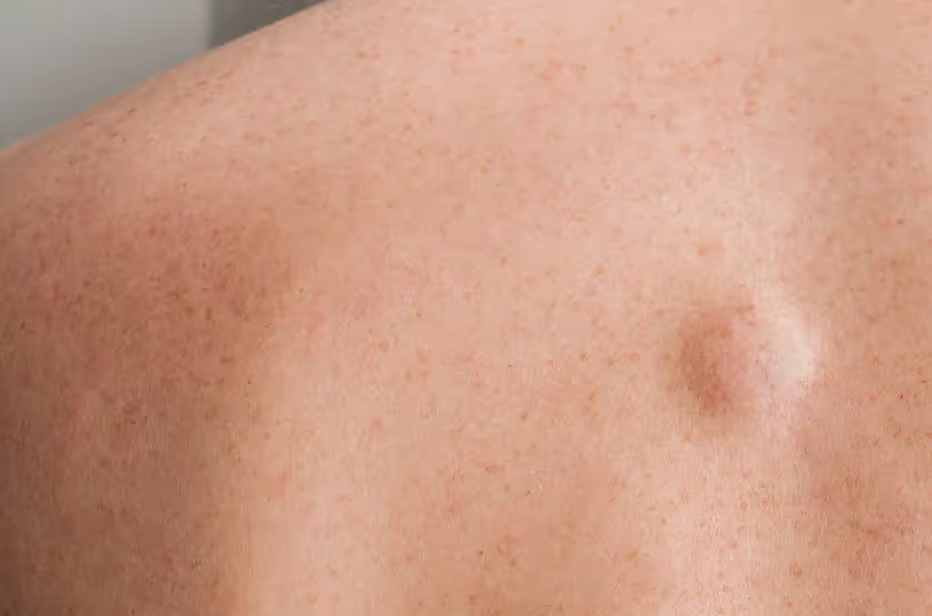
Lipomas represent the most common type of benign soft tissue tumor, consisting primarily of mature fat cells enclosed within a thin, fibrous capsule. These growths develop slowly over time and typically maintain a soft, doughy consistency that moves freely beneath the skin when touched. The cellular composition of lipomas closely resembles normal fatty tissue, which contributes to their generally harmless nature and low risk of malignant transformation.
The formation of lipomas occurs when fat cells begin to multiply and cluster together in localized areas beneath the skin surface. This process happens gradually and usually without any accompanying symptoms such as pain, inflammation, or systemic illness. The exact mechanisms that trigger lipoma development remain partially understood, though genetic factors and metabolic influences appear to play significant roles in their formation.
Most lipomas remain stable in size once they reach maturity, though some may continue to grow slowly over months or years. The growth pattern of lipomas is typically predictable and controlled, unlike malignant tumors that tend to grow rapidly and invasively. This characteristic growth behavior is one of the key factors that distinguish lipomas from cancerous growths and contributes to their classification as benign lesions.
- Cellular structure: Lipomas consist of normal, mature fat cells that are virtually identical to regular adipose tissue found throughout the body
- Growth pattern: These tumors grow slowly and predictably, maintaining clear boundaries and rarely exceeding several centimeters in diameter
- Physical characteristics: Lipomas feel soft and movable under the skin, with a consistency similar to firm dough or rubber
- Location preferences: Most commonly found on the trunk, arms, and thighs, though they can develop anywhere fatty tissue exists
The benign nature of lipomas has been extensively documented through decades of medical research and clinical observation. Pathological examination of lipoma tissue consistently reveals well-differentiated fat cells without the cellular abnormalities, rapid division rates, or invasive characteristics associated with malignant tumors. This fundamental difference in cellular behavior explains why lipomas rarely pose significant health threats.
Professional evaluation at facilities like Hazany Derm can provide definitive confirmation of a lipoma's benign status through clinical examination and, when necessary, additional diagnostic procedures. The peace of mind that comes from professional assessment often outweighs the minimal inconvenience of a dermatological consultation. Early evaluation also establishes baseline documentation that can be valuable for monitoring any future changes in the growth's characteristics.
Cancer Risk and Malignant Transformation
The risk of a lipoma becoming cancerous is extraordinarily low, with medical literature documenting malignant transformation rates of less than one percent across large population studies. This statistic provides substantial reassurance for individuals who have been diagnosed with lipomas, as the overwhelming majority will never develop any cancer-related complications. The rarity of malignant transformation reflects the stable, well-differentiated nature of the fat cells that comprise these benign tumors.
When malignant transformation does occur, the resulting cancer is typically a liposarcoma, which represents a distinct type of soft tissue sarcoma with different characteristics than the original lipoma. However, many cases previously thought to represent malignant transformation are now understood to have been misdiagnosed liposarcomas from the beginning rather than true lipomas that became cancerous. This distinction is important because it further reduces the already minimal risk associated with confirmed lipomas.
The factors that might contribute to malignant transformation remain poorly understood, though trauma, radiation exposure, and certain genetic predispositions have been suggested as potential influences. Even in cases where these risk factors are present, the absolute risk remains extremely low compared to other types of cancer development. Most dermatologists, including those at Hazany Derm, emphasize monitoring rather than prophylactic removal for typical lipomas.
- Statistical risk: Less than 1% of diagnosed lipomas ever undergo malignant transformation during a person's lifetime
- Transformation timeline: When malignant change occurs, it typically happens over years rather than weeks or months
- Warning signs: Rapid growth, firmness, pain, or size greater than 5 centimeters may warrant additional evaluation
- Diagnostic accuracy: Modern imaging and biopsy techniques can reliably distinguish between lipomas and liposarcomas in questionable cases
The process of distinguishing between benign lipomas and potentially malignant soft tissue masses involves careful clinical evaluation and sometimes additional testing procedures. Experienced dermatologists can often make accurate determinations based on physical examination, patient history, and growth characteristics. When uncertainty exists, imaging studies such as MRI or ultrasound can provide additional information about the internal structure and vascular characteristics of the growth.
Professional monitoring and periodic evaluation represent the most appropriate approach for managing lipomas with minimal cancer risk. Regular check-ups allow healthcare providers to track any changes in size, consistency, or other characteristics that might suggest the need for further investigation. This conservative approach balances the extremely low cancer risk against the potential complications and costs associated with unnecessary surgical procedures.
Management and Treatment Considerations
The management of lipomas typically follows a conservative approach that prioritizes monitoring over immediate intervention, reflecting their benign nature and minimal health risks. Most lipomas require no treatment beyond periodic observation, allowing patients to avoid unnecessary surgical procedures and associated recovery periods. This watch-and-wait strategy aligns with current medical guidelines that emphasize intervention only when specific criteria are met or patient preferences strongly favor removal.
Treatment decisions for lipomas often depend more on cosmetic concerns, physical discomfort, or patient anxiety rather than medical necessity related to cancer prevention. Some individuals choose removal when lipomas become noticeable under clothing, interfere with normal activities, or cause psychological distress. The decision-making process should involve thorough discussion between patients and their healthcare providers about realistic expectations, procedural risks, and alternative management options.
When surgical removal is chosen, the procedure is typically straightforward and can often be performed in an office setting under local anesthesia. The complete excision of the lipoma, including its fibrous capsule, usually prevents recurrence and provides tissue for pathological confirmation of the diagnosis. Recovery from lipoma removal is generally uncomplicated, though patients should understand that any surgical procedure carries inherent risks and may result in scarring.
- Observation protocol: Regular monitoring every 6-12 months to assess for changes in size, consistency, or other characteristics
- Surgical indications: Removal considered for large size, rapid growth, cosmetic concerns, or patient preference
- Minimally invasive options: Liposuction or steroid injections may be appropriate for certain lipomas in specific locations
- Pathological confirmation: Removed tissue should always be sent for histopathological examination to confirm the diagnosis
The expertise available at specialized dermatology practices like Hazany Derm ensures that patients receive comprehensive evaluation and appropriate treatment recommendations tailored to their individual circumstances. Professional assessment can distinguish lipomas from other types of growths that might require different management approaches. This specialized knowledge helps patients avoid both under-treatment of potentially significant lesions and over-treatment of benign conditions.
Long-term outcomes for patients with lipomas are excellent regardless of whether they choose observation or surgical removal. The benign nature of these growths means that most people can expect no significant health consequences from their presence. Even in cases where multiple lipomas develop over time, the prognosis remains favorable, and management strategies can be adjusted to accommodate changing patient needs and preferences while maintaining appropriate medical oversight.
Frequently Asked Questions
What exactly is a lipoma and how common are they?
A lipoma is a benign tumor composed of fat cells that develops just beneath the skin surface. These soft, movable lumps are encased in a thin, fibrous capsule and represent the most common type of soft tissue tumor in adults. Lipomas affect approximately 1% of the population, with most cases developing between ages 40-60, though they can occur at any age. They typically grow slowly over months or years and maintain a characteristic doughy consistency. Dr. Salar Hazany frequently encounters patients concerned about these growths, reassuring them that lipomas are generally harmless and rarely require immediate intervention. Most people develop only one or a few lipomas during their lifetime, though some individuals may develop multiple growths due to genetic factors.
Can a lipoma turn into cancer over time?
The transformation of a lipoma into cancer is extremely rare, occurring in less than 1% of all diagnosed cases. When malignant transformation does happen, the resulting cancer is typically a liposarcoma, which is a type of soft tissue sarcoma. However, many cases previously thought to represent transformation are now understood to have been misdiagnosed liposarcomas from the beginning rather than true lipomas that became cancerous. The professionals at Hazany Derm emphasize that this statistical risk is so low that prophylactic removal is rarely recommended based solely on cancer prevention. The stable, well-differentiated nature of lipoma cells makes them inherently resistant to malignant change, providing substantial reassurance for patients who choose conservative monitoring over surgical intervention.
What are the warning signs that a lipoma might be problematic?
While most lipomas remain benign throughout their existence, certain changes warrant professional evaluation to rule out malignant transformation or misdiagnosis. Rapid growth over weeks or months, rather than the typical slow progression over years, represents a key warning sign. Additionally, lipomas that become firm, fixed to underlying structures, or painful may require further investigation. Size greater than 5 centimeters in diameter also merits additional attention, as larger growths have a slightly higher likelihood of being liposarcomas rather than true lipomas. The team at Hazany Derm advises patients to monitor their lipomas for these changes and seek evaluation if any concerning features develop. Other warning signs include irregular borders, unusual firmness, or development in unusual locations such as deep within muscle tissue.
How are lipomas diagnosed and differentiated from other growths?
Diagnosis of lipomas typically begins with clinical examination by an experienced dermatologist who can assess the growth's characteristics, location, and behavior. The soft, movable nature of lipomas, combined with their typical locations and slow growth pattern, often allows for confident clinical diagnosis. However, when uncertainty exists, imaging studies such as ultrasound or MRI can provide detailed information about the internal structure and help distinguish lipomas from other soft tissue masses. In some cases, fine needle aspiration or biopsy may be necessary for definitive diagnosis. Dr. Hazany utilizes comprehensive evaluation techniques to ensure accurate diagnosis, as proper identification is crucial for appropriate management decisions. The combination of clinical expertise and modern diagnostic tools allows for reliable differentiation between lipomas and other growths that might require different treatment approaches.
Do lipomas require treatment or can they be left alone?
Most lipomas do not require treatment and can be safely monitored over time due to their benign nature and minimal health risks. The decision to treat typically depends on factors such as cosmetic concerns, physical discomfort, interference with daily activities, or patient anxiety rather than medical necessity. Conservative observation with periodic check-ups represents the standard approach for typical lipomas that remain stable in size and characteristics. Treatment options, when chosen, include surgical excision, liposuction, or rarely, steroid injections, depending on the lipoma's size, location, and patient preferences. Hazany Derm specialists work closely with patients to develop individualized management plans that balance medical appropriateness with personal preferences and lifestyle considerations. The excellent long-term prognosis for lipomas means that both observation and treatment approaches yield favorable outcomes.
What does lipoma removal surgery involve and what are the risks?
Lipoma removal is typically a straightforward outpatient procedure performed under local anesthesia in an office setting. The surgery involves making a small incision over the lipoma, carefully dissecting around the growth to preserve the surrounding tissues, and removing the entire lipoma including its fibrous capsule to prevent recurrence. The procedure usually takes 30-60 minutes depending on the size and location of the lipoma. Risks are generally minimal and include bleeding, infection, scarring, nerve damage, and rarely, incomplete removal leading to recurrence. Dr. Salar Hazany emphasizes the importance of complete excision to minimize recurrence rates while taking care to optimize cosmetic outcomes. Recovery typically involves keeping the incision clean and dry, activity modification for a few days, and follow-up visits to monitor healing. Most patients experience minimal discomfort and can return to normal activities within a week.
Are there different types of lipomas and do they all have the same cancer risk?
Several subtypes of lipomas exist, each with slightly different characteristics but generally similar benign behavior and minimal cancer risk. Classic lipomas consist entirely of mature fat cells, while fibrolipomas contain additional fibrous tissue, and angiolipomas include small blood vessels that may cause tenderness. Spindle cell lipomas and pleomorphic lipomas represent less common variants that may appear more concerning under microscopic examination but remain benign. Deep-seated lipomas located within muscle tissue (intramuscular lipomas) may be slightly more challenging to evaluate and remove but maintain the same low malignancy risk. The specialists at Hazany Derm clinic are experienced in recognizing these various subtypes and understanding their individual characteristics and management requirements. Regardless of subtype, all true lipomas carry the same extremely low risk of malignant transformation, though some variants may require more careful monitoring or specialized surgical techniques for removal.
When should someone seek professional evaluation for a suspected lipoma?
Professional evaluation should be sought whenever a new growth appears under the skin, regardless of whether it seems consistent with a typical lipoma. Early assessment establishes proper diagnosis, provides peace of mind, and creates baseline documentation for future monitoring. Additionally, any changes in an existing lipoma's size, consistency, mobility, or associated symptoms warrant prompt professional attention. Individuals with family histories of soft tissue tumors, multiple lipomas, or growths in unusual locations should prioritize professional evaluation. The experts at Hazany Derm recommend not delaying consultation when uncertainty exists, as early evaluation can distinguish between benign lipomas and other conditions that might require different management approaches. Professional assessment also provides an opportunity to discuss monitoring strategies, treatment options, and address patient concerns about cancer risk. Even when lipomas are confirmed to be benign, establishing a relationship with a dermatologist facilitates ongoing care and monitoring.