






DermaV vs. Vbeam: Which Laser Is Better for Redness?
Vbeam is a 595 nm pulsed dye laser built mainly for redness. DermaV combines 532 nm and 1064 nm wavelengths to treat redness, deeper vessels and brown spots in one device. Both are proven for rosacea; the right choice depends on what else your skin needs. Hazany Derm treats redness with DermaV.
If you have been researching lasers for facial redness, you have probably seen two names come up again and again: Vbeam and DermaV. Both treat visible blood vessels, flushing and rosacea redness. Both cool the skin with a burst of cryogen as they fire. So what is actually different, and does it matter which one you get?
The short answer: Vbeam is a single-wavelength pulsed dye laser built mainly for redness. DermaV is a two-wavelength laser that treats redness, deeper vessels and brown spots in one device. At Hazany Derm we treat redness with DermaV. Here is how the two compare, and how Dr. Hazany decides what your skin needs.
Quick answer
- Vbeam is a pulsed dye laser made by Candela. It uses one wavelength, 595 nanometers, and is one of the most studied lasers for rosacea, broken capillaries and vascular birthmarks.
- DermaV is made by Cynosure Lutronic. It pairs a 532 nanometer wavelength for surface redness and brown spots with a 1064 nanometer wavelength for deeper vessels.
- If redness is your only concern, both can give excellent results in experienced hands.
- If you have redness and brown spots, or deeper vessels, DermaV can often address them in the same visit.
What is Vbeam?
Vbeam is a pulsed dye laser. Its light is produced by passing energy through a liquid dye, which creates a 595 nanometer beam. That wavelength is strongly absorbed by hemoglobin, the red pigment in blood, so the energy heats and closes small vessels while the surrounding skin stays intact.
Vbeam has been used for decades for port wine stains, hemangiomas, rosacea, spider veins and red scars. Its handpiece sprays a short burst of cryogen just before each pulse to protect the surface of the skin.
One thing patients often hear about Vbeam is bruising. At some settings, a pulsed dye laser leaves purple marks called purpura, which usually fade over one to two weeks. For stubborn lesions such as port wine stains, that bruising can be an intended endpoint. For routine rosacea treatment, settings are usually chosen to avoid it.
What is DermaV?
DermaV is a newer laser platform that combines two wavelengths in one device:
- 532 nanometers targets redness and pigment close to the surface: fine capillaries, flushing, cherry angiomas, sun spots and age spots.
- 1064 nanometers passes deeper into the skin to reach larger and bluer vessels, such as small leg veins and venous lakes. It is also used for hair reduction on all skin types.
Like Vbeam, DermaV cools the skin with a burst of cryogen on every pulse, so no gels are needed. Its settings can be adjusted spot by spot, so a fine capillary and a larger vessel each get the energy they need. Read more about how skin cooling works during laser treatment.
DermaV vs. Vbeam: the key differences
How they work
Vbeam uses one wavelength, 595 nanometers. DermaV uses two, 532 and 1064 nanometers. More wavelengths means more ways to match the energy to the depth and color of what is being treated.
What they treat
Both treat facial redness, rosacea, broken capillaries, cherry angiomas and red scars. Vbeam is best known for redness and vascular birthmarks. DermaV adds brown spots and sun damage through its 532 nanometer wavelength, and deeper vessels through its 1064 nanometer wavelength.
Redness and brown spots together
Most sun-damaged skin has both: broken vessels across the cheeks and nose, plus brown spots on the face, chest and hands. With Vbeam, the brown spots usually need a second device. With DermaV, both can often be treated in the same visit.
Bruising and downtime
Both lasers can be used at settings that avoid bruising, and both can bruise at stronger settings. With DermaV, most patients see mild pinkness or swelling for a few days. Brown spots darken first and flake off over about a week.
Skin type
The 532 nanometer wavelength is also absorbed by melanin, so it is used with care on darker or tanned skin. The 1064 nanometer wavelength is gentler on the surface and is used on every skin type. With either laser, settings should be chosen by a dermatologist who has examined your skin.
Which is better for redness?
Neither laser is better for everyone. Both are proven for rosacea and visible vessels, and the skill of the person using the laser matters as much as the device. What usually decides it is what else your skin needs:
- Diffuse redness only: Vbeam and DermaV both work well.
- Redness plus sun spots: DermaV can treat both in one plan.
- Deeper or blue vessels, small leg veins, venous lakes: the 1064 nanometer wavelength on DermaV reaches deeper.
- Red scars after surgery, acne or injury: both can help a scar blend in. At Hazany Derm, DermaV is often one part of a larger scar plan.
Why we use DermaV at Hazany Derm
Dr. Salar Hazany is a board-certified dermatologist and fellowship-trained Mohs surgeon. Most of the redness we see does not come alone. It comes with sun damage, red scars after skin cancer surgery, or rosacea that also needs medical care. DermaV lets us treat reds and browns in the same plan, with settings matched to each vessel and each spot.
Every brown spot is examined before it is treated. As a skin cancer surgeon, Dr. Hazany will not laser a spot that should first be checked for skin cancer.
What to expect from DermaV treatment
- Before: avoid tanning and heavy sun for a few weeks, and tell us about any medications and recent treatments.
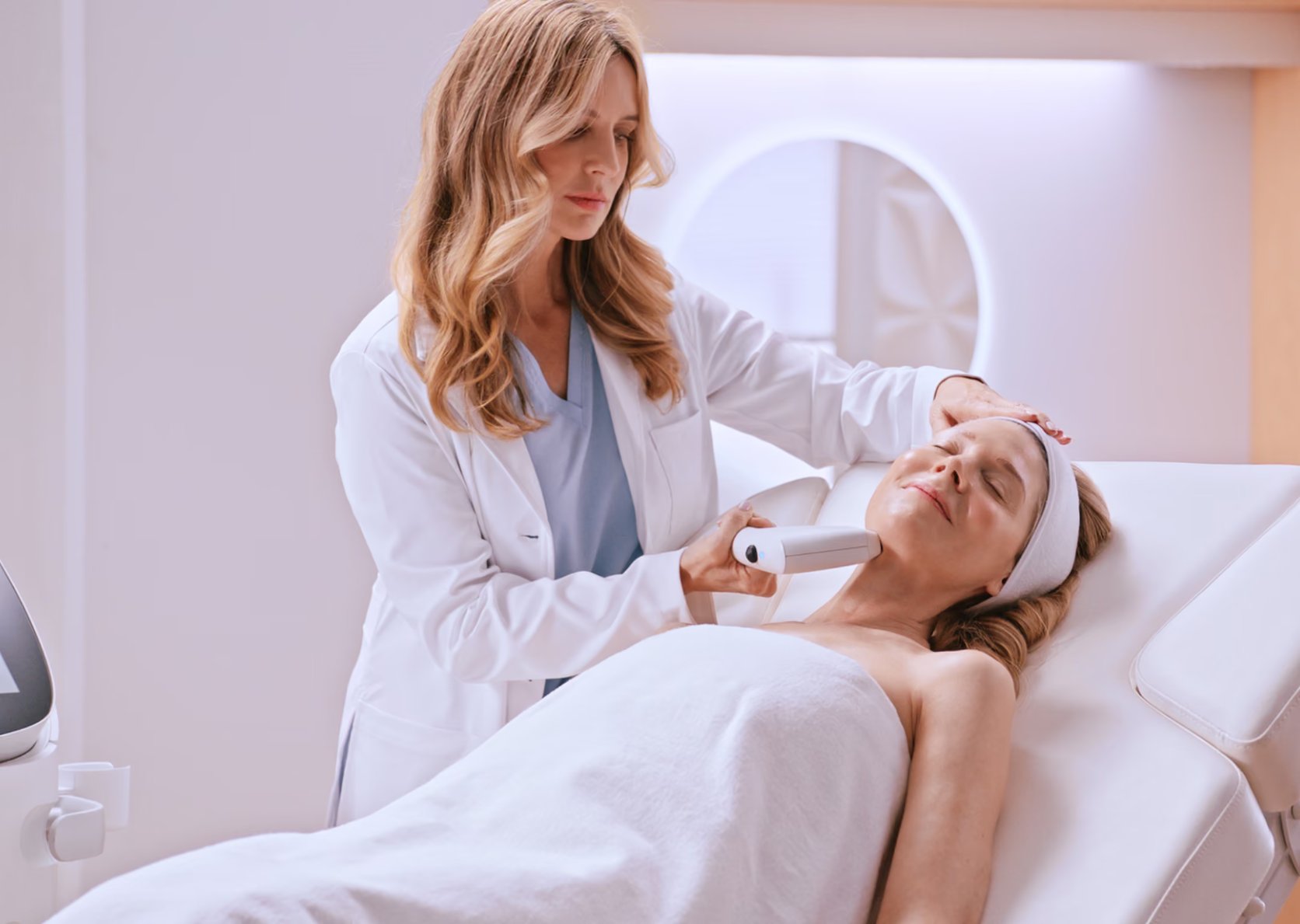
- During: each pulse feels like a quick snap followed by a cool burst. Small areas take minutes. A full face takes longer. Topical numbing is available.
- After: mild pinkness or swelling for a few days. Daily sunscreen while you heal.
- Results: some vessels fade right away and others over several weeks. Redness usually improves over a series of sessions spaced several weeks apart, while a single brown spot may clear in one or two. Individual results vary.
Who is a good candidate?
You may be a good candidate if you have facial redness, flushing, rosacea, visible vessels, red scars or sun spots that have not faded on their own. A recent tan, pregnancy, an active infection in the area or certain medications may mean waiting or choosing another approach. Deep wrinkles and loose skin are better treated with options such as Sofwave. Your candidacy is decided at your consultation.
Final thoughts
Vbeam and DermaV are both excellent lasers for redness. The difference is range. Vbeam is a specialist in red. DermaV treats red, deeper vessels and brown spots in one device. For patients with more than one concern, that can mean a simpler plan and fewer separate treatments.
If you are comparing lasers for redness, the best next step is an exam. Book a consultation with Dr. Hazany to find out what your skin needs.
常见问题解答
Is DermaV the same as Vbeam?
No. Vbeam is a pulsed dye laser from Candela that uses one 595 nanometer wavelength. DermaV is a laser from Cynosure Lutronic that combines 532 and 1064 nanometer wavelengths. Both treat redness and visible vessels, and DermaV also treats brown spots and deeper vessels.
Which is better for rosacea, DermaV or Vbeam?
Both are effective for rosacea redness and visible vessels. The better choice depends on what else your skin needs. If you also have sun spots or deeper vessels, DermaV can often treat them in the same visit. Rosacea is a medical condition, so laser is usually one part of a plan that also includes prescription care and skincare.
Does DermaV cause bruising like Vbeam?
Either laser can bruise at stronger settings, and both can be used at settings that avoid it. With DermaV, most patients see mild pinkness or swelling for a few days. Brown spots darken and then flake off over about a week.
Does DermaV hurt?
Most patients describe each pulse as a quick snap, softened by the cool burst of cryogen that comes with it. Topical numbing is available if you want it.
How many DermaV treatments will I need?
It depends on what is being treated. Redness and vessels usually improve over a series of sessions spaced several weeks apart, while a single brown spot may clear in one or two. Dr. Hazany will give you a plan at your consultation.
Does Hazany Derm offer Vbeam?
Hazany Derm treats redness, rosacea, visible vessels and brown spots with DermaV. At your consultation, Dr. Hazany will examine your skin and recommend the treatment that fits it, including medical care when redness comes from rosacea.