






%201.avif)



Sofwave Timing for GLP-1 Patients: When to Start Treatment and Why It Matters



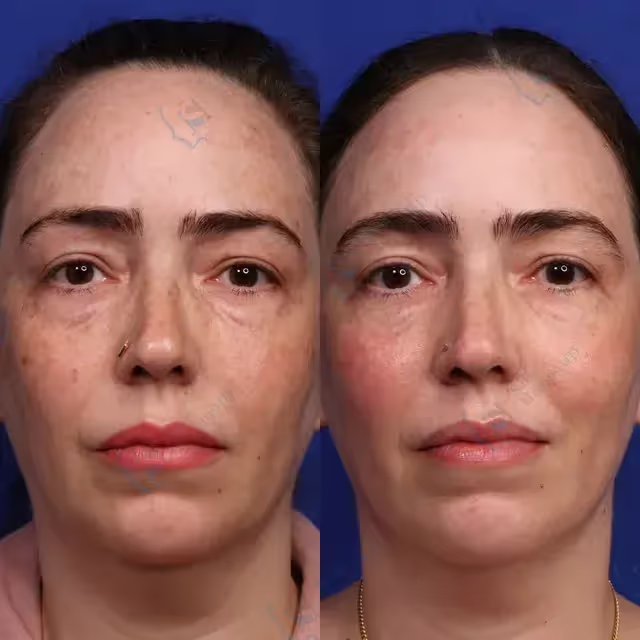
Sofwave, started early in a GLP-1 treatment course rather than after sagging appears, gives the skin's collagen network a head start instead of a repair job. GLP-1 medications appear to reduce collagen production directly, a process that begins well before laxity becomes visible, which is the core argument for treating it proactively. Sofwave uses FDA-cleared ultrasound technology to stimulate collagen and elastin in the mid-dermis, with clinical and histological evidence supporting its effectiveness for the neck, chin, and brow. But not every provider agrees on timing: some prefer to treat laxity once it's visible rather than before, and no head-to-head trial has settled the question either way. This guide covers what Sofwave actually does, who benefits most from starting early, and the framework Hazany Derm uses to help each patient decide between starting proactively and waiting to see how their skin responds.
Patients starting a GLP-1 medication are usually focused on the number on the scale, not their skin. By the time neck or under-chin laxity becomes noticeable, the collagen loss driving it has often been building for months. Among providers who treat this, there's a real, ongoing disagreement about timing: some prefer to wait until weight loss stabilizes and treat the laxity that's actually present, while others, including Dr. Hazany in many cases, argue that starting Sofwave earlier produces a better long-term result.
Both positions have a reasonable basis, and this guide covers what the treatment does, who it's for, and what the evidence actually supports on timing.
Why Timing Changes the Outcome
GLP-1 medications don't only remove fat from under the skin. How and why these drugs affect collagen production directly is covered in Does Ozempic Cause Sagging Skin? What GLP-1 Users Should Know. The short version: the process starts well before visible sagging appears, which is the core argument for treating it early rather than waiting for a change to show up in the mirror.
The neck and submental area are disproportionately affected for a straightforward anatomical reason: they have comparatively little underlying muscular or ligamentous support compared to areas like the cheeks, which are cushioned by a thicker layer of superficial fat and supported by the SMAS, the fibrous muscular layer beneath facial skin. Skin under the chin is also thinner than skin on the cheeks or forehead, which means it has less collagen reserve to begin with. When fat volume decreases quickly in this area, there's less structural support to hold the remaining skin in place, which is exactly why this is often the first place GLP-1 patients notice a visible change.
What Sofwave Actually Does
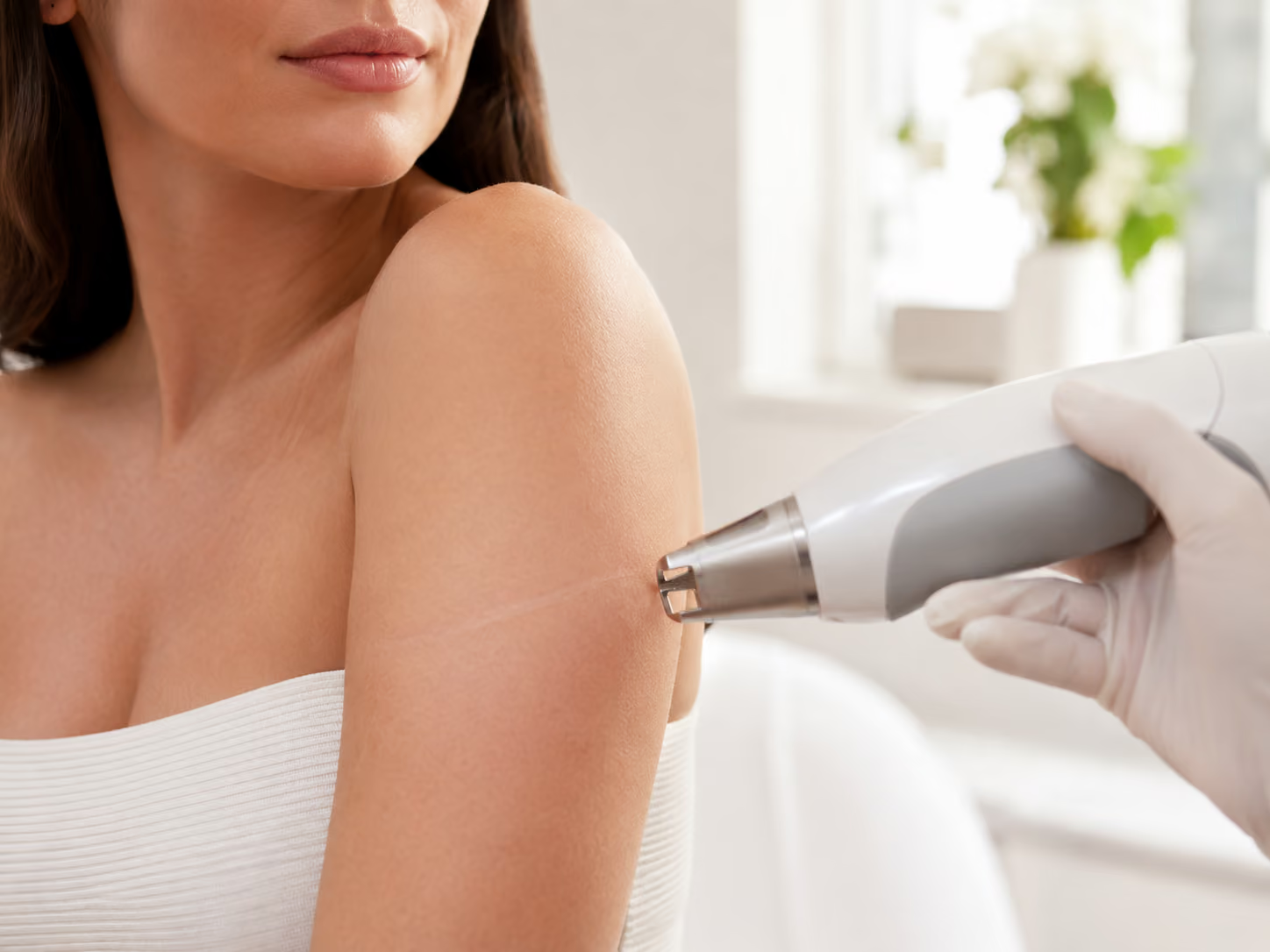
Sofwave isn't a surface-level treatment aimed at fine lines or texture. It's specifically engineered to reach the mid-dermis, the structural layer where collagen and elastin are produced, without damaging the outer skin that protects it. That distinction matters for GLP-1 patients specifically, because the mid-dermis is exactly where the collagen-reducing process described above is doing its damage.
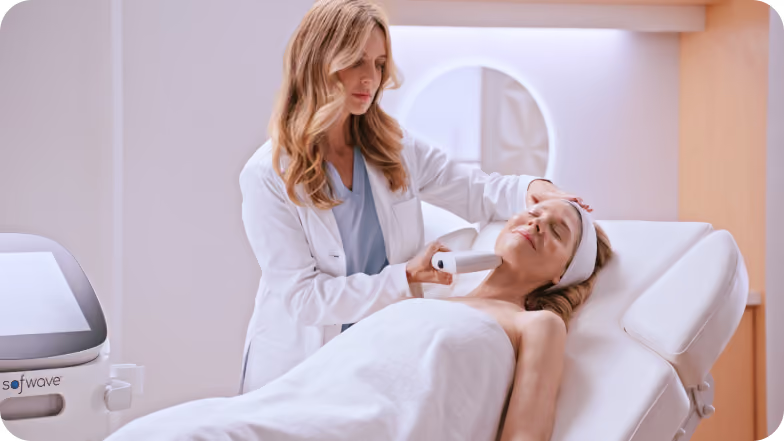
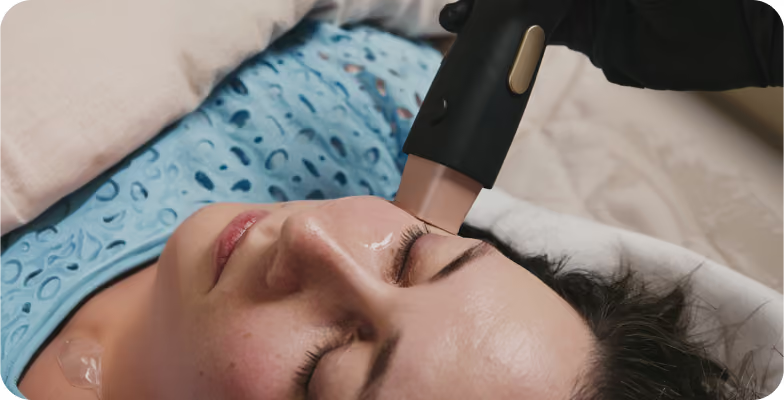
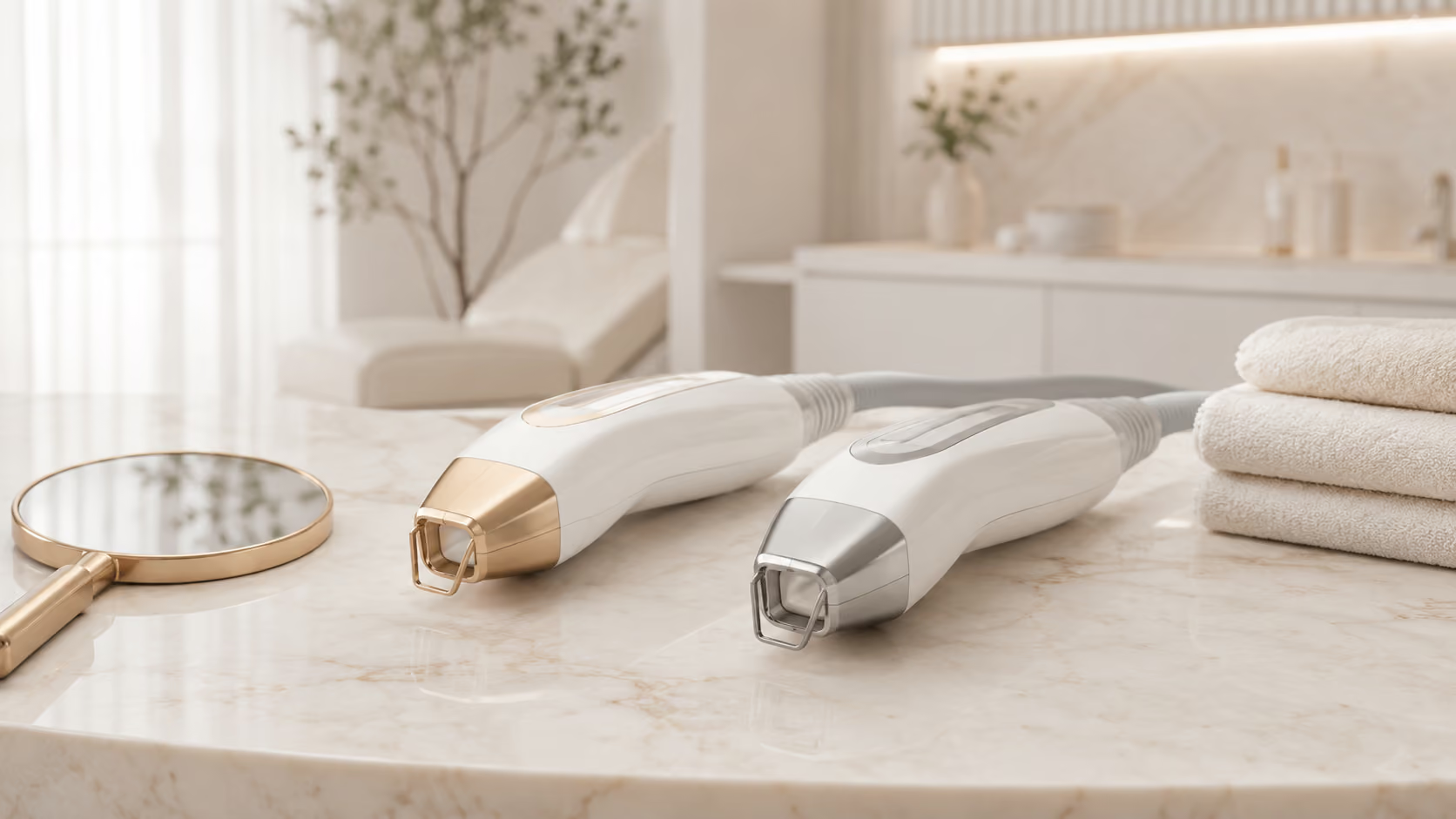
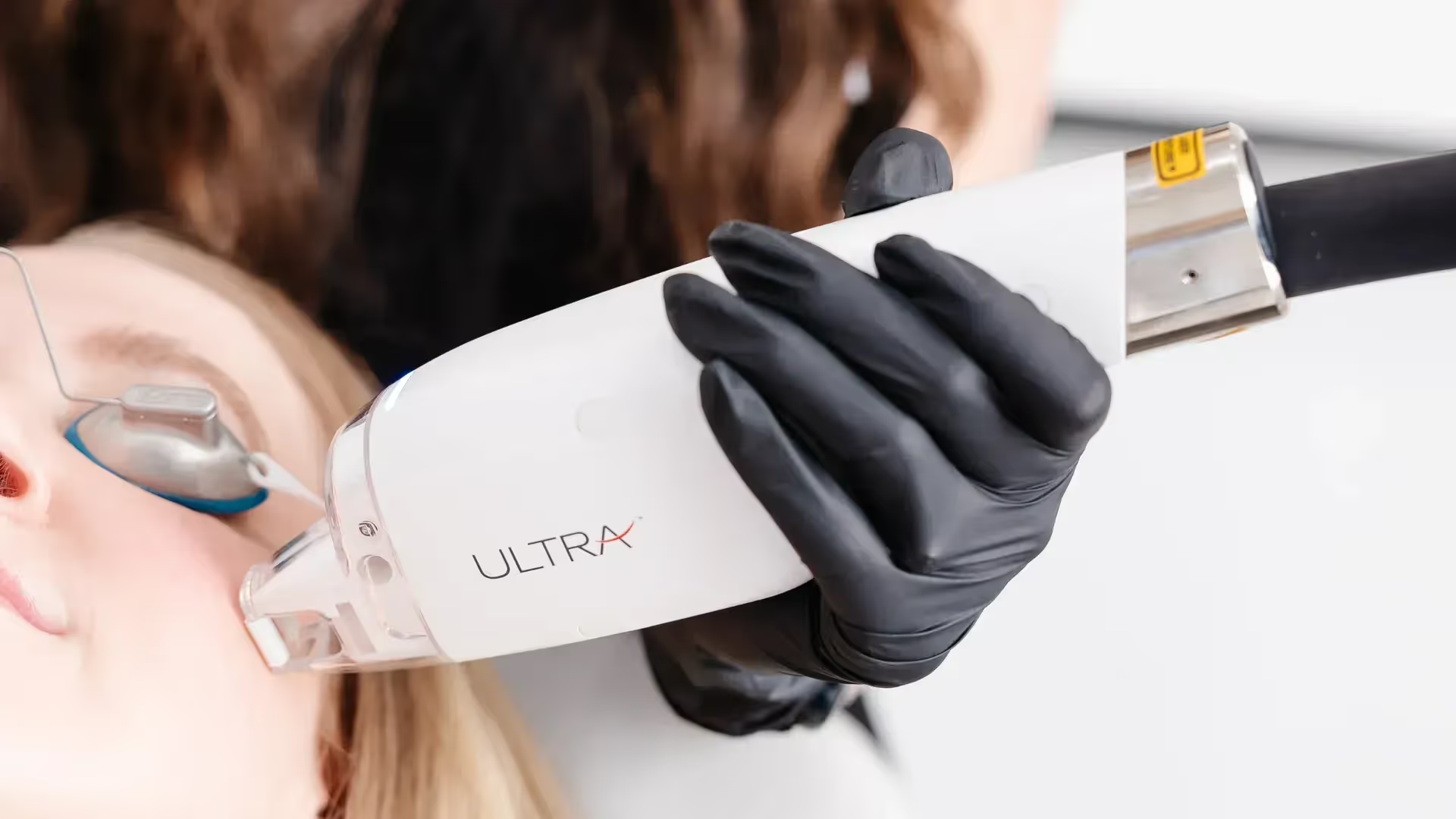
Sofwave uses SUPERB (Synchronous Ultrasound Parallel Beam) technology to deliver ultrasound energy roughly 1.5 millimeters below the skin's surface, into the mid-dermis. Seven synchronized transducers create precise thermal zones reaching temperatures between 60 and 70 degrees Celsius, causing partial collagen denaturation.
That controlled thermal injury triggers the body's own neocollagenesis and neoelastogenesis response, mediated by matrix metalloproteinases and heat shock proteins, working in the opposite direction of the breakdown process described above.
A related histological study confirmed this isn't just theoretical: skin biopsies taken after treatment showed an actual measurable increase in collagen and elastic fiber density in the treated mid-dermis.
The pivotal trial supporting Sofwave's FDA clearance specifically evaluated its effect on lifting lax tissue in the submental and neck zones and the eyebrow, using independent masked evaluators comparing before-and-after images: the exact areas, and the exact kind of independently verified outcome, that matters for a GLP-1 patient deciding whether to pursue treatment early.
Certain patients are more likely to benefit from starting sooner rather than later: those planning significant total weight loss, those on a faster-acting medication or higher-dose protocol, patients over 40 or postmenopausal (a population shown to have more pronounced skin effects), and anyone with a personal history of skin laxity following previous weight changes, whether from a prior GLP-1 course, bariatric surgery, or significant diet-driven weight loss.
A Sofwave session takes 30 to 45 minutes, with no needles, no incisions, and no downtime. Patients feel warm pulses as the ultrasound energy is delivered, with an integrated cooling system protecting the outer skin layer throughout. Most patients see some early tightening within the first few weeks, with results building over roughly three months as new collagen forms. Because GLP-1 treatment often continues for a year or longer, a single session isn't necessarily a one-time event tied to a specific moment in that timeline: some patients do well with one session and reassess later, while others benefit from a second session further into their course, once more of the total planned weight loss has occurred. Whether a second session is needed is decided at follow-up, based on actual skin response rather than a fixed calendar interval.
Comparing Your Options
It's worth being specific about why Sofwave and injectables aren't interchangeable, since patients sometimes ask which one to pick rather than understanding they typically address different things. Injectables, whether neuromodulators or hyaluronic acid fillers, work by relaxing muscle activity or adding volume where it's been lost.
Sofwave works by stimulating the skin's own collagen and elastin production within tissue that's already there. A patient who has lost midfacial volume but has minimal laxity is a better candidate for filler than for Sofwave; a patient with early jawline and neck softening but no significant volume loss is the reverse. Most GLP-1 patients eventually have some combination of both, which is why the treatment plan is built around an individual assessment rather than a single default recommendation.
Options generally fall into three tiers, and each addresses a different degree of laxity: at-home topical support (retinoids, collagen-supporting skincare, with modest evidence for hydration and elasticity), in-office energy-based devices like Sofwave or Density by Jeisys (measurably stronger evidence for structural laxity), and surgical correction. Understanding where a given patient falls on that spectrum, both now and at the point where they expect to finish losing weight, is most of what determines the right recommendation.
A separate, related question patients sometimes ask is why not simply wait and plan for a mini neck lift once weight loss is complete, rather than adding a non-surgical treatment in the meantime. The answer comes down to what each option is built to address. A surgical lift removes and tightens excess skin directly, but it isn't typically recommended until weight has stabilized, since operating on a still-changing face or neck risks a result that doesn't match the eventual outcome. That leaves a gap, often many months long, during which collagen decline is actively occurring and nothing is offsetting it. Sofwave fills that specific gap; it isn't a substitute for surgery when surgery is ultimately needed, but it addresses the period during which surgery isn't yet appropriate.
Sofwave addresses collagen and skin quality specifically. It won't restore lost facial volume or reverse laxity that's already progressed to excess, redundant skin, particularly under the chin. If weight loss has already progressed significantly before treatment starts, or if laxity extends into the jawline and midface, a mini face lift will produce a better, longer-lasting result than Sofwave alone, and Dr. Hazany and his team will say so directly rather than recommend a series of non-surgical treatments unlikely to meet a patient's expectations.
The Case for Starting Early vs. Waiting
GLP-1 medications are still relatively new at the scale they're now being prescribed, and the research on their dermatological effects has moved quickly to catch up with real-world patient volume. That means providers are largely working from mechanism-level research rather than from long-term outcome studies comparing different treatment timing strategies head to head. In that kind of evidence environment, reasonable providers can look at the same underlying biology and draw different conclusions about the best time to intervene, and neither side is arguing from bad evidence.
Providers who prefer to wait point to how facial change actually unfolds. A 2026 review of the anatomically informed treatment of the medical weight-loss face found that changes involve multiple structural layers together: deflation of fat compartments, loss of deep support, skeletal remodeling, and skin laxity, all interacting. Treating the full picture at once, once it's stable, avoids guessing at how much intervention a still-changing face will eventually need.
Providers who favor early intervention, Dr. Hazany among them, counter that the collagen-level process described above is already active well before laxity is visible.
This argument carries extra weight for patients over 55, since research on this population found the effect notably stronger in that group, layering onto collagen decline that menopause has already caused.
It's worth naming the tradeoff plainly. Providers who wait are optimizing for precision: they want to see exactly what needs correcting before recommending a plan, accepting that some collagen decline will happen in the meantime. Providers who favor early intervention are optimizing for prevention: they'd rather use the window while collagen-producing cells are still relatively healthy, even if that means treating some patients who might not have developed significant laxity anyway. It's tempting to resolve this with a simple better-safe-than-sorry argument for early treatment, but that framing understates the case for waiting; waiting is a legitimate clinical position, not a careless one, and it avoids recommending treatment to a patient who never would have developed meaningful laxity in the first place.
What the Evidence Actually Shows, and Doesn't
It's worth being precise about what kind of evidence would actually settle this question, since that clarifies why it hasn't been settled yet. A definitive answer would require a randomized trial enrolling GLP-1 patients at the start of treatment, splitting them into early-Sofwave and delayed-Sofwave groups, and following both through a full weight-loss course to compare outcomes. Nothing of that scope has been conducted or published, and given how recently GLP-1 medications reached their current scale of use, it may be several years before one is.
What exists instead is strong evidence on each piece of the puzzle individually. Sofwave's FDA pivotal trial demonstrates that the treatment works, and separate histological studies confirming collagen and elastin increase after treatment support the same conclusion. Connecting either type of evidence to a specific GLP-1 timeline is a reasonable inference from the underlying biology, not a trial result, and any provider who presents it as settled science is overstating what the current literature actually shows.
This isn't the first time providers have disagreed about treating proactively versus waiting for a problem to fully develop. Similar debates exist around starting neuromodulator treatment before fine lines become etched, or beginning a retinoid regimen before sun damage accumulates. In each case, the argument for earlier intervention rests on the same basic logic: it's generally easier to preserve tissue quality that's still intact than to restore quality that's already been lost.
A Framework for Deciding, Rather Than a Rule
A framework is more useful than a rule precisely because GLP-1 patients aren't a uniform group. A 29-year-old starting a low dose to lose fifteen pounds and a 61-year-old postmenopausal patient starting a higher dose to lose eighty pounds are both technically asking the same before-or-after question, but they're starting from meaningfully different risk profiles, and a single blanket recommendation would serve one of them far better than the other.
Starting too early carries a modest cost: a patient may spend on a treatment for laxity that, in hindsight, might not have become significant anyway. Starting too late carries a different cost: a patient may reach a point where Sofwave alone can no longer meaningfully improve the laxity that's developed, and a surgical option becomes the only way to get the result they wanted. In the absence of a definitive trial, the more useful comparison isn't "before or after" as a universal rule. It's how the two approaches trade off against each other:
Neither mistake is catastrophic. Sofwave is not an expensive or invasive treatment to begin with, and surgical options remain available regardless of timing, but the asymmetry is worth naming: the downside of starting early is generally smaller than the downside of waiting too long for a patient who turns out to be high risk for significant laxity.
For a patient early in a GLP-1 course, with a significant amount of planned weight loss ahead and no visible laxity yet, the decision usually comes down to risk tolerance and the factors above. A younger patient with excellent baseline skin quality and a modest weight-loss goal may reasonably choose to wait and monitor. An older or postmenopausal patient planning substantial weight loss carries a different risk profile, and for that patient, starting proactively is generally the more defensible choice. For a patient who has already lost significant weight and is noticing laxity now, the before-versus-after question is largely moot; the relevant question becomes what combination of Sofwave, injectables, and, if laxity is significant, surgical options will produce the best result from this point forward.
How Dr. Hazany Approaches This Decision
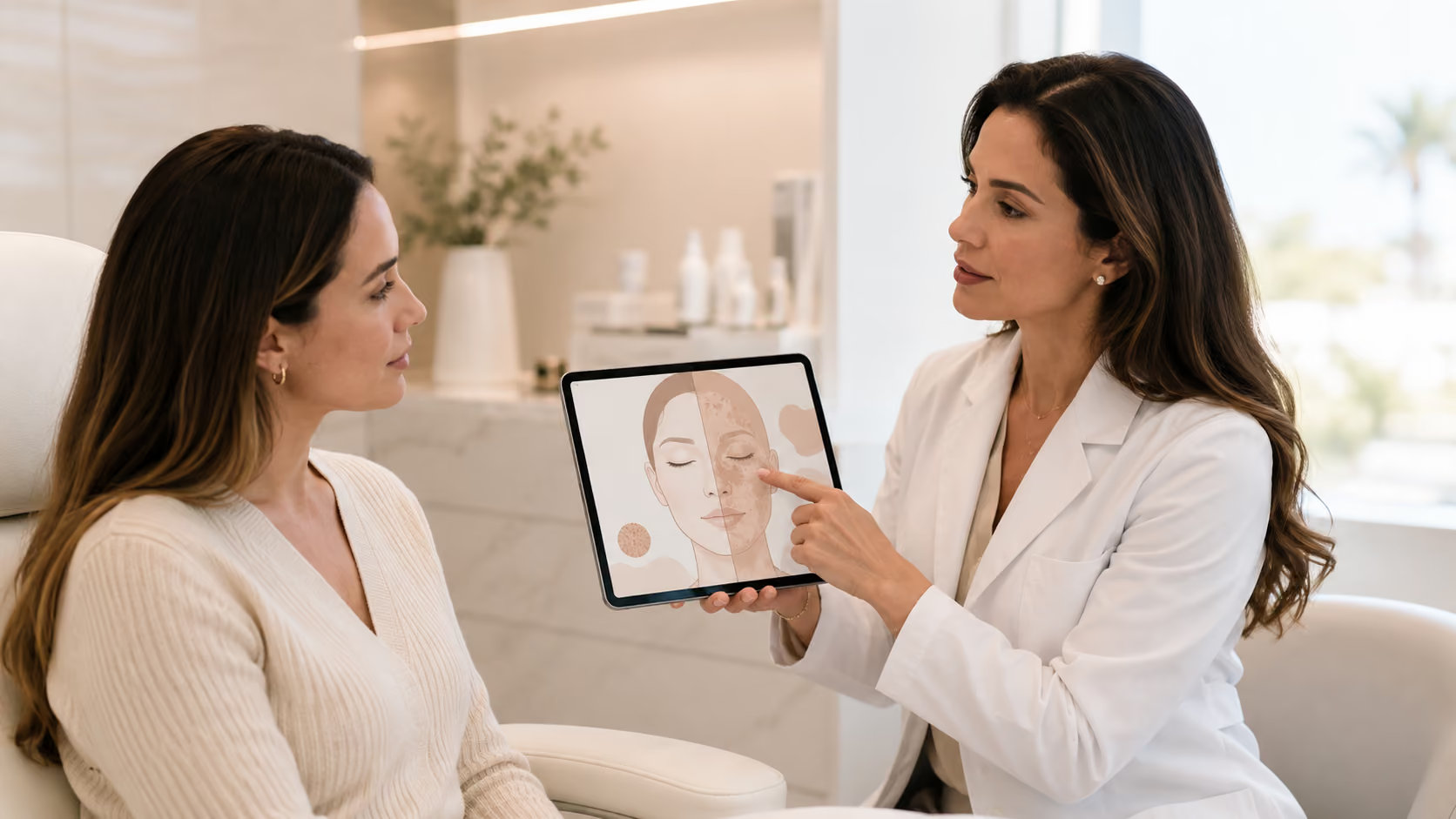
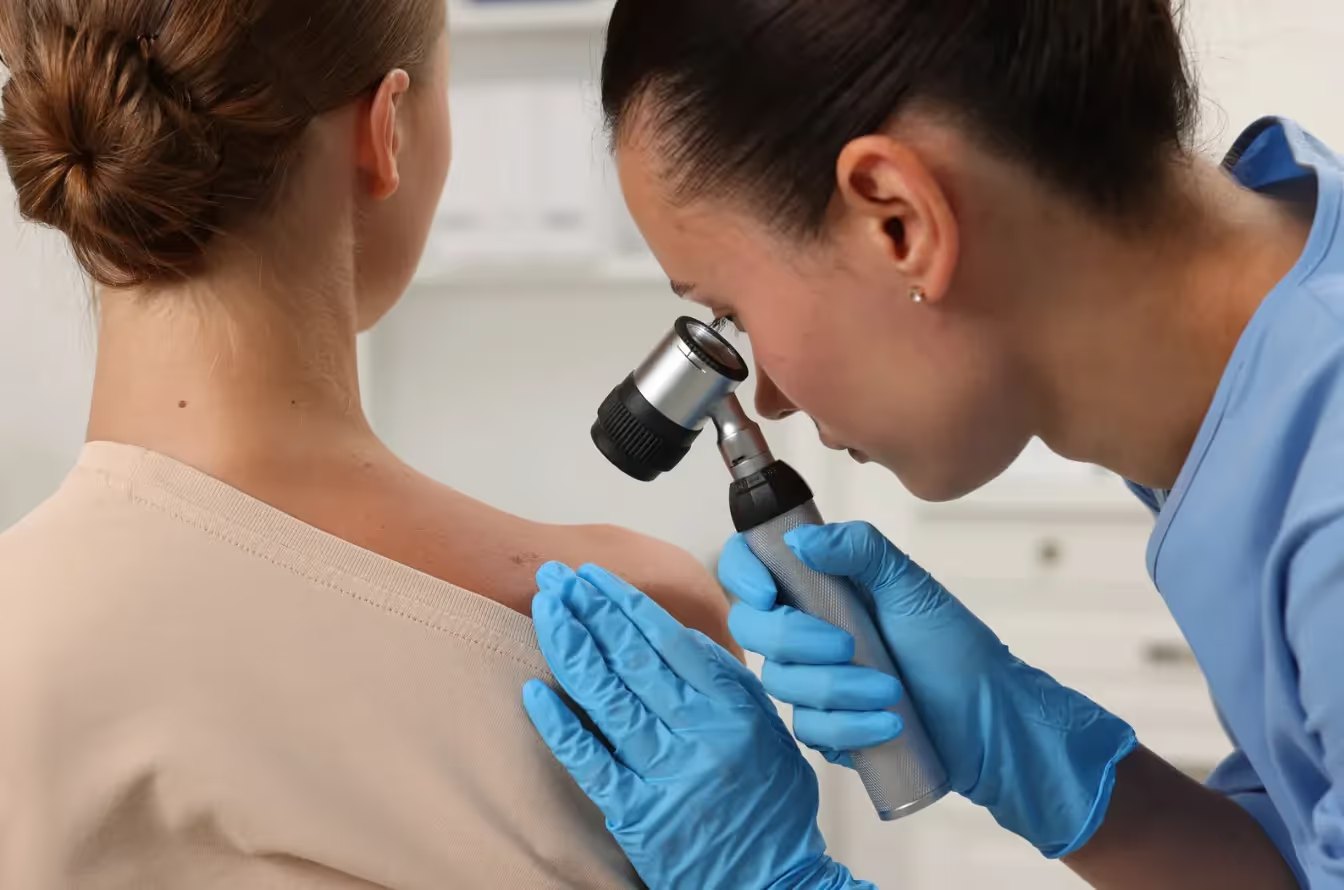
Rather than defaulting to one side of this debate for every patient, Dr. Hazany and his team evaluate each patient's weight loss plan, current skin quality, and treatment timeline individually before recommending a course. For patients who are younger, earlier in their weight-loss plan, or show risk factors for significant laxity, Dr. Hazany generally believes starting Sofwave sooner is the more sensible choice. For patients already well into a GLP-1 course with visible laxity, the conversation shifts toward treating what's present now.
A timing decision made at the start of a GLP-1 course is based on the plan as it exists at that point, not a permanent commitment. Patients who start on a lower dose and later increase it, switch medications, or end up losing significantly more or less weight than initially projected are, in effect, working from a different risk profile than the one the original recommendation was based on. Revisiting the decision when the underlying plan changes is part of treating this as an ongoing conversation rather than a single choice made once.
Sofwave is built for mild to moderate laxity, regardless of when it's used. Patients with more significant sagging, particularly excess skin under the chin or along the jawline, will generally get a better and more lasting result from a mini neck lift than from any timing strategy involving Sofwave alone. Recognizing that boundary, and being honest with patients about which side of it they're on, matters more than which timing camp a provider identifies with.
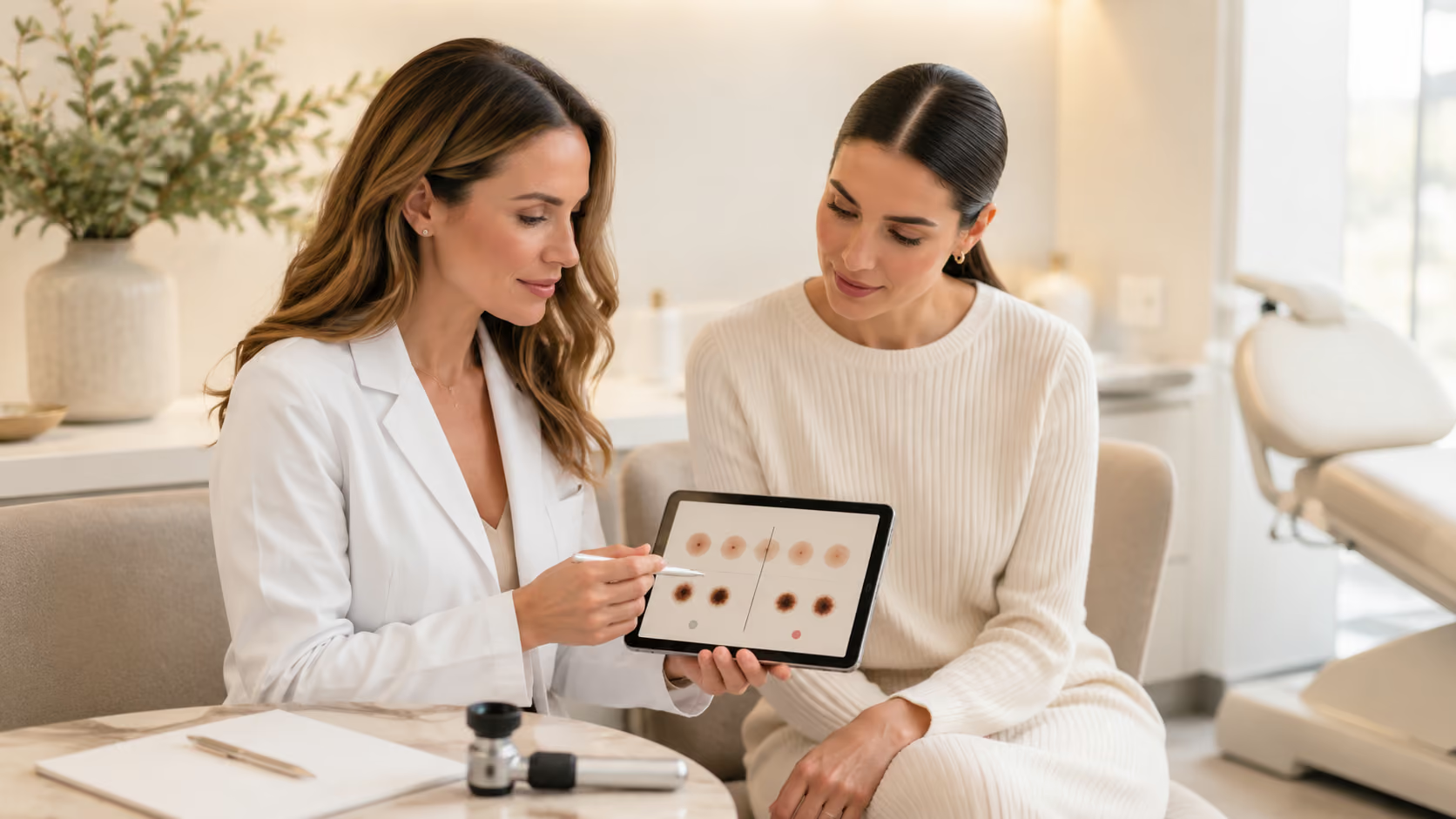
Patients get more out of an initial skin-planning consultation when they come with a few specifics: which GLP-1 medication and dose is planned or already underway, how much total weight loss the prescribing physician is targeting, how quickly weight has come off so far if treatment has already started, and any personal or family history of skin laxity after previous weight changes. That information lets Dr. Hazany and the team place a given patient more precisely on the risk profile described above, rather than making a general recommendation based on GLP-1 use alone.
The right timing decision depends on specifics that a blog post can't evaluate: your weight loss plan, your current skin quality, and your age. Schedule a consultation with Hazany Derm to build a skin plan that runs alongside your weight-loss timeline instead of trailing behind it.